Eyeshadow for Glasses Wearers: Colors and Techniques That Pop
Eyeshadow behaves differently behind glasses. Lenses soften and mute color, frames add visual noise around the eyes, and the warm microclimate behind glass makes shadow crease faster. The result: a look that took twenty minutes in the mirror can all but vanish the moment your frames go on.
The fix is not more product — it is smarter choices. Certain colors read clearly through lenses, specific placements survive minification, and a few prep steps stop creasing before it starts. This guide covers the colors that flatter behind glasses, the techniques that keep them visible, and how to adapt for your prescription. For the bigger picture — liner, mascara, base makeup, and brows — see the complete makeup guide for glasses wearers.
Key Takeaways
- Lenses mute eyeshadow color, so build pigment in thin layers until the shade reads clearly at arm’s length with glasses on.
- Warm neutrals, bronzes, coppers, and plums flatter most glasses wearers; match shadow depth to your frame weight.
- Always use an eye primer — frames trap warmth that creases unprimed shadow fast.
- Nearsighted (minus) lenses shrink eyes: use brightening lids and defined creases. Farsighted (plus) lenses magnify: blend meticulously.
- Pair your shadow with a defined liner so eyes don’t disappear; these eyeliner styles are designed for glasses wearers.
Why Eyeshadow Disappears Behind Glasses
Three things work against your eyeshadow when you wear glasses:
Minification. Nearsighted lenses shrink the apparent size of your eyes — sometimes significantly. A subtle wash of color on a minified eye simply doesn’t register at conversational distance.
Color muting. Glass, lens coatings, and the slight tint of some lenses all act as a filter. Shimmer gets dulled, pastels wash out, and mid-tone shades lose their punch.
Frame competition. Bold frames draw the eye to the frame line, not the lid. Delicate or rimless frames are kinder to subtle looks, but most glasses wearers need more contrast than they expect.
The universal checkpoint: apply your shadow, then put your glasses on and step back from the mirror. If the color doesn’t read at arm’s length, build it up in thin layers until it does. If you are new to shadow application in general, start with this beginner eyeshadow guide.
The Best Eyeshadow Colors for Glasses Wearers
Warm neutrals and bronzes
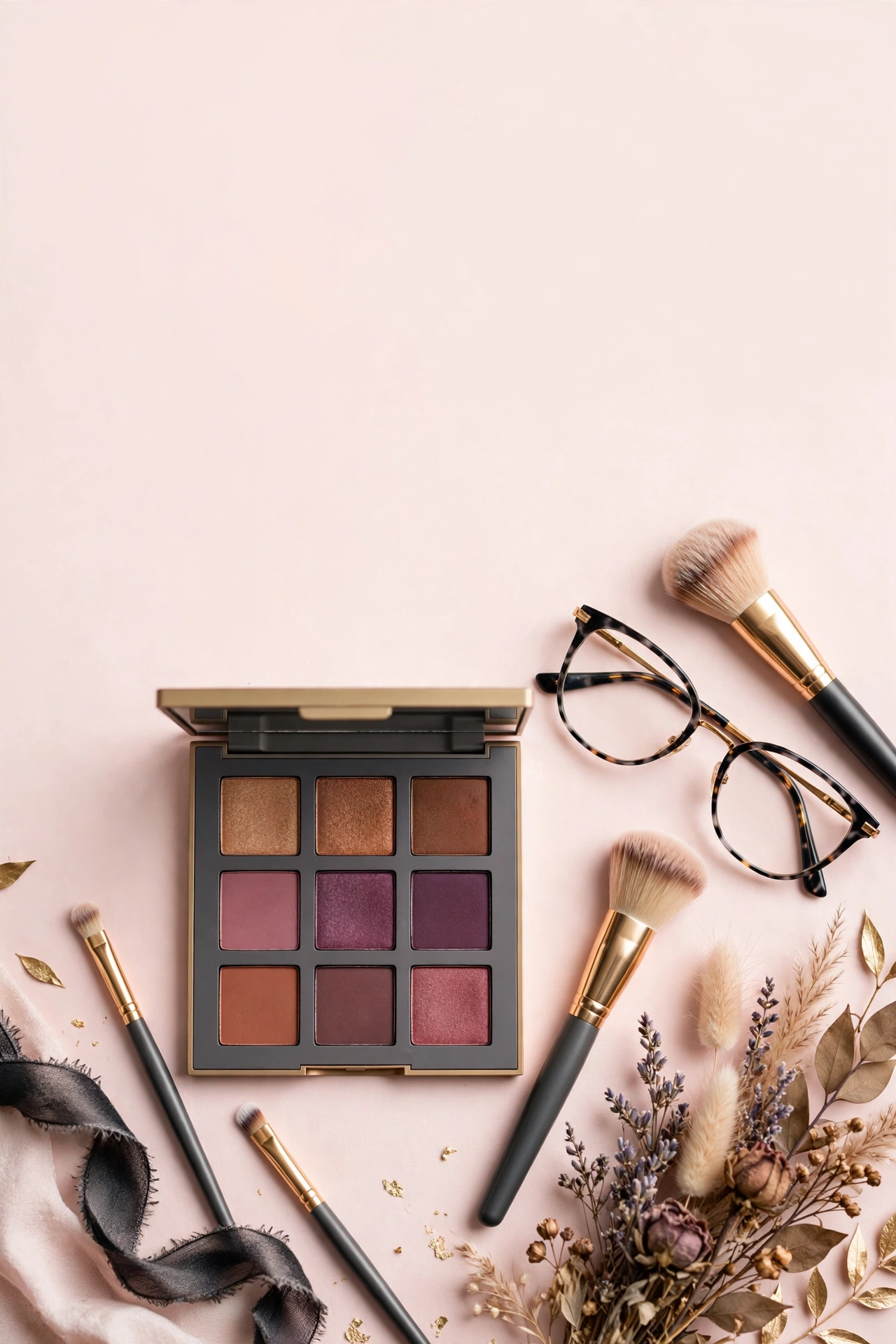
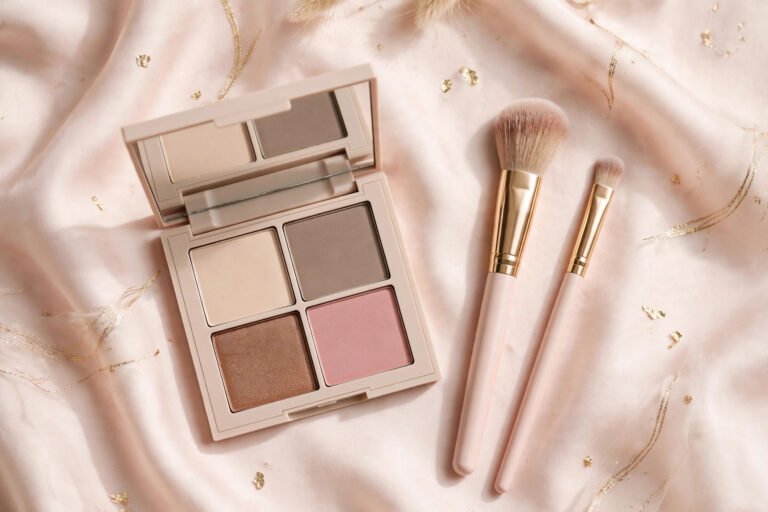
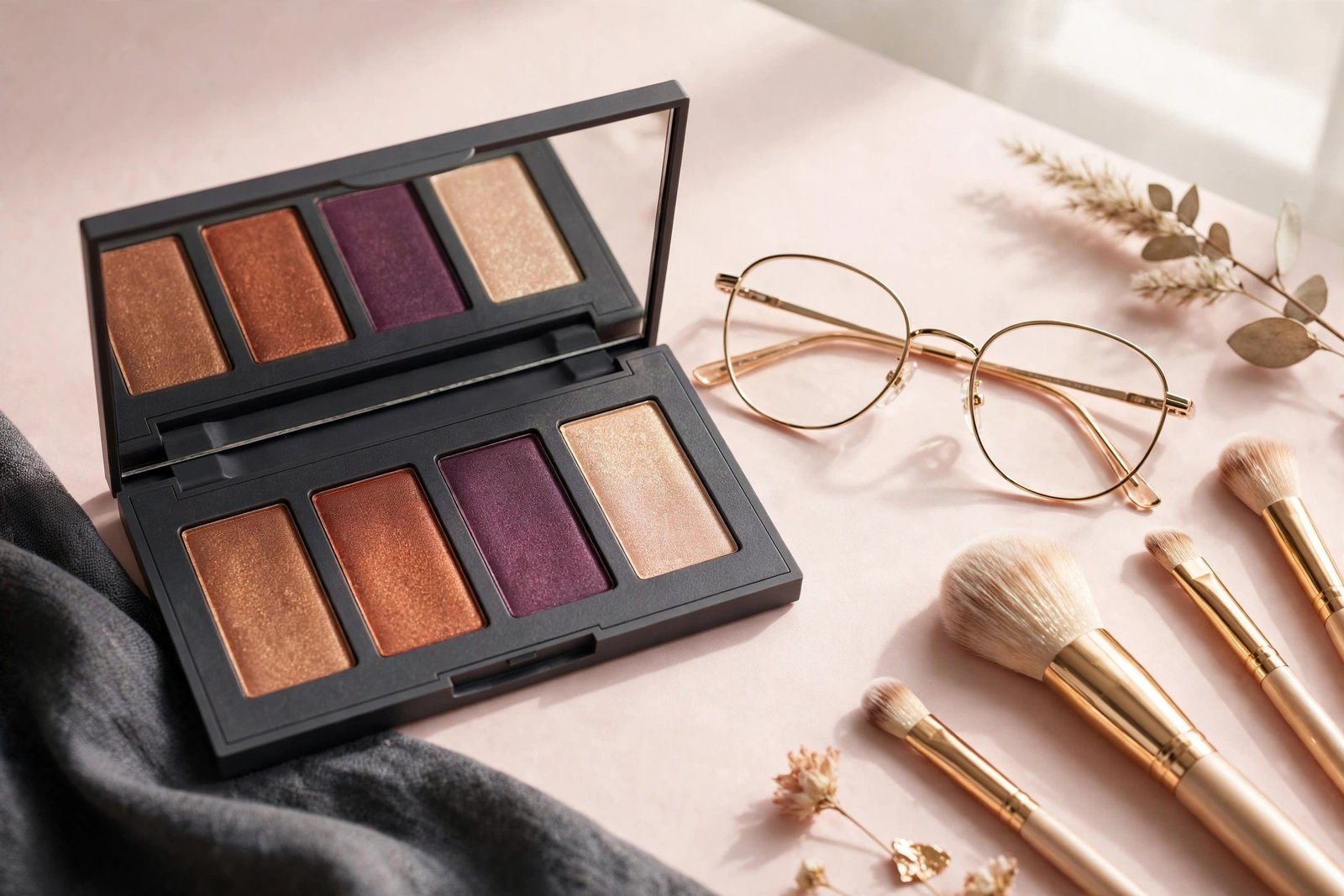
Warm browns, bronzes, taupes, and coppers are the workhorses for glasses wearers. They add warmth and dimension that reads through lenses without fighting your frames, and they suit virtually every eye color. A bronze lid with a deeper brown crease is the single most reliable glasses-wearer eye look.
Plums, mauves, and berries
Plum and mauve shades make eye color pop — especially green and hazel eyes — and they show up beautifully behind both dark and metal frames. They read as polished rather than loud, which makes them ideal for everyday wear.
Soft golds and champagnes
A wash of champagne or soft gold on the lid brightens eyes that minus lenses have minified. Keep the shimmer satin rather than glittery — heavy glitter catches lens glare and can look messy through glass.
Deep jewel tones for evening
Emerald, sapphire, and deep burgundy look striking behind glasses for evening — the lenses actually add a jewel-like depth to saturated color. Build them over a primer and blend edges thoroughly, since plus lenses magnify every harsh line.
Colors to use with caution
- Very pale pastels — they wash out almost completely behind lenses.
- Neon brights — they can clash with frame color and look harsh through glass.
- Heavy black smoky eyes — behind strong minus lenses, an all-dark lid can make eyes recede; if you love the look, keep the inner corner bright.
Techniques That Pop Behind Lenses
Define the crease
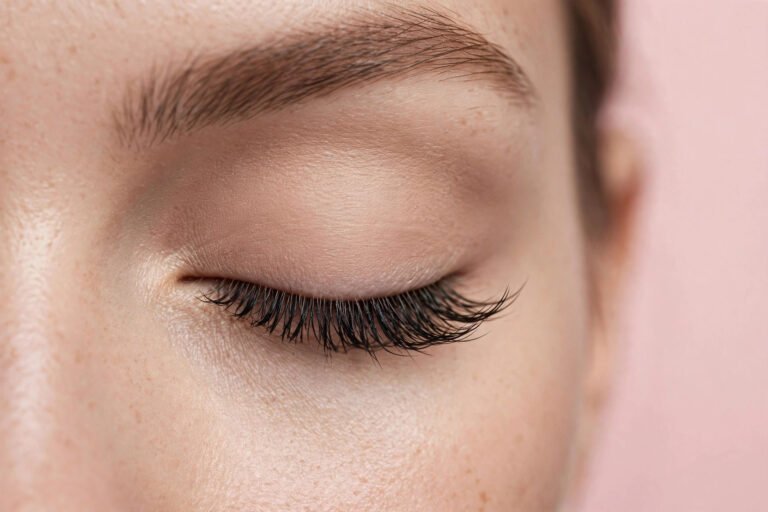
A defined crease gives eyes dimension that flat, one-color lids lack behind glasses. Use a matte shade two to three tones deeper than your skin in the crease, blended upward and outward. This single step does more for glasses wearers than any lid color.
The halo/spotlight placement
Placing the brightest shade at the center of the lid (with deeper shades at the inner and outer corners) creates a rounded, open effect that counteracts minification from minus lenses. It photographs well through glass too.
Brighten the inner corner
A touch of light champagne or pearl at the inner corner opens up the eyes and counteracts the shadows frames cast. This is the highest-impact small step in a glasses-wearer’s routine.
Blend more than you think you need
Proper blending is non-negotiable behind lenses — magnifying plus prescriptions expose every harsh edge. Blend until no hard lines remain, then check with glasses on.
Match intensity to frames
Thick, dark, or oversized frames already bring drama — pair them with softer, well-blended shadow. Thin, light, or rimless frames leave visual room for bolder color and deeper creases.
Adapting to Your Prescription
Strong minus prescription (eyes look smaller): Prioritize brightening — light lids, defined creases, highlighted inner corners, and a crisp liner. Avoid all-matte dark looks that shrink eyes further.
Strong plus prescription (eyes look bigger): Blend meticulously and keep shimmer restrained — magnification emphasizes both harsh edges and glitter fallout. Matte and satin finishes photograph most cleanly.
Mild prescription: You have the most flexibility. Follow the general principles and let your frame style guide intensity.
Crease-Proofing: The Glasses-Wearer Problem
Frames trap body heat and reduce airflow around the eyes, which melts eyeshadow faster — creasing by midday is the norm without prep. The fix:
- Eye primer every time. A dedicated eye primer (not face primer) grips shadow to the lid. Apply up to the brow bone and let it set for 30 seconds.
- Set cream with powder. If you use cream shadow as a base, lock it with a matching powder shade on top.
- Thin layers. Thick layers of shadow migrate; two thin layers outlast one heavy one.
- Powder the oily zones. If your lids run oily, a whisper of translucent powder over the primer adds insurance.
- Waterproof cream options for humid days. On hot or humid days, a waterproof cream shadow as the base layer resists the melt.
Pairing Shadow with Liner and Mascara
Eyeshadow behind glasses works best as part of a trio. Shadow provides the color and dimension, but liner provides the definition that lenses blur — match your liner thickness to your frames with these styles — and curled, smudge-proof mascara keeps lashes visible without transferring to lenses.
A reliable everyday formula: primed lids, warm bronze lid shade, deeper matte crease, brightened inner corner, medium-thickness liner, curled lashes with tubing mascara. It takes ten minutes, survives the lens filter, and works with nearly any frame.
Quick 5-Minute Glasses-Wearer Eye Look
Short on time? This streamlined routine hits every principle above in about five minutes:
- Swipe eye primer over lids and let it set while you do your base.
- Press a warm bronze or copper shade across the lid with a flat brush.
- Sweep a matte brown two tones deeper through the crease with a fluffy brush.
- Dab champagne shimmer at the inner corner with a fingertip.
- Tightline the upper waterline and add one medium coat of tubing mascara to curled lashes.
Put your glasses on, check at arm’s length, and deepen the crease slightly if the color doesn’t read through the lenses. It is a complete, glasses-proof eye look with zero fuss.
Frequently Asked Questions
What eyeshadow color is best for brown eyes behind glasses?
Warm coppers, bronzes, and plums flatter brown eyes and read clearly through lenses. A copper lid with a deep brown crease is a reliable everyday combination that works with most frame colors.
Should I wear shimmer eyeshadow with glasses?
Yes, in moderation. Satin and soft metallic finishes brighten eyes behind lenses; heavy glitter is the problem — it catches lens glare and emphasizes fallout, especially under magnifying plus lenses.
Why does my eyeshadow crease so fast when I wear glasses?
Frames trap warmth and reduce airflow around the eyes, melting shadow faster. An eye primer, thin layers, and setting cream bases with powder solve most creasing for glasses wearers.
Do I need different eyeshadow for thick vs. thin frames?
Adjust intensity, not necessarily color. Bold frames pair with softer, well-blended shadow so the eye area doesn’t look busy; thin or rimless frames leave room for deeper creases and bolder color.
Can I wear a smoky eye with glasses?
Absolutely — just adapt it. Keep the inner corner and center lid brighter than a traditional smoky eye, blend edges thoroughly (plus lenses magnify harsh lines), and pair it with defined liner so the look holds its shape behind the glass.
Conclusion
The best eyeshadow for glasses wearers isn’t a specific palette — it’s an approach: choose colors with enough depth to survive the lens filter, place them to open and define the eye, prime against the extra warmth frames trap, and always do the final check with your glasses on. Warm neutrals, bronzes, plums, and champagnes flatter nearly everyone; crease definition and inner-corner brightness do the heavy lifting; and meticulous blending keeps everything polished under magnification. Get those right, and your eyeshadow won’t just survive your glasses — it’ll shine because of them.
Love this? Pin it for later!