How to Prevent Ingrown Hairs After Shaving: Smooth Skin Guide
If every shave leaves you with red, painful bumps, learning how to prevent ingrown hairs will change your relationship with hair removal. An ingrown hair happens when a shaved hair curls back and grows into the skin instead of up and out. The body treats it as a foreign invader, which is why ingrowns get red, swollen, and sore — and why they are so often mistaken for [body acne → how-to-get-rid-of-body-acne].
The fix is mostly technique: how you prep, how you shave, and how you care for skin afterward. Get those three right and ingrowns become rare instead of routine. This guide covers prevention first, then what to do about the ingrowns you already have.
Key Takeaways
- Ingrown hairs are shaved hairs growing back into the skin — preventable with better technique, not stronger products.
- Exfoliate gently before shaving to clear dead skin that traps emerging hairs.
- Always shave with the grain using a sharp razor and plenty of shaving cream or gel.
- Moisturize and exfoliate between shaves to keep new hairs growing freely.
- Never dig out an ingrown with tweezers or nails — warm compresses and patience are safer.
- Curly, coarse hair is most prone to ingrowns; extra prep and sharp blades matter most there.
What Causes Ingrown Hairs?
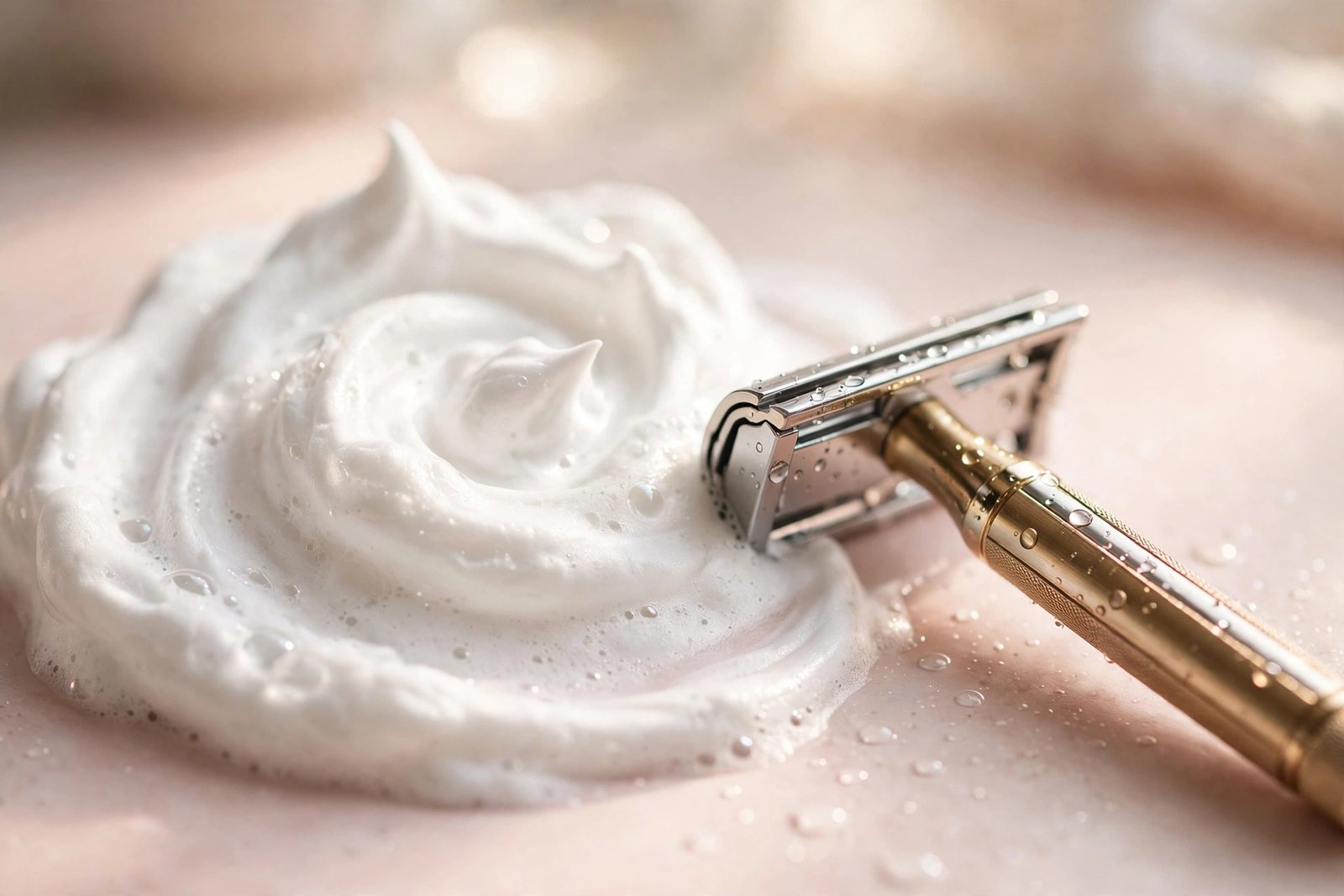
Shaving cuts hair at an angle, leaving a sharp tip. If dead skin cells block the follicle opening, or if the hair is curly enough to loop back, that sharp tip pierces the surrounding skin and grows inward. Inflammation follows — redness, swelling, tenderness, and sometimes a visible trapped hair or pus.
The biggest risk factors:
- Dull razors. A dull blade tugs and tears instead of cutting cleanly, leaving jagged hair tips that pierce skin easily. This is the most common cause.
- Shaving against the grain. Going against hair growth cuts hair shorter and sharper below the skin surface, dramatically raising ingrown risk.
- Dry shaving or too little lubrication. Friction irritates follicles and leaves uneven cuts.
- Skipping exfoliation. Dead skin buildup caps follicles and traps emerging hairs.
- Curly or coarse hair. The curlier the hair, the more likely it is to curve back into the skin. The bikini area and underarms are classic zones for this reason.
- Tight clothing right after shaving. Pressure on freshly shaved follicles pushes emerging hairs sideways.
The Ingrown-Prevention Shaving Routine
Before You Shave: Prep
- Shave at the end of your shower. Warm water and steam soften hair and open follicles for at least 5 minutes before the razor touches skin.
- Exfoliate gently. Use a chemical exfoliant (a salicylic acid or lactic acid body product) or a soft washcloth to remove dead skin from the areas you will shave. This clears the path for hairs to grow out normally. People dealing with bumpy leg texture often find this step helps [keratosis pilaris → how-to-treat-keratosis-pilaris] at the same time.
- Apply generous shaving cream or gel. Never shave on bare skin or with body wash alone. A proper shaving lubricant cushions the blade and reduces tugging.
During the Shave: Technique
- Use a sharp, clean razor. Replace blades after 5 to 7 shaves, or sooner if you feel any tugging. A fresh blade is the single highest-impact change you can make.
- Shave with the grain. Follow the direction of hair growth, using light pressure and short strokes. Against-the-grain passes give a closer shave but multiply ingrown risk — save them only for areas that never get ingrowns.
- Rinse the blade often. A clogged blade drags and cuts unevenly.
- Do not stretch the skin taut. Pulling skin tight lets the blade cut hair below the surface, where it is most likely to become ingrown.
After You Shave: Care
- Rinse with cool water. This calms the skin and closes follicles slightly.
- Moisturize immediately. A fragrance-free, non-comedogenic lotion keeps freshly shaved skin supple so emerging hairs do not get trapped under dry, flaky skin.
- Exfoliate between shaves. Two to three times a week, use a gentle chemical exfoliant on shaved areas — this is the maintenance step that prevents the next round of ingrowns. Salicylic acid is ideal because it works inside the follicle.
- Wear loose clothing after shaving. Give freshly shaved skin a few hours without tight waistbands or synthetic fabrics pressing on it.
How to Treat Existing Ingrown Hairs
For ingrowns you already have, patience beats intervention:
- Warm compress. Hold a warm, damp cloth on the ingrown for 10 to 15 minutes, a few times a day. This softens the skin and often lets the hair surface on its own.
- Gentle exfoliation. A salicylic acid product over the bump helps dissolve the dead skin trapping the hair.
- Do not pick, squeeze, or dig. Tweezing an ingrown out usually breaks the hair below the surface, causes scarring, and risks infection. If you can see the loop of hair above the skin, you may gently lift it with a sterilized needle or tweezers — but never dig into the skin.
- Leave infected ingrowns alone and watch them. If a bump becomes increasingly painful, hot, or swollen, or develops spreading redness, see a doctor or dermatologist — it may need medical treatment.
Ingrowns vs. Acne vs. KP: Quick Guide
Bumps after shaving are frequently misdiagnosed, and wrong treatment wastes weeks:
- Ingrown hairs appear along shave lines within a day or two of shaving, often with a visible trapped hair, and feel tender.
- [Body acne → how-to-get-rid-of-body-acne] appears on the back, chest, and shoulders regardless of shaving, with blackheads and whiteheads mixed in.
- [Keratosis pilaris → how-to-treat-keratosis-pilaris] is dry, rough, non-inflamed texture on the arms and thighs that exists whether or not you shave.
When in doubt, note the timing: bumps that track your shaving schedule are ingrowns.
The Bikini Area Deserves Extra Care
The bikini line is the most ingrown-prone zone on the body: the hair is coarser and curlier, the skin is thin and sensitive, and underwear adds constant friction. The standard routine applies, with a few upgrades:
- Trim first, then shave. Long hair clogs razors and forces multiple passes. Trim with scissors or an electric trimmer before the razor touches skin.
- One pass only. Multiple passes over the same strip multiply irritation and ingrown risk. Accept a slightly less close result here.
- Exfoliate the day before, not the same day. Pre-shave exfoliation the evening before clears dead skin without sensitizing the skin right before the blade.
- Wear breathable cotton underwear after shaving. Give the area a day away from lace and synthetics.
- Consider alternatives for this zone. Many people shave their legs but wax, sugar, or trim the bikini area — matching the method to the zone is smart, not inconsistent.
If bikini-line bumps are frequent and painful despite good technique, that is one of the strongest cases for trying waxing, sugaring, or eventually laser — the areas where ingrowns cost the most comfort are where alternatives pay off fastest.
Alternatives If Shaving Always Causes Ingrowns
If your hair type makes ingrowns nearly unavoidable with a razor:
- Electric trimmers or clippers. They cut hair above the skin surface, which nearly eliminates ingrowns at the cost of a less close result.
- Depilatory creams. They dissolve hair at the surface without sharp tips. Patch-test first — they can irritate sensitive skin.
- Waxing or sugaring. Removes hair from the root, so regrowth has a soft tapered tip. Exfoliate before appointments to prevent new ingrowns.
- Laser hair reduction. The long-term fix for chronic ingrowns — fewer hairs means fewer chances for them to grow inward. Best for dark hair on lighter skin, though newer devices work on more skin tones.
Frequently Asked Questions
How do I stop ingrown hairs permanently?
Laser hair reduction is the closest thing to permanent prevention. Short of that, a consistent routine — sharp razor, with-the-grain shaving, regular chemical exfoliation — reduces ingrowns to rare occurrences.
Should I exfoliate before or after shaving?
Both, gently. Exfoliate before shaving to clear the path, and maintain exfoliation 2 to 3 times weekly between shaves. Skip harsh physical scrubs right after shaving when skin is sensitive.
Can I pop an ingrown hair like a pimple?
No. Squeezing drives inflammation deeper and risks infection and scarring. Use warm compresses and let it resolve, or see a professional if it is infected.
Why do I get ingrowns in my bikini area but nowhere else?
Bikini hair is typically curlier and coarser, the skin is sensitive, and underwear adds friction — a perfect storm. Extra prep, a fresh blade, and with-the-grain passes matter most there.
Does shaving cream actually matter?
Yes. Proper shaving lubricant dramatically reduces friction, tugging, and uneven cuts compared to soap or body wash. It is one of the cheapest upgrades with the biggest payoff.
How often should I replace my razor?
Every 5 to 7 shaves for most blades. If you feel any pulling or need multiple passes, the blade is already too dull.
Smooth, ingrown-free skin comes down to respecting the process: soften, exfoliate, lubricate, use a sharp blade, go with the grain, and moisturize. Master that sequence and ingrowns stop being a shaving tax. If your bumps are not tied to shaving at all, check whether you are dealing with [body acne → how-to-get-rid-of-body-acne] or [keratosis pilaris → how-to-treat-keratosis-pilaris] instead — and make sure your daily cleanse comes from a [body wash suited to your skin’s needs → best-body-wash-for-acne-prone-skin].
body acne pillar guide
keratosis pilaris guide
best body wash for acne-prone skin
Love this? Pin it for later!