Dry Brushing for Cellulite: Does It Actually Work?
If you’ve spent any time on beauty TikTok, you’ve seen the videos: someone vigorously brushing their thighs with a natural-bristle brush, promising that this ancient-feeling ritual will “drain lymphatic fluid,” “break up cellulite,” and leave legs visibly smoother in weeks. Dry brushing has been around far longer than TikTok — it’s rooted in Ayurvedic tradition (garshana) — but its current fame rests on big claims about cellulite. So does dry brushing actually work for cellulite? The honest answer: it won’t erase dimples, but it does a few genuinely useful things for your skin, and many people find the ritual itself worthwhile. Here’s what the practice can and can’t do, how to do it safely, and how it fits into a broader body-care routine.
Key Takeaways
- Dry brushing cannot permanently change cellulite — the dimpling comes from deep fat and connective tissue that a surface brush can’t reach.
- It does exfoliate dead skin cells, leaving skin smoother and helping moisturizers absorb better.
- The massage and friction temporarily boost local circulation, which can make skin look a little firmer for a short time.
- “Lymphatic drainage” claims are overstated — gentle brushing won’t meaningfully detox or drain anything, though it feels invigorating.
- Proper technique matters: always brush gently toward the heart, on dry skin before showering, and moisturize afterward.
- Dry brushing pairs well with body moisturizer — the real visible improvement often comes from the exfoliation-plus-hydration combo.
A quick safety note before you start: be gentle. Dry brushing should feel stimulating, never painful. Aggressive, hard brushing can irritate skin, cause micro-tears, and leave redness or sensitivity that lasts for days — which is the opposite of what you want. Always skip broken, irritated, sunburned, or eczema-prone skin, and avoid brushing over moles, rashes, or any area with an active skin condition. If you have a skin condition or very sensitive skin, check with a dermatologist first. The goal is light, comfortable stimulation — if your skin is bright red or stinging afterward, you’re pressing too hard.
What Dry Brushing Is (and the Claims Around It)
Dry brushing is exactly what it sounds like: using a firm-bristled brush on dry skin, usually before showering, stroking in long movements toward the heart. Traditional practitioners have used versions of it for centuries, and the modern wellness version credits it with exfoliation, improved circulation, lymphatic drainage, “toxin” removal, and cellulite reduction.
Let’s sort these claims honestly. Exfoliation: real — the brush physically sloughs off dead skin cells. Circulation: temporarily real — friction brings blood to the skin’s surface, which is why brushed skin looks pink and feels warm. Lymphatic drainage: mostly overstated — true manual lymphatic drainage is a specific, very light clinical massage technique, and vigorous brushing isn’t it; your lymphatic system drains itself perfectly well without a brush. Toxin removal: not a real thing in this context — your liver and kidneys handle detoxification, and no brush “pulls toxins” through skin. Cellulite reduction: the dimples come from fibrous septae tethering skin to muscle deep beneath the surface, as explained in our complete guide to cellulite and stretch marks — no surface brushing rearranges that structure.
So why do so many people insist it works? Because dry brushing plus the moisturizer you apply afterward genuinely makes skin look and feel better: smoother from exfoliation, more even-toned from increased surface circulation, and better-hydrated because exfoliated skin absorbs lotion more effectively. That’s real, visible improvement — it’s just not cellulite being “broken up.”
What Dry Brushing Can Actually Do for Your Skin
Effective, satisfying exfoliation
This is dry brushing’s strongest, most evidence-backed benefit. The bristles physically remove the layer of dead cells that makes skin look dull and feel rough — particularly on legs, where many people notice the biggest difference. Regular gentle dry brushing (a few times a week) keeps skin consistently smoother than moisturizer alone can, and it’s a good option for people who find chemical body exfoliants irritating. For more on getting exfoliation right, see our guide to exfoliating your body properly.
Temporary circulation boost
The pink flush you see after brushing is increased blood flow to the skin’s surface — real, measurable, and temporary. This can make skin look a little more even-toned and “alive” for a while, which is part of why before-and-after photos look convincing. It’s the same reason any massage makes skin look better briefly. Enjoy it for what it is; don’t mistake it for structural change.
Better moisturizer absorption
Exfoliated skin drinks up lotion and body oil more effectively. This is arguably dry brushing’s most practical benefit: the dry-brush-then-moisturize sequence leaves skin noticeably softer and better-hydrated than moisturizing alone. If you’re using a body oil or firming lotion, brushing first helps you get more out of it — which may be part of why cellulite creams seem to work better with massage. The combination of mechanical exfoliation plus deep hydration is a genuinely effective body-care one-two punch.
A ritual people actually stick with
This sounds soft, but it matters: the best skincare routine is the one you’ll do consistently. Many people find dry brushing’s few-minute ritual — the satisfying strokes, the warm shower after, the lotion to finish — easier to maintain than other body-care steps. And consistent body care, whatever form it takes, beats an abandoned “miracle” product every time. Our body skincare routine guide shows how to fit it into a simple weekly rhythm.
How to Dry Brush Properly: Step-by-Step Technique
Doing it right maximizes the benefits and avoids the irritation:
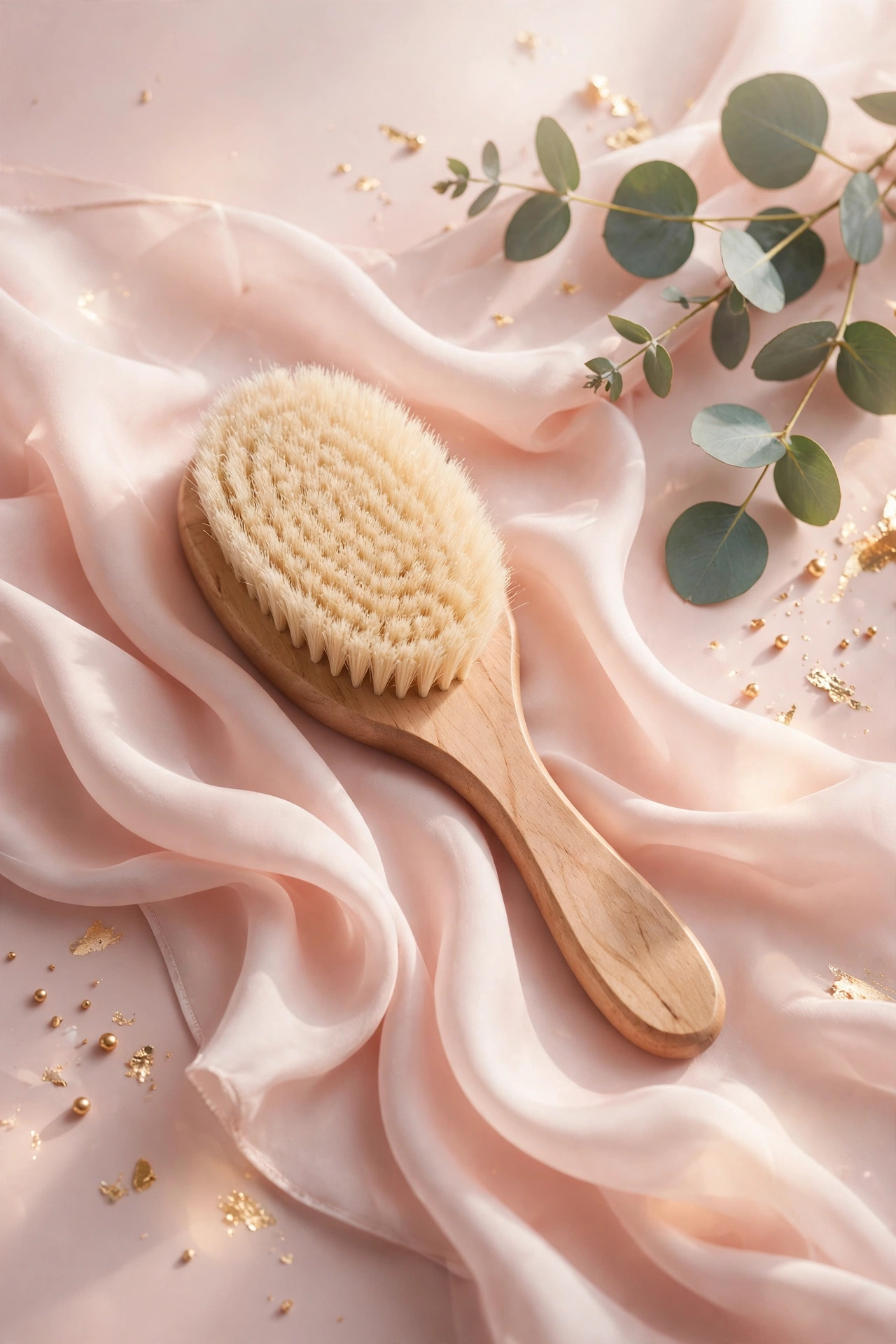
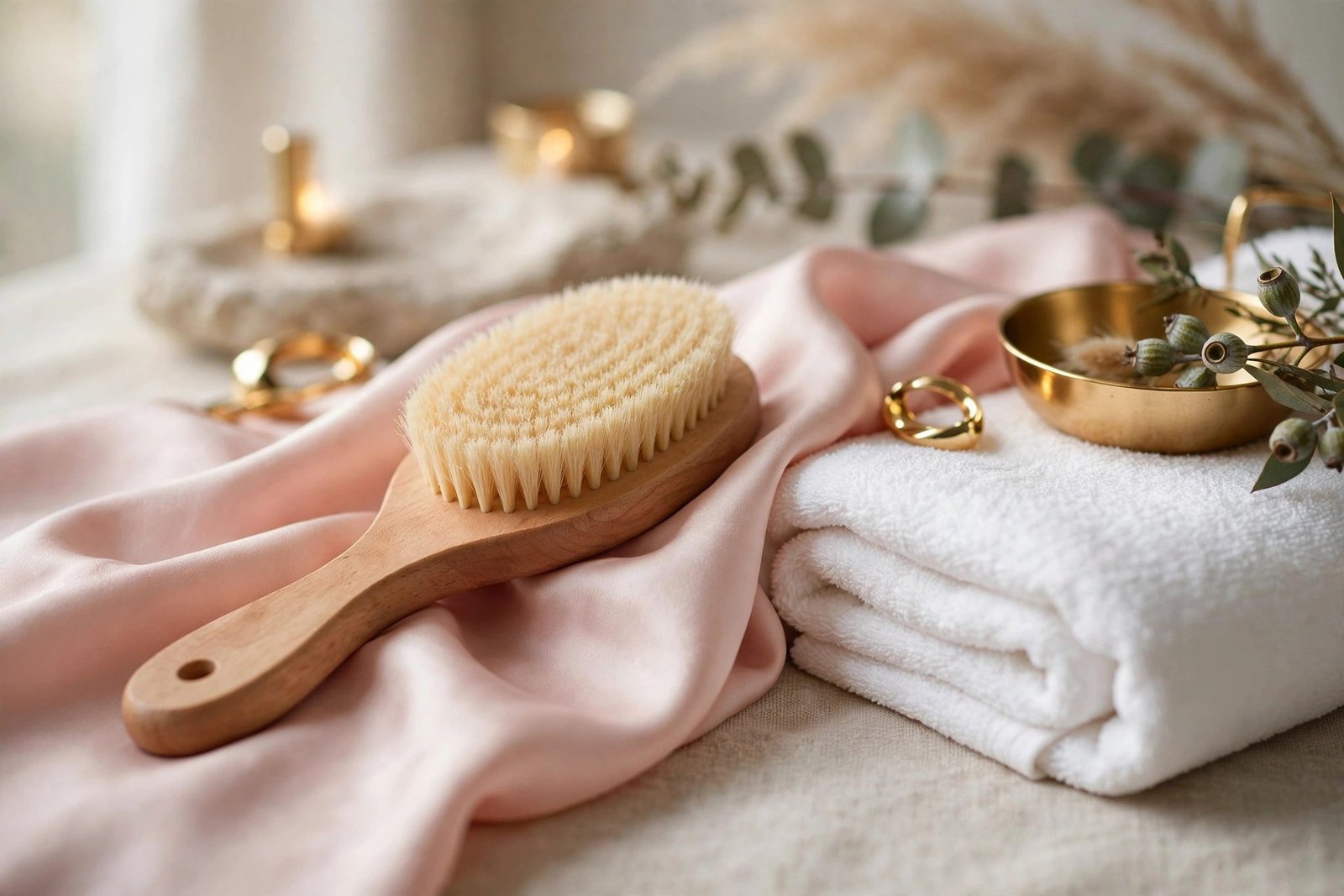
- Choose the right brush. A natural-bristle brush with a long handle (for reaching your back) is the classic choice. Bristles should feel firm but not scratchy — if it hurts on your forearm, it’s too stiff. Replace the brush when bristles start to splay or feel rough.
- Brush on dry skin, before showering. Dry skin exfoliates more effectively than wet skin, and showering afterward rinses away the loosened dead cells.
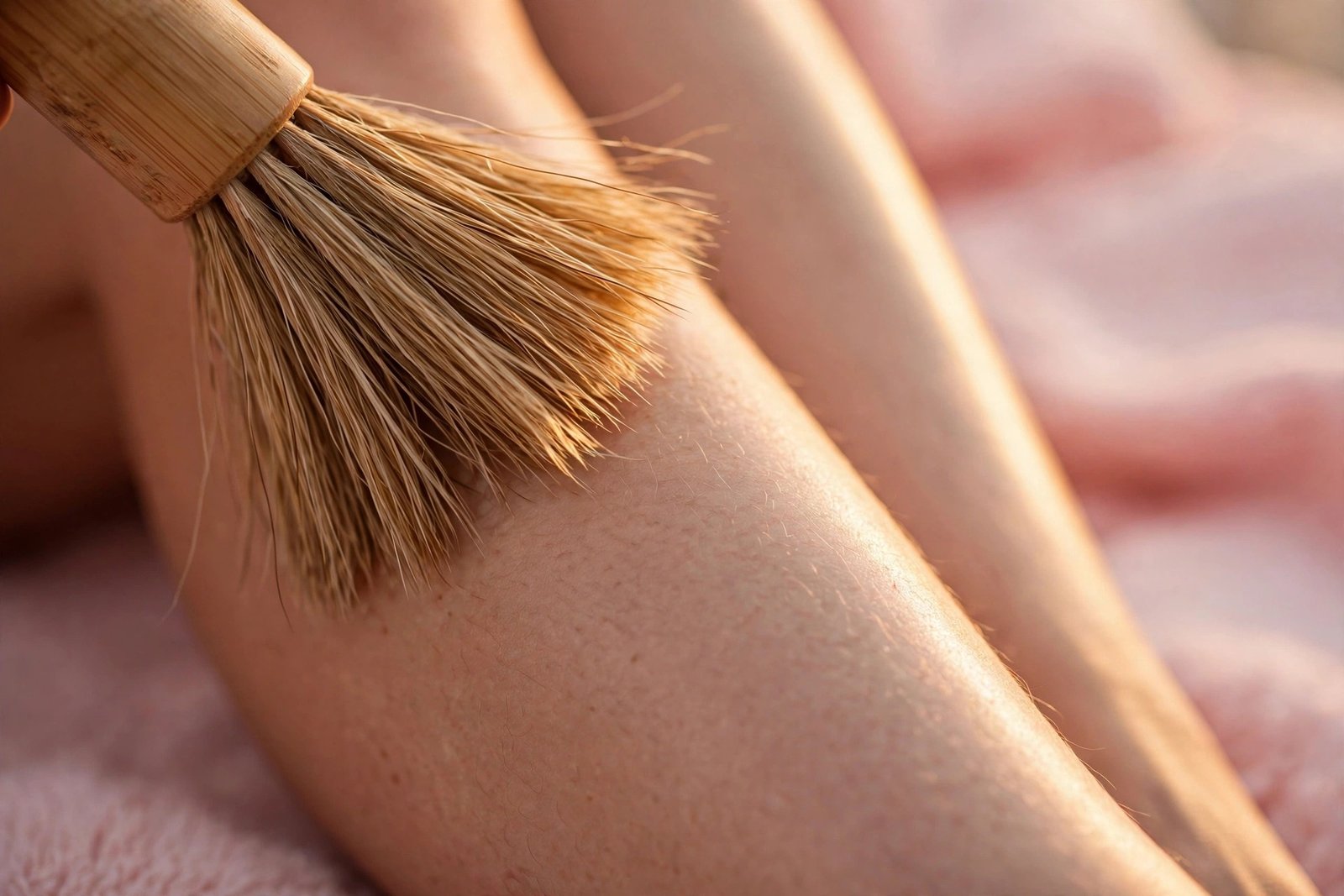
- Use light pressure and long strokes toward the heart. Start at your feet and brush upward in long, smooth strokes — legs, then thighs, then buttocks and hips; hands up the arms toward the shoulders; gentle clockwise circles on the belly. “Toward the heart” follows the direction of venous and lymphatic flow.
- Go easy on sensitive areas. Use very light pressure on the inner thighs, chest, and neck — or skip them. Never brush your face with a body brush.
- Keep sessions short. Three to five minutes is plenty. This isn’t a workout; more pressure and more time don’t give better results.
- Shower, then moisturize immediately. Rinse off, pat dry, and apply body lotion or oil while skin is still slightly damp to lock in hydration.
Frequency: two to three times per week is enough for most people. Daily brushing is fine if your skin tolerates it and you keep pressure light, but more isn’t better — over-brushing leads to the irritation we’re trying to avoid.
Dry Brushing vs. Other Cellulite Approaches
How does dry brushing stack up against the other things people try for cellulite? Honestly, they’re all in the same category: cosmetic, temporary improvement rather than structural change. Cellulite creams offer a similar kind of short-term smoothing, mostly through hydration and massage. Caffeine scrubs combine exfoliation with a temporary tightening effect. Professional treatments (acoustic wave therapy, subcision, certain lasers) are the only options that address the underlying structure — and they’re expensive.
Where dry brushing wins is cost and sustainability: a $15 brush lasts for months, the routine takes five minutes, and the exfoliation benefit is genuine regardless of cellulite. Where it loses is expectations — if you’re brushing furiously every day waiting for dimples to vanish, you’ll be disappointed, and you may irritate your skin in the process. Judge dry brushing as exfoliation and self-care, and it’s excellent. Judge it as a cellulite cure, and it fails like everything else in that category.
Common Mistakes to Avoid
- Brushing too hard. The number-one mistake. Pressing harder doesn’t reach deeper tissue — it just damages the surface. Light, comfortable strokes are the entire point.
- Brushing irritated or broken skin. Skip sunburns, rashes, eczema patches, ingrown hairs, cuts, and any area that’s already red or sensitive. Brushing over these makes everything worse.
- Skipping moisturizer afterward. Dry brushing without following up with lotion or oil leaves freshly exfoliated skin exposed and can cause dryness. The post-brush moisturize is non-negotiable.
- Sharing brushes or never cleaning yours. Rinse your brush regularly and let it dry bristles-down; a damp brush left in the shower grows bacteria. Replace it every 6–12 months.
- Expecting cellulite to disappear. Set the right expectation from day one: smoother, better-hydrated, nicer-feeling skin — yes. Erased dimples — no.
Frequently Asked Questions
How long until I see results from dry brushing?
Skin usually feels smoother after the first session and looks a bit more even-toned within a week or two of consistent use (2–3 times per week). But “results” here means better exfoliation and hydration — not cellulite reduction, which dry brushing can’t deliver regardless of how long you do it.
Is dry brushing better in the morning or at night?
Either works — it’s personal preference. Morning brushing feels energizing (the circulation boost wakes skin up); evening brushing fits naturally before a shower and nighttime moisturizing. Consistency matters far more than timing.
Can dry brushing help with ingrown hairs?
It can help prevent them: regular gentle exfoliation keeps dead skin from trapping hairs, particularly on legs and the bikini line. But don’t brush directly over active, inflamed ingrowns — that irritates them further. Exfoliate around them, moisturize, and let inflamed spots calm down first.
Should I dry brush if I have sensitive skin or eczema?
Be cautious. If your skin is generally sensitive, use the softest brush you can find and the lightest pressure, and test on a small area first. If you have active eczema, psoriasis, or any diagnosed skin condition, skip dry brushing on affected areas — and ask your dermatologist before starting. Aggravating a flare isn’t worth the exfoliation.
Does dry brushing really drain the lymphatic system?
Not in any meaningful clinical sense. True lymphatic drainage is a specialized, feather-light massage technique used therapeutically; vigorous brushing with a bristle brush isn’t it. Your lymphatic system functions fine on its own. Dry brushing feels invigorating and boosts surface circulation, which is real — but “detox” and “drainage” claims are marketing stretch.
What should I put on my skin after dry brushing?
A good body moisturizer or body oil, applied while skin is still slightly damp from the shower. Exfoliated skin absorbs products better, so this is the moment your lotion works hardest. Any rich cream or oil you like will do — the key is doing it every time you brush.
The Honest Bottom Line on Dry Brushing
Dry brushing for cellulite is a classic case of a good ritual wrapped in oversized claims. It will not break up cellulite, drain toxins, or remodel your thighs — the anatomy simply doesn’t work that way, and no amount of enthusiastic TikTok testimonials changes it. But as a body-care practice, it’s genuinely worthwhile: effective exfoliation, a temporary circulation glow, better moisturizer absorption, and a five-minute ritual that makes consistent skincare easy. Do it gently, skip irritated skin, always moisturize after, and judge it for what it actually delivers. Paired with a solid body skincare routine, it’s one of the simplest upgrades you can make to how your skin looks and feels — dimples and all.
Love this? Pin it for later!