How to Hide Scalp Visibility (7 Instant Fixes)
Few things chip away at confidence like looking in the mirror and noticing more scalp showing through than you remember. Whether it’s a widening part, a thinning crown, or hair that simply lies too flat against the head, scalp visibility is one of the most common — and most fixable — hair concerns. Most cases aren’t as noticeable to others as they are to you, but that doesn’t mean you should just live with it.
The good news: you don’t need to wait months for regrowth to look like you have thicker hair. The fixes below work today, with products and styling tricks that camouflage visible scalp instantly. Some take seconds; none require salon appointments. And alongside these quick fixes, there are longer-term strategies for the complete guide to making thin, fine hair look thicker starting today that build density over time.
Key Takeaways
- Scalp visibility is usually caused by fine hair texture, a widening part, or flat styling — not always by hair loss.
- The fastest camouflage comes from hair fibers, scalp concealers, and changing your part.
- Volume at the roots hides more scalp than any product alone.
- Persistent, sudden, or patchy thinning deserves a dermatologist’s evaluation.
Why You’re Seeing More Scalp
Before fixing it, it helps to know why it’s happening. Scalp visibility has a handful of common causes, and the fix works best when it matches the cause.
Fine hair texture. If each strand is thin, even a full head of hair can let light through to the scalp. This is genetic and incredibly common — fine hair simply covers less surface area per strand.
A deep, unchanging part. Wearing the same straight center or side part for years trains hair to lie flat along that line, and the part gradually looks wider as hair settles.
Flat styling. Sleek blowouts, heavy conditioners, and oils applied at the roots all press hair against the scalp, maximizing visibility.
Actual thinning. Gradual shedding or a widening part can signal the causes of excessive shedding and how to slow it down. If you’re noticing more hair in the shower drain alongside the visible scalp, read that guide next.
Knowing your cause helps you pick the right fix below — but honestly, most of these tricks work regardless.
Fix 1: Move Your Part
This is the fastest fix of all and takes about ten seconds. A deep, straight part creates a single visible line of scalp; softening it instantly breaks up that line.
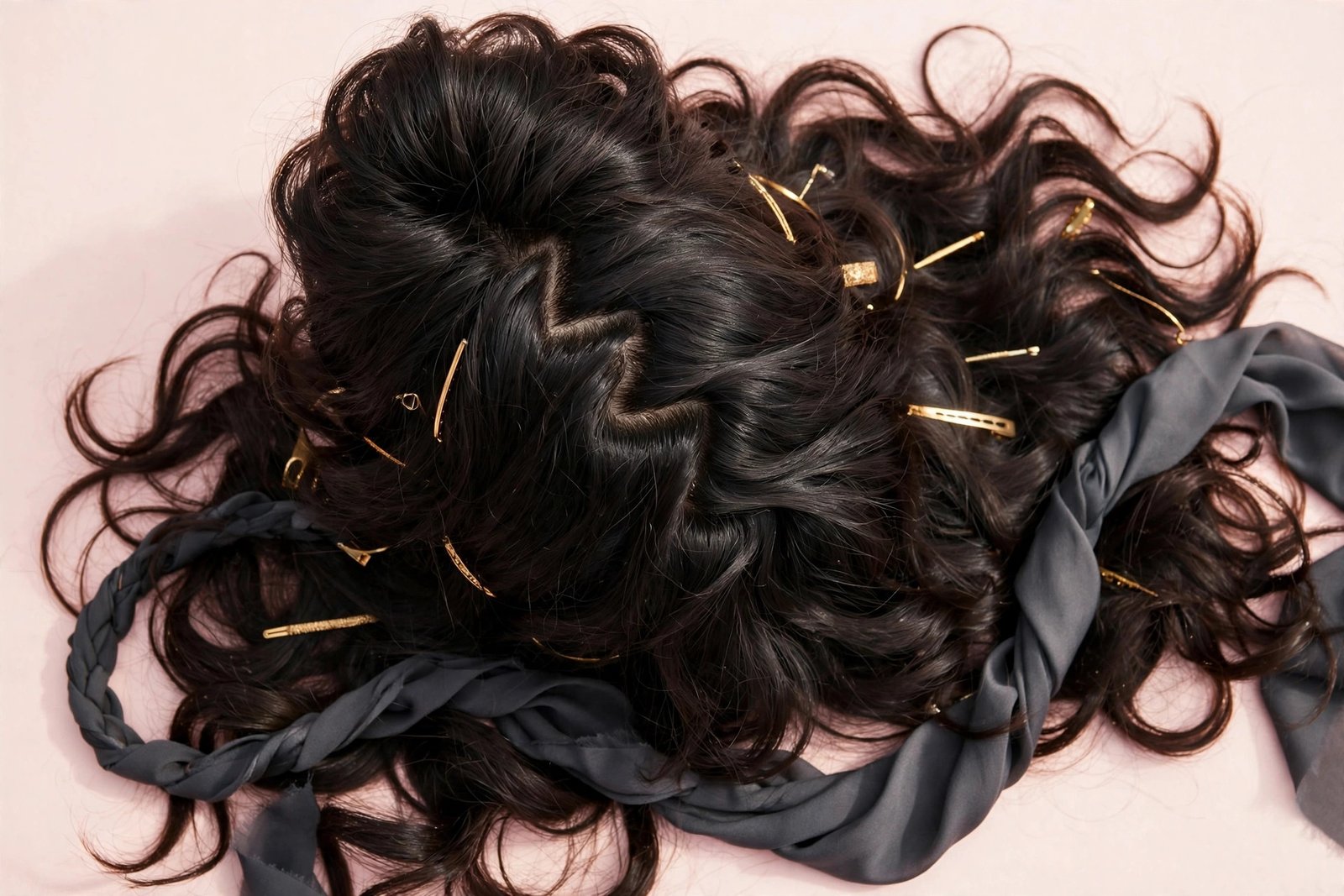
Try a zigzag part instead of a straight one: use the tip of a tail comb to zigzag hair left and right along your part line. The alternating direction scatters the scalp line so there’s no single visible track. It also adds natural-looking volume at the crown, since hair lifted in opposing directions stands up better.
Alternatively, flip your part to the opposite side for a day. Hair that’s been trained in one direction lifts with more bounce when redirected, and the unfamiliar part looks instantly fuller. For persistent part-line visibility, pair this trick with the broader strategies in the complete volume guide for thin, fine hair.
Fix 2: Try Hair Fibers
Hair thickening fibers are tiny keratin fibers that cling to existing strands via static charge, making each hair look thicker and filling in the gaps where scalp shows through. They take under a minute to apply and the effect is genuinely dramatic.
Shake the fibers onto thinning areas, then gently pat — don’t rub. Focus on the part line, the crown, and anywhere scalp peeks through. Most formulas resist wind, rain, and sweat but wash out with shampoo, so there’s no commitment.
Choose a shade slightly darker than your hair if you’re between colors; it blends more naturally than a perfect match. And if you want the full rundown — how fibers work, application tricks, and their honest limits — see the honest guide to hair thickening fibers.
Fix 3: Add Root Volume
Here’s the physics: the flatter hair lies against your head, the more scalp shows. Lift at the roots and visibility drops immediately, because lifted hair casts tiny shadows and overlaps itself, blocking the view of the scalp.
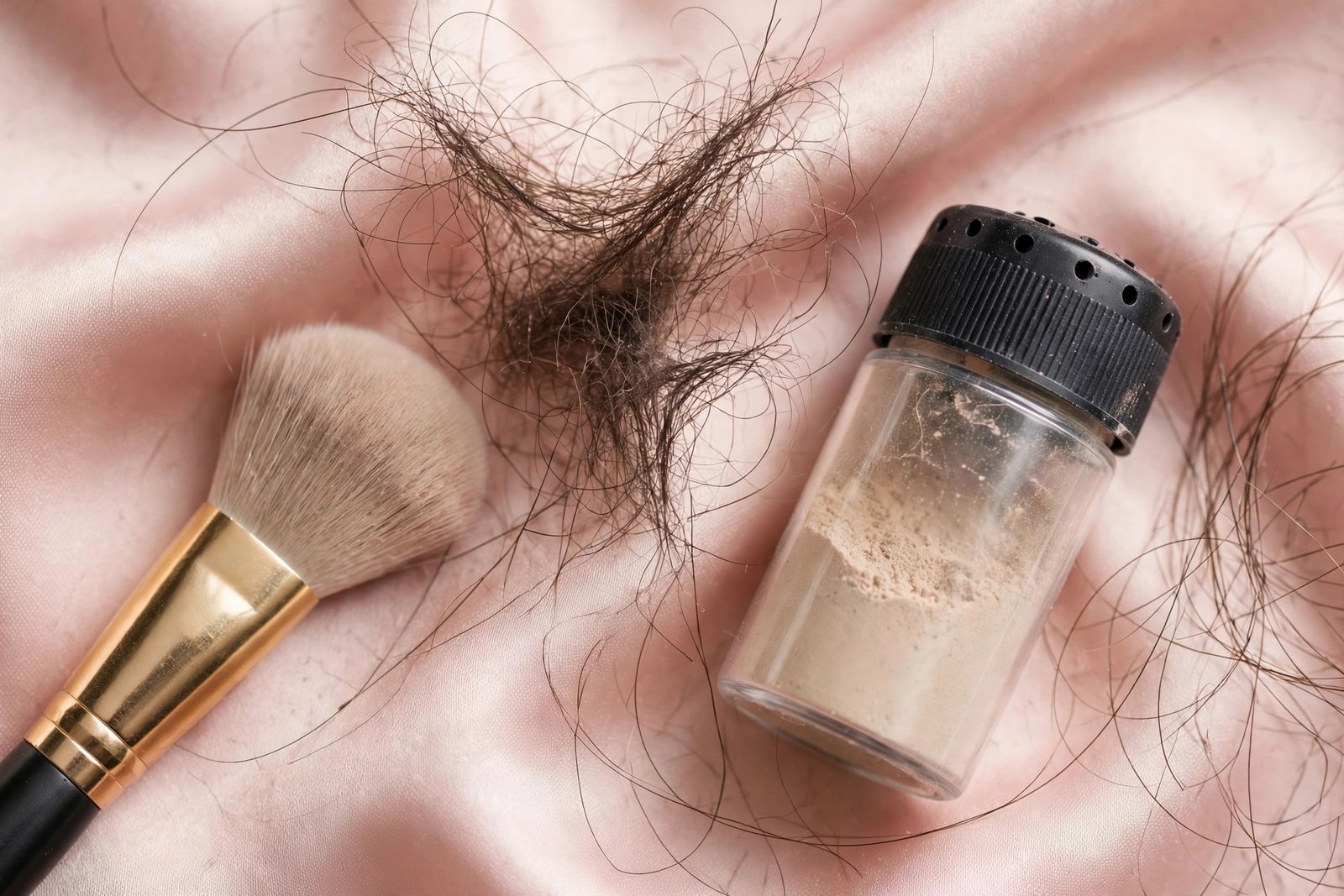
The simplest method: flip your head upside down and blast roots with a blow dryer on medium heat for 60 seconds. Add a volumizing mousse to damp roots first for longer-lasting lift. Root-lifting powders — those little shaker bottles — are also excellent; sprinkle at the roots, massage in, and the texture keeps hair standing.
Avoid heavy serums and oils at the roots entirely. They glue hair to the scalp and undo every bit of lift. For product recommendations that add body without weight, see the best volumizing products for fine hair.
Fix 4: Use a Scalp Concealer or Root Touch-Up Powder
Pressed-powder concealers designed for the scalp work like eyeshadow for your part line. Dab them along the part, the hairline, and the crown with a small brush or the included applicator, and the visible scalp line fades into the hair color.
This fix is ideal for darker hair, where contrast between hair and scalp is starkest, but brands now make shades from platinum blonde to black. Root touch-up sprays work too, though powders give more precise control and last longer through the day.
Keep one in your bag for touch-ups — a quick dab at the crown before evening plans takes five seconds and makes a visible difference.
Fix 5: Style for Coverage
Certain hairstyles hide scalp far better than others. The principle: anything that breaks up straight lines and adds texture covers more.
- Soft waves or curls. Texture overlaps strands and hides scalp far better than straight styles. Even loose heatless waves change the equation.
- A side-swept style. Sweeping the front section across the forehead disguises a thinning hairline and wide part simultaneously.
- Half-up styles with crown teasing. Gentle backcombing at the crown (then smoothing the top layer over it) creates a cushion that hides the crown’s scalp.
- Low buns with face-framing pieces. Pulling hair back loosely with soft pieces left out around the face disguises temples and the hairline.
What to avoid: super-sleek pulled-back styles, severe center parts, and anything that stretches hair taut against the scalp.
Fix 6: Cut Strategically
The right haircut can do more for scalp visibility than most products. Blunt ends create the illusion of density — wispy, heavily layered ends taper away and let scalp show through between strands.
For fine or thinning hair, stylists generally recommend:
- A blunt bob or lob. One-length ends stack up and look thick.
- Long layers only, not short ones. Short layers remove weight from the crown area, which is exactly where you need coverage.
- Avoid razor cuts. Razors thin out the ends, which works against you.
- Consider bangs. A soft fringe adds hair to the front of the head, covering the hairline and making the overall head of hair look fuller.
If you’re unsure what suits your face, a consultation with a stylist who has experience with fine hair is worth it — bring photos of cuts you like.
Fix 7: Color for the Illusion of Density
Hair color can fake fullness surprisingly well. Highlights and lowlights create dimension: the interplay of light and dark tones makes hair look deeper and denser than a single flat color.
Root shadow or a slightly darker root area reduces the contrast between scalp and hair, which is what makes scalp so visible on darker hair. Balayage with depth at the roots works the same way.
Conversely, avoid going too dark all over if your scalp is light — maximum contrast between hair and scalp makes any visibility more obvious. A shade closer to your natural root color usually looks fuller.
When to See a Dermatologist
Quick fixes are wonderful, but some situations call for professional evaluation:
- Sudden, rapid shedding — losing noticeably more hair over weeks, not months.
- Patchy loss — smooth, round bald spots or a distinctly widening part with miniaturized hairs.
- Scalp symptoms — itching, burning, pain, scaling, or redness alongside thinning.
- Loss with other changes — fatigue, weight changes, or hormonal shifts.
A dermatologist can distinguish between telogen effluvium, androgenetic alopecia, and other causes — and treatment works best when started early. The cosmetic fixes above still help while you wait for an appointment.
Frequently Asked Questions
Does scalp visibility always mean hair loss?
No. Many people with perfectly healthy, full heads of hair see scalp simply because their strands are fine, their part is deep, or their styling presses hair flat. That said, if the visibility is increasing over time or comes with extra shedding, it’s worth investigating with a guide to controlling hair fall or a dermatologist.
Will hair fibers damage my hair?
No evidence suggests fibers damage hair. They’re cosmetic keratin particles that sit on the strand’s surface and wash out with shampoo. They don’t clog follicles in normal use, though it’s smart to wash them out before bed rather than sleeping in them night after night.
How long do scalp concealers last?
Powder concealers typically last through the day and survive light sweat, but they transfer onto pillowcases and hats. They’re a daytime fix — apply in the morning, and you’ll be covered until your next wash.
Can I use dry shampoo to hide scalp visibility?
Dry shampoo helps indirectly: it adds gritty texture at the roots, which lifts hair and absorbs the oils that make hair lie flat. It’s not a concealer, but it’s a useful supporting player — especially on second-day hair.
Is it better to part hair on the side or in the middle for thin hair?
A slightly off-center or side part usually hides scalp better than a severe center part, because it creates more overlap at the crown. But the zigzag technique works with any part placement — the key is breaking up the straight line.
Conclusion
Seeing scalp doesn’t have to define how you feel about your hair. With a zigzag part, hair fibers, root volume, and smart styling, you can walk out the door today looking like you have significantly denser hair — and keep it that way while you work on longer-term density with the thin, fine hair volume guide. Start with one fix, see the difference in the mirror, and build from there. Your hair is doing its best; these tricks just help it show.
Love this? Pin it for later!