How to Minimize Large Pores: What Actually Works (and What Doesn’t)
Few skincare frustrations are as persistent as large pores. You can cleanse religiously, moisturize diligently, and still see those tiny openings staring back at you every time you look in the mirror — especially across the nose, cheeks, and forehead. The beauty industry has sold countless “pore-shrinking” promises, but most of them collapse under a single honest fact: pores cannot physically shrink.
That doesn’t mean you’re stuck. Pores can absolutely look smaller — dramatically smaller — when they’re clean, unclogged, and surrounded by firm, well-exfoliated skin. The difference between a pore that looks like a crater and one that’s nearly invisible usually comes down to what’s inside it (sebum, dead skin, debris) and the condition of the skin around it (collagen levels, sun damage, oil production).
This guide covers everything honestly: why pores look large, the science-backed ingredients that genuinely refine their appearance, the habits that make them worse, and the myths to stop believing. No “I tested this for 30 days” stories — just research-based guidance you can trust.
Why Do Pores Look Large? The Real Causes
Pores are simply the openings of hair follicles, and everyone has them. But several factors determine whether they’re barely visible or noticeably enlarged:
Genetics. The single biggest factor. Pore size is largely inherited — if your parents have visible pores, you likely will too. This is the part you can’t change, and accepting it saves a lot of wasted money on miracle products.
Excess oil production. Oily skin stretches pores. When sebaceous glands produce abundant sebum, the pore opening widens to accommodate the flow. This is why large pores are most common on the T-zone, where oil glands are densest.
Clogged pores. A pore filled with sebum, dead skin cells, and debris looks significantly larger than a clean one — sometimes two to three times the diameter. This is actually good news, because it’s the most fixable cause.
Sun damage. UV radiation breaks down collagen and elastin, the structural proteins that keep skin firm and pores tight. As the surrounding skin loses support, pores sag and appear larger. Dermatologists consistently identify sun protection as one of the most effective long-term strategies for pore appearance.
Aging. Collagen production declines with age (roughly 1% per year after your twenties), and pores gradually lose the firm scaffolding around them. What looked like a small pore at 22 can look noticeably larger at 40, even with identical skincare.
Hormonal fluctuations. Androgens stimulate oil glands, which is why pores often look larger during puberty, around menstruation, or during other hormonal shifts. For a deeper look at one common hormonal skin concern, see our guide to understanding blackheads and clogged pores.
The Honest Truth: Pores Don’t “Shrink”
Let’s be direct: no cream, serum, device, or treatment can permanently reduce the physical size of your pores. Pores aren’t muscles — they can’t contract. Any product claiming to “shrink,” “close,” or “erase” pores is using marketing language, not dermatology.
What products can do:
– Clear debris from inside pores, making the opening look smaller
– Reduce oil production, so pores aren’t constantly stretched
– Exfoliate the pore lining, preventing the buildup that widens them
– Boost collagen around pores, giving them firmer structural support
– Temporarily tighten skin (astringents), creating a short-lived refined look
That temporary tightening deserves a note: many “pore-minimizing” toners rely on alcohol or witch hazel to create a brief tightening sensation. The effect fades within hours and the alcohol can dry out skin, potentially triggering more oil production. Short-term cosmetic tricks have their place (especially before events), but they aren’t a strategy.
The strategies below are the ones with genuine evidence behind them.
9 Science-Backed Ways to Minimize Large Pores
1. Niacinamide (Vitamin B3)
Niacinamide is arguably the best-studied topical ingredient for pore appearance. Research shows it regulates sebum production, strengthens the skin barrier, and improves skin elasticity — all of which make pores look smaller. A widely cited study found that 2% niacinamide reduced sebum excretion rates, and higher concentrations (4–5%, common in serums) are standard for visible pore refinement.
How to use it: Apply a niacinamide serum (4–10%) after cleansing and before moisturizer, once or twice daily. It’s well-tolerated by most skin types and plays nicely with other actives. Results typically become visible after 8–12 weeks of consistent use — this is a long game, not an overnight fix.
2. Salicylic Acid (BHA)
Salicylic acid is oil-soluble, which gives it a unique advantage: unlike water-soluble AHAs that work on the skin’s surface, BHA penetrates into the pore itself, dissolving the sebum and dead skin cells clogging it from within. A decongested pore is a smaller-looking pore.
How to use it: A 2% salicylic acid leave-on exfoliant (liquid or gel) used 2–3 times per week is the standard recommendation. Daily use is fine for very oily skin but can irritate drier types. Always follow with moisturizer, and don’t layer it with strong retinoids on the same night until your skin is accustomed to both.
3. Retinoids
Retinoids (retinol, retinal, tretinoin) are the gold standard for long-term pore improvement. They work on multiple fronts: increasing cell turnover (so pores stay clear), boosting collagen production (firming the skin around pores), and normalizing oil gland function. Few ingredients address as many pore-widening factors simultaneously.
How to use it: Start with a low-strength retinol (0.25–0.3%) 2–3 nights per week, applied to dry skin after cleansing. Increase frequency gradually over weeks. Expect some initial dryness or flaking — that’s normal. Consistent retinoid use for 6+ months produces the most dramatic pore refinement, as collagen remodeling takes time.
Important: Retinoids increase sun sensitivity. Daily sunscreen isn’t optional when using them — it’s mandatory.
4. Daily Sunscreen (Non-Negotiable)
If you do nothing else from this list, wear sunscreen. UV damage is one of the primary drivers of enlarged-looking pores over time, and it’s entirely preventable. A broad-spectrum SPF 30+ applied every morning protects the collagen that keeps pores looking tight.
Choose a lightweight, non-comedogenic formula — heavy sunscreens can themselves clog pores and defeat the purpose. Gel or fluid sunscreens tend to work best for pore-prone skin. Reapply if you’re outdoors for extended periods.
5. Clay Masks (Weekly Decongesting)
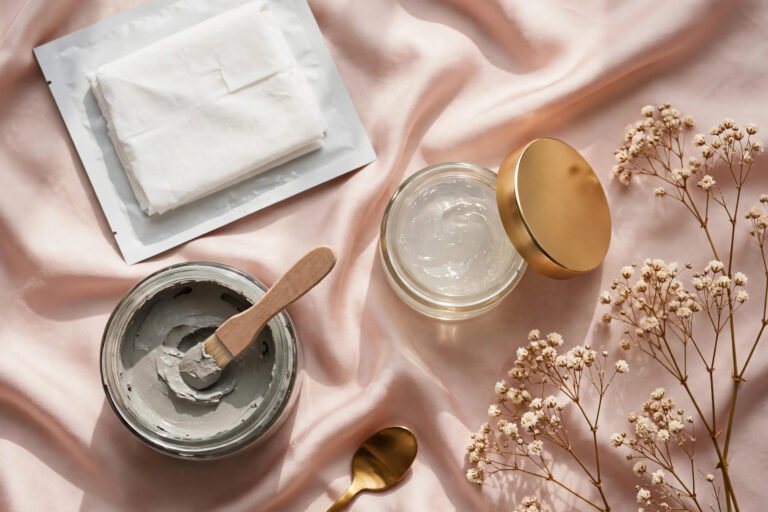
Kaolin and bentonite clays absorb excess oil and draw impurities from pores, giving an immediately refined appearance. They’re a genuinely effective weekly treatment — not because they “shrink” pores, but because they empty them.
How to use it: Apply a thin layer to the T-zone (or full face for oily skin) once per week, leaving it on for 10–15 minutes. Don’t let it dry completely and crack — that’s unnecessarily irritating. Rinse while it’s still slightly damp. Our guide to clay masks and the famous tingle explains what that pulsating sensation means and whether it’s normal.
6. Double Cleansing
If you wear sunscreen and makeup daily, a single cleanse often leaves residue in pores. Double cleansing — an oil-based cleanser first to dissolve sunscreen, makeup, and sebum, followed by a water-based cleanser — ensures pores are genuinely clean. The oil-cleansing step is particularly effective at loosening the sebum plugs that widen pores, especially around the nose. Our detailed blackhead routine includes an oil-cleansing massage method worth trying.
7. Gentle, Consistent Exfoliation
Beyond BHA, regular exfoliation prevents the dead-skin buildup that stretches pores. The key word is gentle — over-exfoliating damages the barrier, triggers inflammation, and can make pores look worse. Two to three exfoliating sessions per week (chemical, not harsh scrubs) is plenty for most people.
Avoid gritty physical scrubs on pore-prone areas. They create micro-tears and irritation without effectively clearing inside the pore, where the actual problem lives.
8. Keep Skin Hydrated (Yes, Even Oily Skin)
Dehydrated skin overproduces oil to compensate — and more oil means more stretched pores. Using a lightweight, non-comedogenic moisturizer keeps oil production balanced. Look for gel or lotion textures with humectants like hyaluronic acid and glycerin rather than heavy occlusives.
This is one of the most common mistakes people with large pores make: stripping the skin with harsh cleansers and skipping moisturizer, then wondering why pores look larger than ever.
9. Professional Treatments (For Stubborn Cases)
When topicals plateau, in-office treatments can help:
– Chemical peels (medium-depth) provide intensive exfoliation and collagen stimulation.
– Microneedling creates controlled micro-injuries that trigger collagen remodeling around pores.
– Laser treatments (like fractional lasers) tighten skin and improve pore appearance significantly, though they require downtime and budget.
These aren’t necessary for most people, but they’re worth knowing about if genetics have given you particularly prominent pores and topical routines aren’t enough.
What Doesn’t Work: Pore Myths to Stop Believing
“Ice closes pores.” Cold can temporarily constrict blood vessels and create a brief tightening sensation, but it doesn’t change pore structure. Rubbing ice on your face is a short-lived cosmetic trick, not a treatment.
“Pore strips shrink pores.” Pore strips remove surface debris (and sometimes more than you’d like). They don’t change pore size, and aggressive use can irritate skin and damage surrounding tissue. Our honest breakdown of whether pore strips actually work covers the real risks dermatologists warn about.
“Lemon juice / apple cider vinegar tightens pores.” These DIY acids are uncontrolled in strength and pH. They can cause chemical burns, irritation, and sun sensitivity. There’s no evidence they affect pore size, and the risks are real.
“Toothpaste on pores.” Toothpaste contains irritants (menthol, sodium lauryl sulfate, baking soda) designed for teeth, not skin. It dries out the surface, creating an illusion of tightening while potentially causing contact dermatitis.
“You can steam pores open and ice them closed.” Pores don’t have muscles to open and close. Steam loosens debris (helpful before extraction or masking), but the “opening and closing” framing is a myth.
“Blackhead extractor tools are safe for daily use.” Frequent aggressive extraction traumatizes pores, potentially stretching them permanently — the opposite of the goal. If extractions are needed, they’re best done occasionally, gently, and on properly prepped skin.
Building Your Pore-Minimizing Routine
Consistency beats intensity. Here’s a practical framework:
Morning:
1. Gentle cleanser (gel or foaming, non-stripping)
2. Niacinamide serum
3. Lightweight moisturizer
4. Broad-spectrum SPF 30+
Evening:
1. Oil cleanser (first cleanse)
2. Gentle water-based cleanser (second cleanse)
3. BHA exfoliant (2–3x per week) or retinoid (alternate nights — don’t stack them initially)
4. Niacinamide serum (optional second application)
5. Moisturizer
Weekly: Clay mask on the T-zone, 10–15 minutes.
Makeup days: A blurring primer creates an instantly refined look while your skincare does the long-term work. Our guide to the best primers for large pores breaks down which formulas actually blur texture versus just claiming to.
Give any new routine at least 8–12 weeks before judging results. Pore appearance changes slowly because it depends on cell turnover cycles and collagen remodeling — both measured in months, not days.
Pore Appearance by Skin Type: Tailoring Your Approach
The same pore-refining principles apply to everyone, but the emphasis shifts by skin type:
Oily skin benefits most from oil regulation. Prioritize niacinamide and BHA, choose gel moisturizers and gel sunscreens, and consider blotting papers or a silica-based mattifying product midday rather than adding more layers. Oily skin also tolerates more frequent exfoliation — up to 4x weekly BHA is reasonable if there’s no irritation.
Dry skin needs a gentler hand. Large pores on dry skin are often more about collagen loss and sun damage than oil, so retinoids and sunscreen matter most. Use BHA sparingly (1–2x weekly) and buffer retinoids with moisturizer to avoid the dryness-inflammation cycle that paradoxically makes pores look worse.
Combination skin calls for zone treatment: BHA and clay masks on the oily T-zone, gentler care on drier cheeks. There’s no rule that every product must go everywhere — targeted application is more effective and less irritating.
Sensitive skin should introduce one active at a time, starting with niacinamide (the gentlest of the three core ingredients), and patch-test BHA and retinoids before full-face use. If sensitivity is significant, the sunscreen + gentle cleansing + moisturizer foundation alone still meaningfully protects long-term pore appearance.
Keep Reading: Your Pore & Blackhead Library
Pores and blackheads are deeply connected topics. These in-depth guides cover each angle:
- How to Get Rid of Blackheads on Nose — A safe, step-by-step BHA routine plus the oil-cleansing massage method for stubborn nose blackheads.
- Do Pore Strips Work? The Truth About Their Dangers — An honest, nuanced look at what pore strips actually do, the risks dermatologists flag, and gentler alternatives.
- Sebaceous Filaments vs Blackheads: How to Tell Them Apart — Those dots on your nose might not be blackheads at all. Learn to identify what you’re actually dealing with.
- Best Primer for Large Pores — Blurring primer formulas that make pores visually disappear under makeup, plus application techniques.
Key Takeaways
- Pores cannot physically shrink — but clean, unclogged pores surrounded by firm skin look dramatically smaller.
- The biggest pore-widening factors are genetics, excess oil, clogged debris, sun damage, and collagen loss with age.
- Niacinamide, salicylic acid (BHA), and retinoids are the three best-evidenced ingredients for refining pore appearance.
- Daily broad-spectrum sunscreen protects the collagen that keeps pores looking tight — it’s the most underrated pore strategy.
- Weekly clay masks and double cleansing keep pores decongested; harsh scrubs and over-exfoliation make things worse.
- Skip the myths: ice, lemon juice, toothpaste, and pore strips don’t change pore size.
- Consistency for 8–12 weeks minimum — pore refinement is measured in months, not days.
FAQ
Can large pores go back to normal?
Pores don’t have a “normal” size they return to — their appearance depends on how clean they are, how much oil they’re producing, and how firm the surrounding skin is. With consistent use of niacinamide, BHA, retinoids, and sunscreen, most people see visible refinement within 2–3 months, though genetics set the baseline.
What is the best ingredient for large pores?
No single ingredient wins outright, but the strongest evidence supports three: niacinamide (regulates oil and improves elasticity), salicylic acid (clears inside the pore), and retinoids (boost cell turnover and collagen). Used together in a sensible routine, they address nearly every cause of enlarged-looking pores.
Does oily skin cause large pores?
Excess oil is one of the main contributors. When sebaceous glands produce abundant sebum, pores widen to accommodate the flow. Managing oil production — with niacinamide, BHA, and non-stripping cleansing — is one of the most effective ways to make pores look smaller.
At what age do pores get bigger?
There’s no single age, but most people notice pores looking larger from their late twenties onward as collagen production begins declining (roughly 1% per year). Sun damage accelerates the process significantly, which is why daily SPF matters so much for long-term pore appearance.
Should I see a dermatologist for large pores?
If over-the-counter ingredients (niacinamide, BHA, retinol) haven’t helped after 3–4 months of consistent use, a dermatologist can prescribe stronger options like tretinoin or recommend in-office treatments such as chemical peels, microneedling, or laser therapy. It’s worth the visit if pores are a significant concern.
Love this? Pin it for later!