Dry Lips in Winter: Remedies That Actually Work
Chapped lips are the most democratic winter complaint — they hit every skin type, every age, and they make everything from smiling to lipstick uncomfortable. Worse, the usual responses — licking lips, peeling flakes, reapplying the wrong balm constantly — make it worse. Dry winter lips are fixable, but only if you understand why they happen and which remedies genuinely help.
Lips are structurally disadvantaged in winter: thinner skin than the face, no oil glands, and constant exposure to cold air and dry indoor heat. That means lips cannot moisturize themselves — they depend entirely on what you put on them and the environment around them. This guide explains the real causes of winter lip chapping, which balm ingredients work (and which to avoid), safe exfoliation methods, overnight treatments, and a simple DIY lip mask.
Key Takeaways
- Lips have no oil glands and very thin skin, so they dry out faster than any other facial area in winter.
- Licking your lips makes chapping worse — saliva evaporates and takes more moisture with it.
- Look for balms with ceramides, shea butter, squalane, and lanolin; avoid menthol, camphor, and fragrances.
- Exfoliate lips gently 1–2 times a week; never pick or peel flakes with your teeth or fingers.
- Overnight lip treatments or a thick balm layer before bed repair the day’s damage while you sleep.
- Indoor heating dries lips overnight — a bedroom humidifier helps lips as much as facial skin.
- Persistent cracking at the corners of the mouth may need attention beyond balms (see the FAQ).
Why Lips Chap So Badly in Winter
Three factors converge on lips every winter. First, anatomy: lip skin is only three to five cell layers thick (facial skin has up to sixteen), and lips contain no sebaceous glands, so they produce zero protective oil. Without that oil barrier, moisture escapes from lips far faster than from the rest of your face.
Second, environment: cold outdoor air holds little moisture, and heated indoor air is often drier still. Lips face both, all day, with no protection unless you apply it. Wind strips the thin moisture layer directly, which is why one windy afternoon can undo a week of good lip care.
Third, behavior — and this is the factor you control. Licking your lips feels moisturizing for about three seconds, then makes things worse: saliva evaporates quickly and takes the lips’ own moisture with it, while digestive enzymes in saliva irritate the already-compromised skin. Mouth breathing (common with winter colds and congestion) blows dry air directly over the lips all night. And picking or peeling flakes tears healthy skin along with the dead, creating raw spots that take days to heal and often crack and bleed. Breaking these three habits — licking, mouth breathing when avoidable, and picking — is as important as any product. For the full seasonal context on protecting all your exposed skin, see the winter holiday skincare guide.
Balm Ingredients That Work — and Ones to Avoid
Not all lip balms are equal, and some popular ones actively worsen chapping. The ingredients that genuinely repair lips fall into three categories. Occlusives seal moisture in: petrolatum, lanolin, and beeswax are the most effective, which is why classic heavy ointments outperform light waxy sticks. Emollients soften and smooth: shea butter, cocoa butter, squalane, and natural oils fill the cracks between dry skin cells. Humectants draw water in: hyaluronic acid and glycerin hydrate, but they must be paired with an occlusive on top or they can backfire in dry air — the same principle as facial skincare.
Ceramides deserve a callout: they are the lipids your skin barrier is made of, and ceramide-containing lip products help rebuild the lip barrier rather than just coating it. If your lips are chronically chapped every winter, a ceramide lip treatment is worth seeking out.
Now the avoid list. Menthol, camphor, and eucalyptus create a cooling tingle that feels like it is working but actually irritates and dries lips — the tingle is mild inflammation. Fragrance and flavoring (including “natural” mint and cinnamon flavors) are common irritants on compromised lip skin. Phenol and salicylic acid appear in some medicated lip products as exfoliants, but daily use over-exfoliates thin lip skin. Be skeptical of balms needing constant reapplication: if lips feel worse as it wears off, it is evaporating and taking moisture with it. A good winter balm keeps lips comfortable for hours. For making your own with ingredients you control, this DIY lip balm recipe with coconut oil is a reliable starting formula.
How to Exfoliate Lips Safely
Exfoliation removes the flaky buildup that makes lips look rough and prevents balm from absorbing — but lip skin is thin, so the method must be gentle. The safe frequency is once or twice a week, never daily, and never on cracked or bleeding lips. Exfoliating damaged lips tears them further and invites infection.
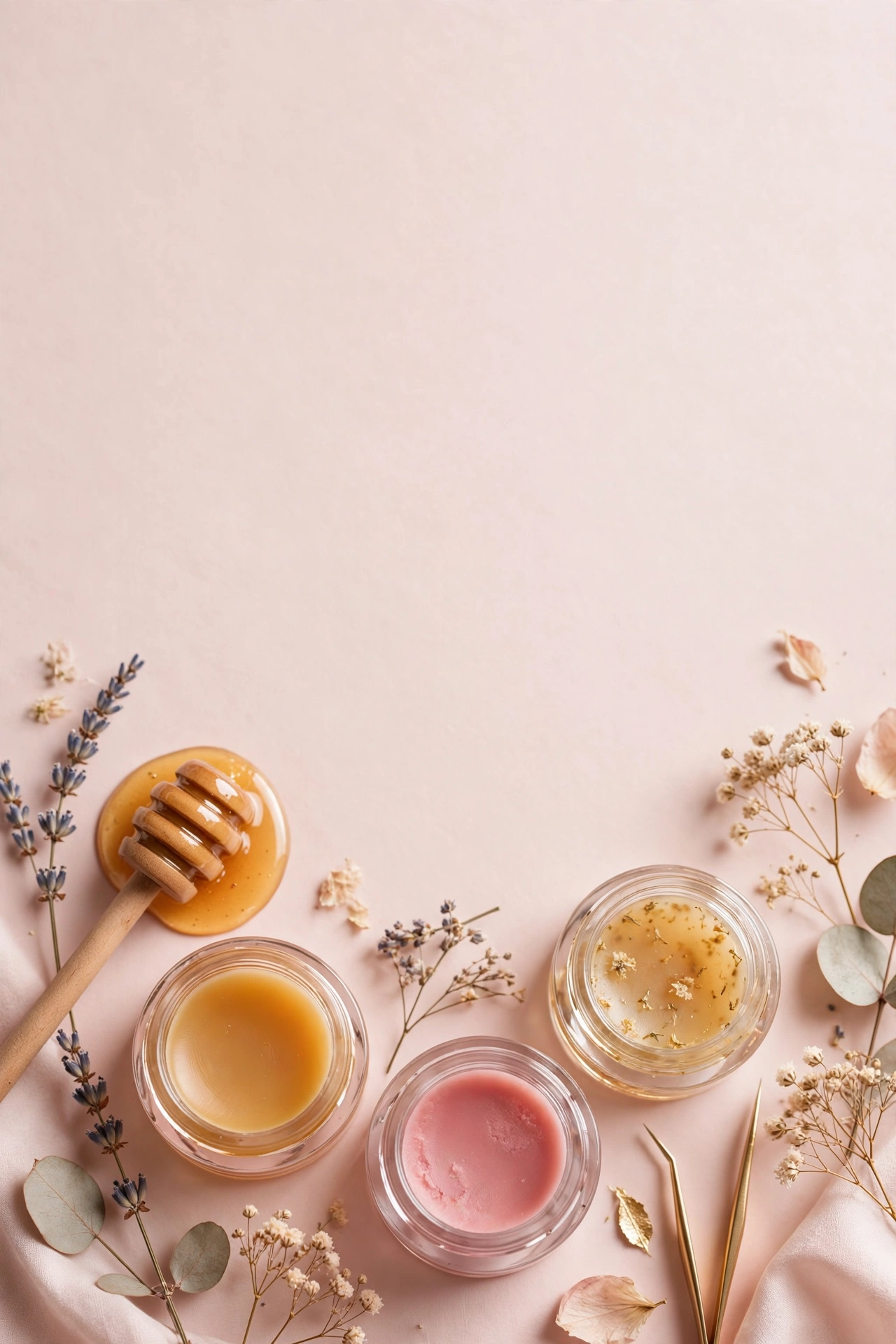
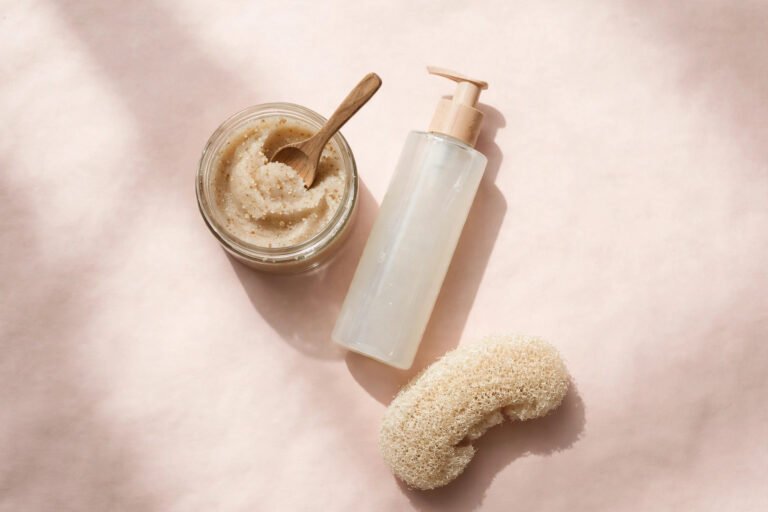
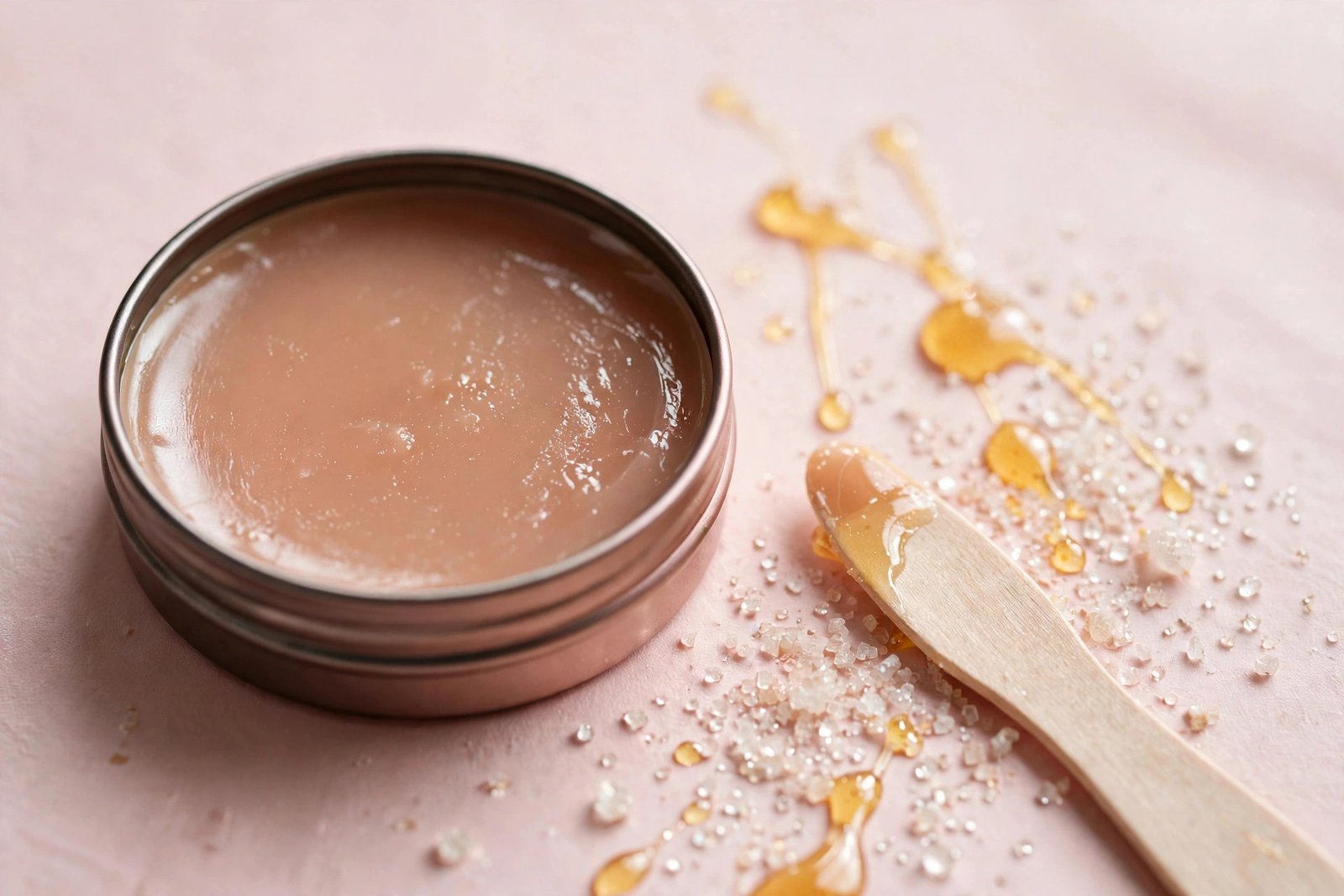
The gentlest method is a soft toothbrush: after brushing your teeth, run the damp brush very lightly over your lips in small circles for about fifteen seconds. It is free, effective, and hard to overdo if you keep pressure light. The second option is a lip scrub — either a commercial one or a homemade mix of fine sugar and honey or oil. Massage a pea-sized amount over lips for thirty seconds, then rinse or wipe off. Sugar dissolves as you work, making it self-limiting — but choose fine sugar, since coarse crystals are too abrasive for lip skin. This DIY honey sugar lip scrub gives exact proportions for a gentle homemade version.
What not to do: do not use facial exfoliating acids on lips routinely (they are too strong for regular lip use), do not scrub aggressively enough to cause redness, and never peel flakes with your fingers or teeth. If a flake is hanging, trim it carefully with clean small scissors rather than pulling — pulling tears living tissue and restarts the healing clock. After every exfoliation session, immediately apply a rich balm or overnight treatment to protect the freshly smoothed surface.
Overnight Treatments and Lip Masks
Nighttime is when lip repair happens fastest, for the same reason facial skin repairs overnight: no talking, eating, or wind exposure for eight hours, so treatments stay put and work undisturbed. The simplest overnight treatment is also highly effective — apply a thick layer of your richest lip balm or ointment right before bed, far more than you would use during the day. Petrolatum-based ointments are ideal for this because they seal in moisture for hours.
Dedicated overnight lip masks take it further. These are thicker, more concentrated than daytime balms, often containing shea butter, ceramides, vitamin E, and sometimes gentle exfoliating enzymes that work while you sleep. Apply a generous layer as the last step of your evening routine. Nightly use through winter prevents the chapping cycle from establishing itself.
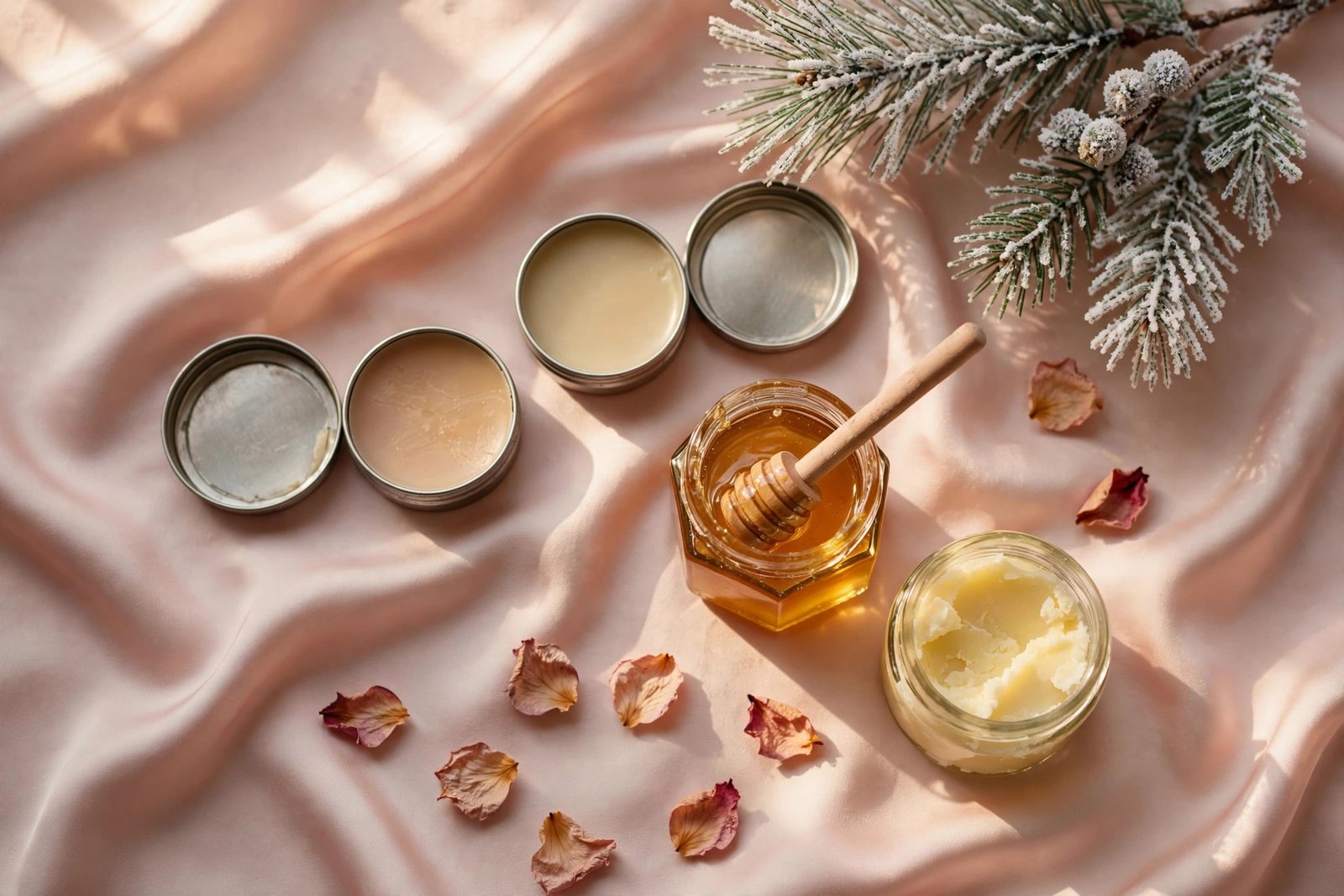
DIY works too: mix honey with coconut oil or shea butter and apply thickly before bed, or layer honey under your regular balm to seal it in. One more overnight factor people miss: bedroom air. Heated bedrooms dry lips out as you sleep, so the same humidifier that helps your facial skin helps your lips — covered in the broader seasonal routine in this dry skin winter vs summer routine.
Daily Habits That Keep Lips Smooth
Products matter, but daily habits determine whether your lips stay smooth or cycle through chapping all season. Apply balm before you need it, not after lips already hurt — prevention beats repair. Key moments: before going outside (wind protection), after eating or drinking (food acids and wiping strip balm), and before bed (overnight repair). Keep balms everywhere you spend time: coat pocket, bag, desk, nightstand. The best balm is the one within reach.
Stay hydrated normally — it supports overall skin function, though water alone will not fix chapped lips. If you are congested and mouth-breathing at night, a humidifier or even a glass of water by the bed helps; chronic mouth breathing dries lips relentlessly. For lipstick, prep matters: exfoliated, balm-protected lips hold color smoothly. Blot most balm off before applying so color adheres.
Finally, protect lips from the sun even in winter. Lips have very little melanin, making them vulnerable to UV damage year-round, and sunburned lips chap and peel badly. A lip balm with SPF 15–30 for daytime outdoor time is a small habit with real payoff — especially around snow, which reflects UV upward onto the face and lips.
Frequently Asked Questions
Why do my lips get chapped even though I use lip balm constantly?
The balm itself may be the problem. Balms with menthol, camphor, fragrance, or drying alcohols irritate lips and create a cycle where lips feel worse as the balm wears off, prompting more application. Switch to a balm with ceramides, shea butter, or petrolatum and no irritants, and the constant-reapplication cycle usually breaks within days.
Is it bad to lick my lips?
Yes — it is one of the main causes of chronic chapping. Saliva evaporates within seconds and takes additional moisture from the lips with it, and enzymes in saliva irritate compromised lip skin. Every lick makes the next round of dryness worse. Balm instead, every time.
How often should I exfoliate my lips?
Once or twice a week at most, with a gentle method like a soft toothbrush or fine sugar scrub. Never exfoliate cracked, bleeding, or very sore lips — wait until they heal, keep them protected with ointment in the meantime, and resume gentle exfoliation only on intact skin.
What causes painful cracking at the corners of my mouth?
Cracking at the mouth corners (angular cheilitis) is often more than dryness — it can involve saliva irritation or fungal or bacterial overgrowth. If corner cracks persist beyond a week or two, see a doctor or dermatologist rather than continuing home remedies.
Can I use my face moisturizer on my lips?
In a pinch, yes — it is better than nothing, and the hydrating ingredients help. But dedicated lip products are formulated to stay put through talking and eating, and ointment-type lip treatments seal better than most face creams. For chronically dry lips, a proper lip balm or overnight mask outperforms face moisturizer.
Smooth winter lips come down to a simple formula: stop the habits that cause chapping, use a balm with barrier ingredients and no irritants, exfoliate weekly, and treat overnight.
Love this? Pin it for later!