Best Foundation for Oily Skin: Long-Wear Formulas That Stay Matte
Finding a foundation that survives oily skin past lunchtime is one of beauty’s great frustrations. The formula looks flawless at 8 AM, separates around the nose by noon, and has migrated somewhere near your jawline by 4 PM. The problem is rarely your application technique — it is usually the formula. Foundations designed for normal or dry skin simply are not engineered to resist a steady flow of sebum.
The best foundation for oily skin is oil-free, long-wear, and matte or natural-matte in finish — formulated to grip skin and resist breaking down as oil surfaces. This guide covers what to look for on the label, how the main formula types compare, application techniques that extend wear, and the mistakes that cause sliding and separation.
Key Takeaways
- Look for “oil-free,” “long-wear” (12+ hours), “matte” finish, and “non-comedogenic” — these four label cues filter out most bad matches.
- Matte liquid foundations and powder foundations last longest on oily skin; dewy, luminous, and serum foundations break down fastest.
- Thin layers last longer than thick ones — build coverage with two thin layers rather than one heavy layer.
- Primer + foundation + T-zone powder + setting spray is the full longevity stack for very oily skin.
- Test foundation for oxidation: swatch on your jawline and check the color after 2-3 hours, since many formulas darken as they mix with skin oils.
- Blot before touch-ups; never layer fresh liquid foundation over midday oil.
Why Foundation Fails on Oily Skin
Foundation sits on top of skin, and on oily skin it sits on top of a continuously renewing layer of sebum. Three things go wrong:
Breakdown: Oil dissolves the film-formers and pigments in foundation, causing it to thin, move, and disappear — first in the T-zone, where glands are densest.
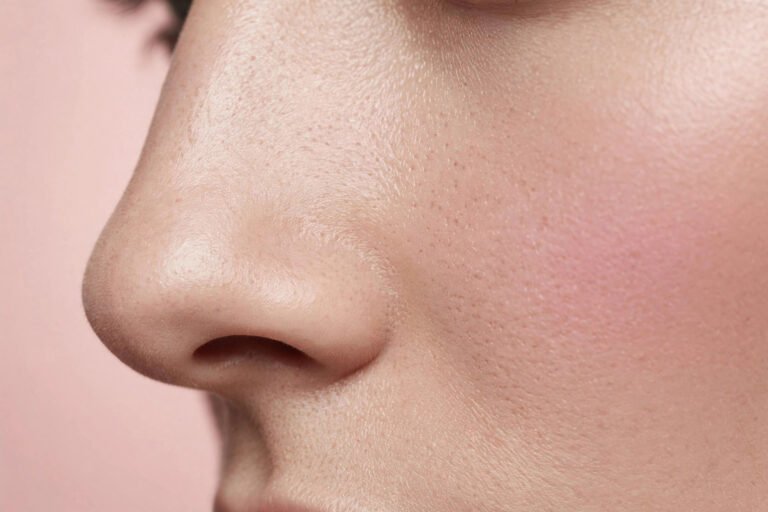
Separation: As sebum pools under foundation, the formula splits into patches — pigment clinging in some spots, bare skin showing through in others. The nose and chin are classic separation zones. The specific causes are covered in why makeup separates around the nose.
Oxidation: Many foundations darken as they mix with skin oils and air exposure over hours. A shade that matched perfectly in the morning can look noticeably orange by afternoon — a particular problem for oily skin types.
Standard foundations are tested for wear on average skin. Long-wear formulas for oily skin use different film-forming technology designed to resist oil and water — which is why the “long-wear” label matters more than brand prestige.
What to Look for on the Label
Oil-free. The baseline requirement. Oil-based foundations add fuel to the sebum fire and slide fastest.
Long-wear / 24-hour wear. Marketing terms, but they indicate the formula was designed with staying power as a priority — usually through stronger film-formers. For oily skin, treat long-wear as near-mandatory.
Matte or natural-matte finish. Avoid “dewy,” “luminous,” “radiant,” and “glow” finishes — they contain light-reflecting ingredients and emollients that break down quickly on oily skin and amplify shine.
Non-comedogenic. Important because foundation sits on skin all day. Non-comedogenic formulas are designed to minimize pore-clogging risk during long wear.
Transfer-resistant or transfer-proof. Directly relevant to oily skin — these formulas are designed not to migrate onto phones, hands, and masks.
Shade range and undertones. Oily skin does not change shade needs, but oxidation risk makes undertone matching more important: a foundation that oxidizes warm will look worse on cool undertones. When in doubt, swatch and wait.
Formula Types Compared for Oily Skin
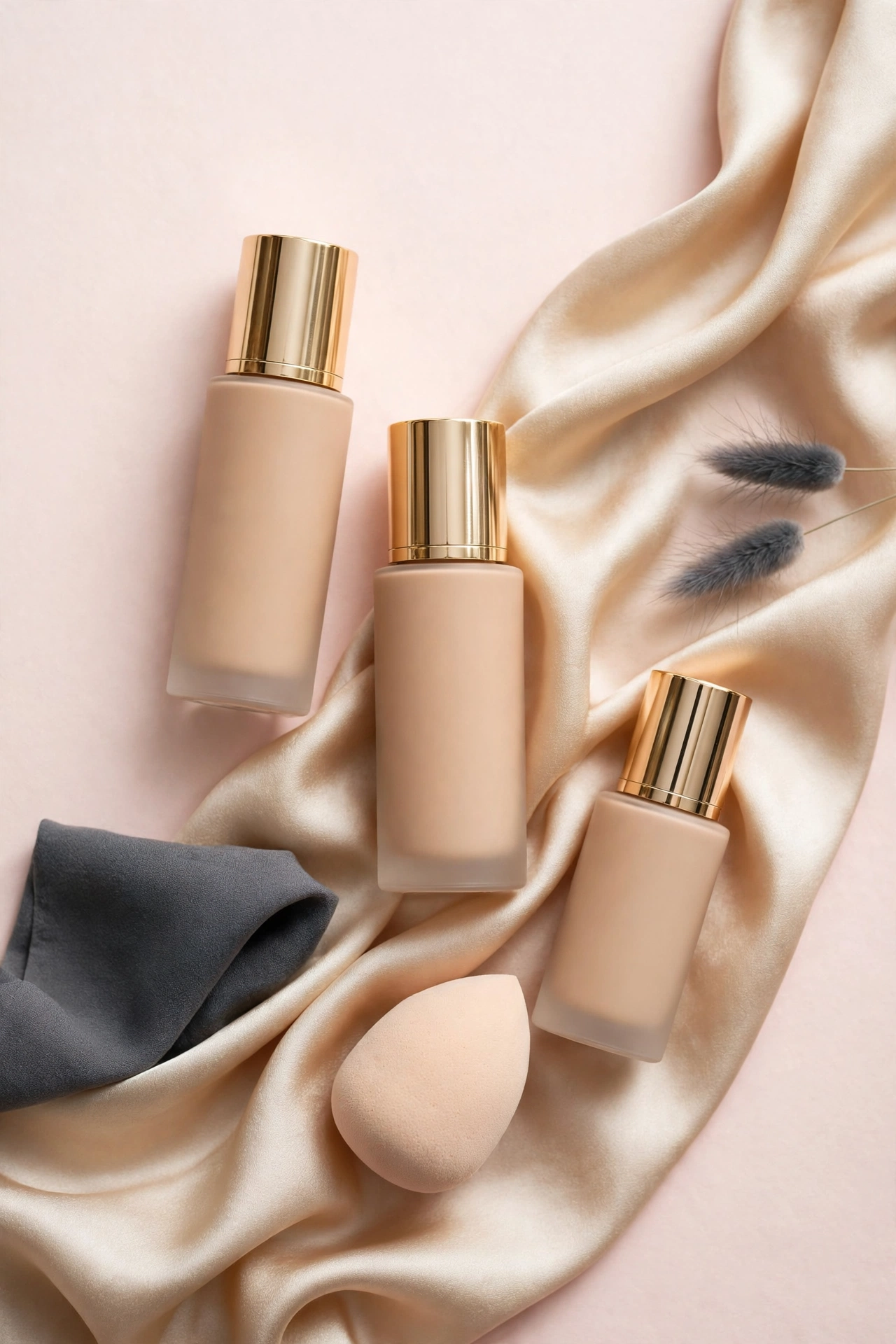
Matte liquid foundation — best overall. The top choice for most oily skin types. Modern matte liquids are far from the flat, cakey formulas of the past — good ones give medium-to-full coverage with a skin-like matte finish and 10-16 hour wear. Apply in thin layers.
Powder foundation — best for very oily skin. Absorbs oil throughout the day rather than fighting it, making it the longest-lasting option for extremely oily types. Coverage is light-to-medium; it can look dry on dehydrated patches, so skin prep matters. Also excellent for midday touch-ups over liquid foundation.
Stick foundation — good with caveats. Convenient and full-coverage, but many stick formulas are creamier (more emollient) than liquids. Check that the specific stick is marketed as matte or long-wear; creamy sticks slide on oily skin.
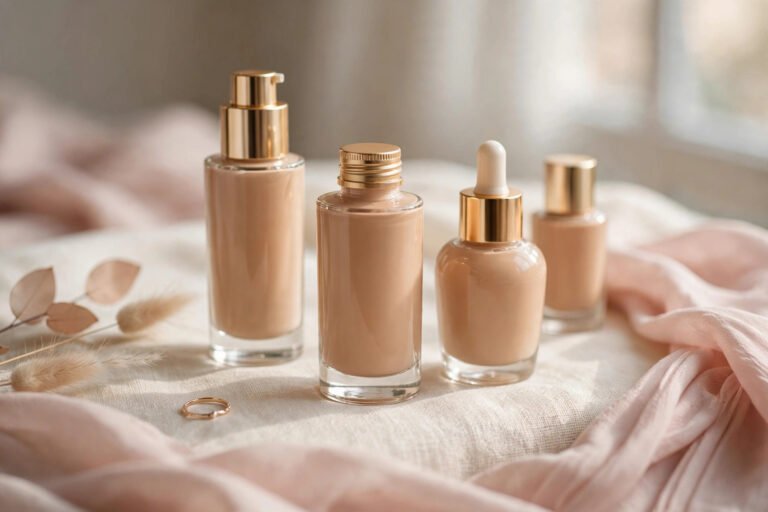
Serum foundations and skin tints — usually a poor match. Designed for a dewy, sheer finish, they lack the film-formers that resist oil. On oily skin they typically break down within 3-4 hours. If you love the look, set aggressively with powder and spray — or save them for low-oil days.
Cushion compacts — convenient but short-wear. The format applies a thin, dewy layer that is comfortable but rarely survives oily skin past midday without significant touch-ups. Better as a touch-up tool than a primary base.
Tinted moisturizer with SPF — situational. Fine for minimal-makeup days if the formula is oil-free and you set it. Not a substitute for long-wear foundation on important days.
Application Tips That Prevent Sliding
The right formula applied wrong still fails. This routine maximizes wear:
- Start with set sunscreen. Let SPF absorb fully (3-5 minutes) before any makeup. Tacky sunscreen under foundation is the top cause of morning sliding.
- Prime the T-zone. A mattifying primer on the forehead, nose, and chin gives foundation something to grip. See what makeup primer does.
- Apply thin layers. One thin layer of foundation, blended well, outlasts one thick layer every time. Build coverage with a second thin layer only where needed (redness, blemishes) rather than all over.
- Use a damp sponge or dense brush. Damp sponges press product into skin for better adhesion; dense brushes buff it in. Fingers deposit hand oils — avoid them for base application on oily skin.
- Set the T-zone with powder immediately. Do not wait for shine to appear — press translucent powder into the oiliest zones right after foundation, before oil has a chance to surface.
- Seal with setting spray. A long-wear or matte setting spray melds the layers and adds hours of wear. The powder-then-spray combination is the gold standard for oily skin — setting spray vs setting powder explains when each does the heavy lifting.
- Carry blotting papers. Even the best application needs a 1 PM touch-up on oily skin. Blot, then press powder — never add more liquid foundation midday. Full touch-up strategy in how to control oily skin throughout the day.
Shade Matching and Oxidation: The Oily Skin Warning
Oxidation — foundation darkening as it mixes with skin oils — affects oily skin types disproportionately. Protect yourself:
- Swatch on your jawline, not your hand. Hand skin has different oil levels and undertones.
- Wait 2-3 hours before judging. Check the swatch in natural daylight after it has had time to interact with your skin’s oils.
- Consider going half a shade lighter if a formula you love oxidizes slightly — the darkening will bring it to your true match by midday.
- Ask for samples. Wear a sample for a full day before committing. Oxidation, wear time, and separation all reveal themselves by hour six.
Common Foundation Mistakes on Oily Skin
Choosing a dewy finish. The single most common mismatch. No primer or powder fully compensates for a luminous formula on oily skin.
Skipping primer. Primer is not optional for oily skin — it is the adhesion layer everything else depends on.
Applying too much. Heavy application looks good for an hour, then cakes as oil surfaces underneath. Thin layers, always. If coverage looks heavy, why foundation looks cakey (and fixes) covers the causes.
Setting with shimmer or luminous powder. Touch-up and setting powders must be translucent and matte. Anything with shimmer reads as extra shine on oily skin.
Reapplying liquid foundation midday. Layering fresh liquid over oil and existing makeup pills and cakes. Blot + powder is the only midday correction that works.
Using expired foundation. Old foundation separates in the bottle and performs worse — liquids generally last 12 months after opening. If your formerly reliable foundation suddenly slides, check the age.
Drugstore vs High-End: Does Price Matter?
For oily skin specifically, formula technology matters more than price tier. Long-wear drugstore foundations have closed much of the gap — many use comparable film-forming systems to prestige formulas. Where higher prices sometimes show: wider shade ranges (important for oxidation-prone matching), more refined matte finishes that avoid flatness, and better packaging (pumps reduce contamination and over-dispensing).
The practical approach: identify your formula requirements (oil-free, long-wear, matte), then test across price points with samples. An $12 foundation that survives your skin’s oil output beats a $45 one that does not — wear-test, do not price-shop.
Frequently Asked Questions
What is the best type of foundation for very oily skin?
A matte long-wear liquid foundation, applied in thin layers over mattifying primer and set with translucent powder, gives the longest wear for very oily skin. For extremely oily types, powder foundation lasts even longer through the day since it absorbs oil rather than resisting it. Avoid dewy, luminous, and serum foundations — they break down within hours on oily skin.
Why does my foundation separate around my nose?
The nose has one of the highest densities of sebaceous glands on the face, so oil pools there fastest and breaks foundation’s film. Fixes: mattifying primer specifically on the nose, thin foundation layers, immediate powder setting, and blotting (not re-powdering over oil) at touch-ups. Persistent separation is detailed in why makeup separates around the nose.
Should I use primer if I have oily skin?
Yes — primer is one of the highest-impact steps for oily skin. A mattifying or oil-control primer creates an absorbent barrier between skin and foundation, significantly extending wear. Apply it to the T-zone at minimum; all-over application suits very oily types.
How do I stop foundation from looking cakey on oily skin?
Cakiness comes from too much product, powder applied over unblotted oil, or dry/dehydrated patches under makeup. Use thin layers, blot before powdering, keep skin hydrated with lightweight moisturizer, and exfoliate 2-3x weekly so foundation has a smooth surface. More detail in why foundation looks cakey.
Can I wear foundation every day with oily, acne-prone skin?
Yes, provided the formula is oil-free and non-comedogenic and you remove it thoroughly every night with double cleansing. Foundation itself does not cause breakouts — trapped oil, unremoved makeup, and comedogenic formulas do. Never sleep in makeup, and clean makeup sponges and brushes weekly.
The Bottom Line
The best foundation for oily skin is oil-free, long-wear, and matte — applied in thin layers over primer, set with powder in the T-zone, and sealed with setting spray. Test for oxidation with a full-day wear test before committing, blot (don’t reapply liquid) at midday touch-ups, and remember that formula technology matters more than price.
Build the complete system: start with the skincare routine for oily skin, master midday shine control, and choose setting products with setting spray vs setting powder.
Love this? Pin it for later!