Hair Care Routine for Beginners: Healthy Hair Step by Step
The short answer: A good beginner hair care routine has four core steps — cleanse with shampoo, condition, treat weekly with a deep conditioner or mask, and always use heat protectant before hot tools. Wash frequency depends on your hair type: fine or oily hair usually needs washing every 1–2 days, while thick, curly, or coily hair thrives on 1–2 washes per week. Start simple, stay consistent for at least a month, and adjust based on how your hair responds.
If you’ve ever stood in the hair care aisle feeling completely overwhelmed by the wall of shampoos, serums, masks, and oils — wondering which ones you actually need and which are just marketing — this guide is for you. Building a hair care routine doesn’t require twelve products or a chemistry degree. It requires understanding your hair, learning a few fundamentals, and sticking with the basics long enough to see results.
Think of this as your complete starter manual: what each step does, how to do it correctly, the mistakes silently damaging your hair, and how to customize everything for your specific hair type — all without spending a fortune.
Understanding Your Hair Type
Before buying a single product, you need to know what you’re working with. Hair type determines nearly everything about your routine: how often you wash, which formulas suit you, and which techniques actually work. Get this wrong and even the best products will underperform.
The Four Main Hair Types
Hair is generally grouped into four types based on curl pattern:
- Type 1 – Straight: Hair falls flat with no bend. Tends to get oily quickly because natural scalp oils travel easily down a straight strand. Usually needs more frequent washing and lightweight products.
- Type 2 – Wavy: A loose S-shape bend. Can range from barely-there waves to defined ripples. Often struggles with frizz and can be weighed down by heavy products.
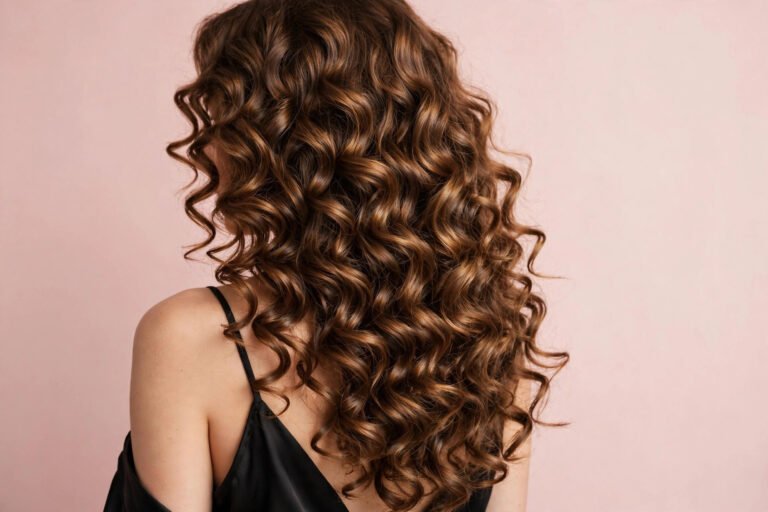
- Type 3 – Curly: Defined curls or ringlets. Prone to dryness because oils have a harder time traveling down the twists and turns. Needs more moisture and gentler handling.
- Type 4 – Coily: Tight curls, coils, or zigzag patterns. The most fragile and dryness-prone type. Thrives on rich moisture, protective styles, and minimal manipulation.
Most people also have a subtype (like 2B or 3C), but for beginners, the main category is enough to guide your choices.
Porosity: The Factor Most Beginners Miss
Beyond curl pattern, porosity — how well your hair absorbs and holds moisture — matters enormously. Try this simple test: drop a clean, shed strand of hair into a glass of water and watch for two minutes.
- Floats on top: Low porosity. Your hair resists moisture, so products tend to sit on top. Use lightweight formulas and warm water to help open the cuticle.
- Sinks slowly to the middle: Medium porosity. The sweet spot — your hair absorbs and retains moisture well. Most standard products work for you.
- Sinks quickly to the bottom: High porosity. Your hair absorbs moisture fast but loses it just as quickly, often due to damage, bleach, or heat. Needs heavier creams, oils, and leave-in products to seal moisture in.
Density and Thickness
Two more traits worth knowing:
- Density is how much hair you have (how thick your ponytail feels). Fine hair gets weighed down easily; thick, dense hair drinks up product.
- Strand thickness is the width of each individual hair. Fine strands are delicate and damage-prone; coarse strands are strong but can feel rough without enough moisture.
You don’t need a lab analysis — just pay attention. Does your hair get oily by day two? Do products seem to vanish into it? Does it take forever to dry? Those observations tell you more than any quiz.
The Basic Hair Care Routine, Step by Step
Every effective routine — no matter the hair type — is built on the same foundation. Master these steps before adding anything fancy.
Step 1: Shampoo (Cleanse)
Shampoo’s job is simple: remove oil, sweat, dirt, and product buildup from your scalp. The biggest beginner mistake is treating shampoo like it’s for the hair lengths. It’s not — shampoo is for the scalp.
How to do it right:
- Soak your hair thoroughly with lukewarm water (hot water strips moisture; cold water won’t cleanse well).
- Use a quarter-sized amount for short to medium hair, more for long or thick hair.
- Massage into the scalp with your fingertips — not nails — for 30 to 60 seconds. This is where oil and buildup live.
- Let the suds run down the lengths as you rinse. That’s enough cleansing for the ends; scrubbing them directly causes tangles and breakage.
- Rinse completely. Leftover shampoo causes itchiness and dullness.
Choosing a shampoo: If your hair is color-treated, damaged, or very dry, look for a sulfate-free formula — sulfates are strong cleansers that can strip natural oils. If your scalp gets oily fast or you use lots of styling products, a clarifying shampoo once every week or two removes buildup that regular shampoo misses. Normal, healthy hair does well with a gentle daily or every-other-day formula matched to your hair type on the label.
Step 2: Conditioner (Moisturize and Protect)
If shampoo opens the door, conditioner closes it. Conditioner smooths the hair cuticle, replaces lost moisture, reduces tangling, and protects against breakage. Skipping conditioner is one of the fastest ways to end up with dry, frizzy, snap-prone hair.
How to do it right:
- Squeeze excess water from your hair first — conditioner can’t penetrate soaking-wet strands effectively.
- Apply from the mid-lengths to the ends, where hair is oldest and driest. Keep it off the scalp unless the product specifically says it’s scalp-safe; conditioner on the scalp leads to greasiness and flat roots.
- Leave it on for 2 to 3 minutes (this is a good time to wash your body or shave).
- Rinse with cool or lukewarm water to help seal the cuticle.
Choosing a conditioner: Match it to your hair’s needs. Fine hair wants a lightweight, volumizing formula. Dry, thick, or curly hair needs a richer, moisturizing one. Damaged or bleached hair benefits from a repairing conditioner with proteins or bond-building ingredients.
Step 3: Weekly Treatments (Repair and Nourish)
Daily conditioner maintains; weekly treatments transform. A deep conditioning mask or treatment used once a week delivers concentrated moisture, protein, or repair ingredients that regular conditioner can’t match in two minutes.
How to do it right:
- Once a week, swap your regular conditioner for a deep conditioning mask.
- Apply generously from mid-lengths to ends.
- Leave on for 10 to 20 minutes. For extra penetration, wrap hair in a warm towel or shower cap — gentle heat helps the cuticle open and absorb the treatment.
- Rinse thoroughly.
Choosing a treatment: Alternate between moisture and protein. Too much of either causes problems — over-moisturized hair feels mushy and limp; over-proteinized hair feels stiff and brittle. If your hair is dry and frizzy, lean toward moisture masks. If it’s stretchy, gummy when wet, or breaking from bleach and heat, it likely needs protein.
Keep reading: rice water rinse for hair growth — how often to use it
How Often Should You Wash Your Hair?
This is the question beginners ask most, and the honest answer is: it depends on your hair and scalp. There’s no universal magic number, but these guidelines are a solid starting point:
| Hair type | Suggested frequency |
|---|---|
| Fine, straight, or oily | Every 1–2 days |
| Normal/medium, wavy | Every 2–3 days |
| Thick, curly | Every 3–5 days |
| Coily or very dry | Every 7–10 days |
Signs you’re washing too often: Your hair feels straw-like, your scalp is tight or flaky, or your hair gets oilier faster than before (over-washing can trigger rebound oil production).
Signs you’re not washing enough: Itchy scalp, visible flakes, unpleasant odor, or heavy, limp roots that no dry shampoo can rescue.
The transition period is real. If you’re cutting back from daily washing, your scalp may overproduce oil for 2 to 3 weeks before rebalancing. Dry shampoo on the roots, hairstyles that disguise oiliness (braids, buns, hats), and patience will get you through it.
Between washes, you can refresh with dry shampoo at the roots, a light rinse with water only, or co-washing (washing with conditioner instead of shampoo) — a favorite technique for curly and coily hair types that need moisture without stripping.
The Deep Conditioning Guide
Deep conditioning deserves its own section because it’s the single highest-impact weekly habit for healthier hair — yet most beginners either skip it or do it wrong.
What Deep Conditioning Actually Does
Regular conditioner works on the surface in a couple of minutes. A deep conditioner contains higher concentrations of conditioning agents, penetrating oils, and reparative ingredients, and the extended leave-on time (10+ minutes) lets them actually sink into the hair shaft rather than just coating it. The result: softer, stronger, shinier hair that breaks less.
How to Deep Condition by Hair Type
- Fine or straight hair: Use a lightweight deep conditioner once a week or every two weeks. Apply only from mid-lengths down, and don’t exceed 10 minutes — fine hair over-conditions easily and goes limp.
- Wavy or medium hair: Once a week for 10–15 minutes. Focus on the ends, which are the oldest and most fragile part.
- Curly hair: Once a week for 15–20 minutes. Section your hair to ensure even coverage, and consider the warm-towel trick for deeper penetration.
- Coily or damaged hair: Once or even twice a week for 20–30 minutes. This hair type is chronically moisture-hungry; generous, frequent deep conditioning is the foundation of length retention.
DIY vs. Store-Bought
You don’t need an expensive mask to deep condition effectively. Coconut oil, olive oil, or shea butter warmed slightly and applied for 20 minutes before shampooing make excellent pre-wash treatments. That said, formulated masks with ingredients like shea butter, argan oil, hydrolyzed proteins, and ceramides are engineered for better penetration and easier rinsing — worth the small investment if your hair is significantly dry or damaged.
Heat Protection: The Non-Negotiable Step
Here’s the rule that separates healthy hair from fried hair: never apply hot tools to unprotected hair. No exceptions, no “just this once.” A single pass with a 450°F flat iron on bare hair can cause damage that takes months to grow out.
Why Heat Damages Hair
Hair is made of keratin protein. Excessive heat breaks down that protein structure, cracks the protective cuticle, and boils the water inside the strand — literally creating tiny steam bubbles that weaken the hair from within (this is also why hair sometimes smells burnt after straightening). The damage is cumulative and irreversible; you can’t repair a fried strand, only trim it off and prevent future damage.
Keep reading: why hair smells burnt after straightening — causes and fixes
How to Protect Your Hair
- Always use a heat protectant. Sprays, creams, or serums labeled “heat protectant” or “thermal protection” form a barrier that distributes heat more evenly and reduces moisture loss. Apply to damp or dry hair before any hot tool.
- Lower the temperature. Fine or damaged hair rarely needs more than 300–350°F. Even thick, coarse hair seldom needs the maximum setting. If one pass doesn’t do the job, the tool — not the temperature — may be the problem.
- Never iron or curl soaking-wet hair (unless the tool is specifically designed for it). Water + extreme heat = steam damage.
- Limit frequency. Every heat-free day is a recovery day. Embrace air-drying, heatless curls, braids, and buns between styling sessions.
Keep reading: how to fix frizzy hair after straightening
10 Common Mistakes That Are Damaging Your Hair
Most hair damage isn’t from one dramatic event — it’s from small daily habits. Check how many of these sound familiar:
- Washing with very hot water. Feels great, strips everything. Lukewarm for washing, cool for the final rinse.
- Scrubbing the lengths with shampoo. Shampoo is for the scalp. Suds running down are enough for the ends.
- Skipping conditioner. Even “low-maintenance” hair needs it. There is no hair type that benefits from skipping this step.
- Brushing wet hair aggressively. Wet hair stretches and snaps. Use a wide-tooth comb, start from the ends, and work upward gently.
- Towel-drying by rubbing. The friction roughs up the cuticle and causes frizz and breakage. Squeeze with a microfiber towel or an old cotton T-shirt instead.
- Sleeping on rough cotton pillowcases. Cotton creates friction overnight. A satin or silk pillowcase (or bonnet) dramatically reduces morning tangles and breakage. how to sleep with straightened hair without ruining it
- Tight hairstyles every day. Constant tension from tight ponytails, buns, and braids causes traction breakage, especially around the hairline. Vary your styles and keep them loose.
- Overusing heat without protection. Covered above — but worth repeating because it’s the number one cause of preventable damage.
- Ignoring split ends. Split ends travel upward, turning a tiny trim into inches of lost length. Get a dusting (micro-trim) every 8–12 weeks.
- Using the wrong products for your hair type. Heavy butters on fine hair cause buildup and flatness; lightweight sprays on coily hair provide zero moisture. Match products to your type, not to what’s trending.
Building Your Routine by Hair Type
Now let’s put it all together. Here are starter routines customized for each hair type. Treat these as templates — adjust frequency and products based on how your hair responds over 3 to 4 weeks.
Straight Hair (Type 1)
The challenge: oiliness and flatness. The goal: volume at the roots, smoothness through the ends.
- Wash: Every 1–2 days with a volumizing or gentle clarifying shampoo. Double-shampoo if hair is very oily (first wash removes oil, second actually cleanses).
- Condition: Lightweight conditioner, mid-lengths to ends only. Rinse thoroughly.
- Weekly: A light deep-conditioning treatment or a clarifying wash to remove buildup.
- Style: Heat protectant before blow-drying. A root-lifting spray adds volume. Avoid heavy oils and butters — a pea-sized drop of lightweight serum on the ends is plenty.
- Between washes: Dry shampoo at the roots on day two.
Wavy Hair (Type 2)
The challenge: frizz and waves falling flat. The goal: defined waves with bounce.
- Wash: Every 2–3 days with a sulfate-free shampoo. Wavy hair is easily weighed down, so keep formulas light.
- Condition: A moisturizing (not heavy) conditioner, focusing on ends.
- Weekly: Deep condition for 10–15 minutes. A lightweight hair mask works better than thick butters.
- Style: Apply a curl-enhancing cream or light mousse to damp hair and scrunch upward. Diffuse on low heat or air-dry. Heat protectant is a must for any hot tools.
- Between washes: Refresh waves with a water + leave-in conditioner spritz, then re-scrunch.
Curly Hair (Type 3)
The challenge: dryness, frizz, and shrinkage. The goal: hydrated, defined curls.
- Wash: Every 3–5 days. Many curlies co-wash (conditioner-only washing) between shampoos to maintain moisture.
- Condition: Generously. Curly hair is thirsty — don’t be shy with conditioner, and consider leaving a little in.
- Weekly: Deep condition for 15–20 minutes with a rich mask. Section hair for even coverage.
- Style: The LOC or LCO method works well — Liquid (water or leave-in), Oil, Cream, layered in that order to lock in moisture. Define curls with a curl cream, then scrunch with a gel for hold. Plop with a T-shirt or microfiber towel instead of terry cloth.
- Between washes: Pineapple your hair (a loose high ponytail) at night and sleep on satin. Refresh with water and leave-in.
Coily Hair (Type 4)
The challenge: extreme dryness, shrinkage, and fragility. The goal: maximum moisture retention and length protection.
- Wash: Every 7–10 days with a moisturizing, sulfate-free shampoo. Pre-poo (applying oil before shampooing) protects strands during cleansing.
- Condition: Rich, thick conditioner. Detangle gently with fingers or a wide-tooth comb while the conditioner is in — never on dry hair.
- Weekly: Deep condition for 20–30 minutes, ideally with heat (shower cap + warm towel). This is non-negotiable for healthy coily hair.
- Style: LOC/LCO layering is essential. Seal with a heavier oil or butter (shea, castor). Protective styles (braids, twists, buns) reduce manipulation and retain length.
- Between washes: Moisturize and seal ends every 2–3 days. Sleep with a satin bonnet or scarf every single night.
Budget-Friendly Hair Care Tips
Great hair doesn’t require a luxury budget. Some of the most effective hair care practices cost nothing at all:
- Get the technique right before upgrading products. Proper shampooing, conditioning, and gentle handling make a bigger difference than any expensive bottle.
- Buy multitaskers. A good leave-in conditioner can double as a heat protectant base and a refresher spray. Coconut oil works as a pre-wash treatment, frizz smoother, and ends sealer.
- Dilute and portion. Most people use 2–3 times more product than needed. Start with less — you can always add more.
- Try store brands and drugstore lines. Many affordable shampoos and conditioners share key ingredients with prestige versions. Look at the ingredient list, not the price tag.
- DIY treatments. A weekly coconut oil or olive oil pre-wash costs pennies per use. Aloe vera gel makes an excellent lightweight leave-in for wavy and curly hair.
- Protective habits are free. Satin pillowcases cost little, sleeping in a loose braid costs nothing, and turning down your flat iron temperature saves both hair and money.
- Trim regularly. It feels counterintuitive when growing hair out, but regular micro-trims prevent splits from traveling up and forcing a big chop later.
Frequently Asked Questions
How long does it take to see results from a new hair care routine?
Give any routine at least 4 to 6 weeks before judging it. Hair grows about half an inch per month, so visible length and texture changes take time. That said, you should notice improved softness, manageability, and shine within 2 to 3 weeks if the routine suits your hair. If things get worse — increased breakage, itchiness, excessive shedding — stop and reassess rather than pushing through.
Can I skip conditioner if I have oily hair?
No. Oily scalp and dry lengths are different problems. Your scalp produces the oil; your ends still need conditioning. Just keep conditioner away from the scalp — apply from the ears down — and choose a lightweight formula. Skipping conditioner to “fix” oiliness usually backfires by making ends brittle while the scalp keeps overproducing oil.
Is it bad to wash your hair every day?
Not inherently — it depends on your hair and products. Fine, straight hair with an oily scalp often does best with daily washing using a gentle shampoo. The problems start when daily washing is paired with harsh sulfates, skipped conditioner, or daily high-heat styling. If you wash daily, keep everything else gentle.
What’s the difference between a hair mask and a deep conditioner?
Mostly marketing. “Hair mask” and “deep conditioner” generally refer to the same category: intensive treatments left on longer than regular conditioner. Read the instructions and ingredients rather than the label — what matters is whether it’s formulated for moisture, protein, or repair, and how long it needs to process.
Do I really need a separate heat protectant, or is leave-in conditioner enough?
A dedicated heat protectant is formulated to withstand high temperatures and distribute heat evenly — most leave-in conditioners aren’t tested for that. If you use hot tools regularly, a real heat protectant is worth it. For occasional low-heat blow-drying, a leave-in with some silicones offers mild protection, but it’s not a substitute.
Why is my hair still frizzy even though I condition every time?
Frizz has several causes beyond conditioning: rough towel-drying, brushing dry curly/wavy hair, sleeping on cotton, humidity without anti-humidity products, or damage from heat and bleach. Audit your full routine — not just the shower steps — and address the friction and moisture-loss points. how to fix frizzy hair after straightening
Should beginners try the rice water rinse everyone talks about?
Rice water rinses are popular for a reason — rice water contains starches and amino acids that can add shine and strength. But it’s a protein-heavy treatment, so overuse can make hair stiff and brittle, especially for low-porosity hair. If you’re curious, start once every two weeks and watch how your hair responds before increasing frequency. rice water rinse for hair growth — how often to use it
Key Takeaways
- Know your hair type first. Curl pattern, porosity, and density determine everything about your routine — products, frequency, and technique.
- Master the four basics: cleanse the scalp with shampoo, condition the lengths, deep-treat weekly, and never skip heat protectant.
- Wash frequency is personal. Fine/oily hair: every 1–2 days. Thick, curly, or coily hair: far less often. Let your scalp’s behavior guide you.
- Technique beats products. Lukewarm water, fingertip scalp massage, conditioner kept off the roots, and gentle drying matter more than expensive bottles.
- Protect your hair daily. Satin pillowcases, loose hairstyles, and lower heat settings are free habits with outsized payoffs.
- Be patient and consistent. Give any routine 4–6 weeks. Healthy hair is built through steady habits, not overnight miracles — but the results are absolutely worth it.
Love this? Pin it for later!