Retinol Body Lotion: What It Does and How to Use It Safely
Retinol has long been a hero ingredient for the face, but the skin below the neck ages too — it gets drier, rougher, and less firm, especially on the arms, legs, and chest. Retinol body lotion brings that same renewing ingredient to a larger area, in a gentler, more spreadable formula designed for body skin. Used well, it can improve texture and the look of crepey skin over time. Used too fast, it can leave skin dry, flaky, and irritated.
This guide explains what retinol body lotion actually does, how it differs from facial retinol, how to start safely, what to pair it with, and who should skip it. It is general information, not medical advice — if you have a skin condition or you are unsure, check with a dermatologist before starting.
Key Takeaways
- Retinol body lotion speeds up skin-cell turnover, which can smooth rough texture and soften the look of fine lines and crepey skin over weeks to months.
- Body formulas are usually gentler and more moisturising than facial retinoids, because they cover a larger area.
- Start slow: a few nights a week, a thin layer, with a plain moisturiser on off nights.
- Some dryness, flaking, or mild irritation at first is common — scale back, do not push through it.
- Daily SPF on exposed skin is non-negotiable while using retinol, and retinoids should be avoided during pregnancy and breastfeeding.
What Retinol Does for Body Skin
How retinol works
Retinol is a form of vitamin A. Once absorbed, it converts in the skin to retinoic acid, which signals skin cells to turn over faster — old, dull surface cells shed more quickly, and newer cells come through sooner. Over time, that process can also support collagen, the protein that keeps skin firm and elastic. The visible result, for many people, is smoother texture, a more even look, and softer-looking fine lines.
It is important to be realistic about the timeline. Retinol is not an overnight fix. Most people need consistent use for at least eight to twelve weeks before judging a change, and the improvement is usually gradual — skin that feels smoother and looks a little firmer, rather than a dramatic transformation. Body skin is thicker than facial skin in many areas, so patience matters even more here.
What it can help with
Retinol body lotion is most often used for rough, bumpy, or uneven texture, the crepey look that appears on the upper arms, thighs, and chest with age and sun exposure, and dullness that regular moisturiser alone does not fix. It can also help the skin look more even-toned over time, particularly where sun damage has left a slightly uneven appearance. It is not a treatment for deep wrinkles, stretch marks, or loose skin on its own, and anyone promising that is overselling it.
For rough, bumpy skin specifically, retinol works best as part of a broader routine. Gentle exfoliation and consistent moisturising matter just as much, as explained in best body lotion for dry bumpy skin and how to exfoliate your body properly.
Retinol Body Lotion vs. Facial Retinol
Body and facial retinol share the same active family, but the formulas are built for different jobs. Body lotions usually contain a lower effective strength, spread over a much larger surface, and are blended with more emollients so they feel like a lotion rather than a treatment serum. Facial formulas are often stronger, more targeted, and sold in smaller amounts.
That does not mean you can swap them freely. A facial retinol used all over the body would be expensive and potentially more irritating at that scale, while a body lotion used on the face may be too heavy, too fragranced, or too weak for facial concerns. Keep each product where it was designed to go. If you are new to retinoids altogether, start by reading when should you start using retinol before choosing a strength.
How to Use Retinol Body Lotion Safely
Start slow, then build
The golden rule with retinol is slow and steady. A safe starting routine looks like this:
- Patch test first. Apply a small amount to one area, such as the inner forearm, for a few nights and watch for redness, stinging, or flaking.
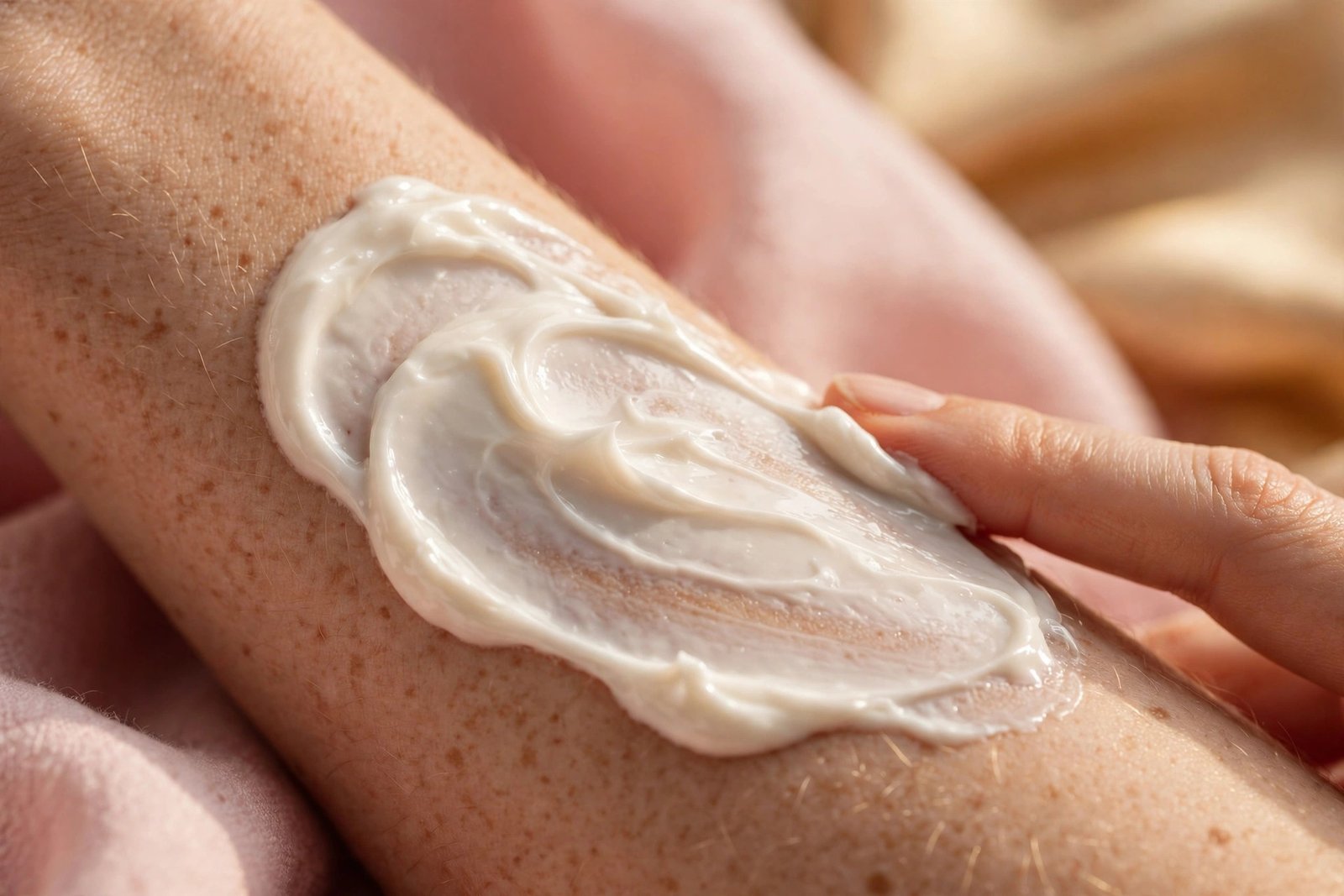
- Begin two to three nights a week. Apply a thin, even layer to clean, dry skin in the evening. A little goes a long way — you do not need a thick coat.
- Moisturise on off nights. On nights you skip retinol, use a plain, fragrance-free moisturiser to keep the barrier strong.
- Increase only if skin is calm. After two to three weeks with no irritation, you can move to every other night, and later to nightly if your skin tolerates it. If irritation appears, drop back a step rather than pushing on.
Evening application is preferred because retinol can make skin more sensitive to sunlight, and because the skin’s repair processes are most active overnight.
Expect an adjustment period
Some dryness, light peeling, or mild tightness in the first few weeks is common, especially if you start too often or layer retinol with strong exfoliants. This is often called retinisation — the skin adjusting to faster turnover. It should be mild and should settle as you find your rhythm. If peeling is heavy, skin is sore or cracked, or irritation lasts more than a week after scaling back, stop and let the barrier recover, and consider asking a dermatologist for advice.
A related question many people ask is whether new spots mean the product is working or failing. On the body, true purging is less clear-cut than on the face, because body acne has many causes. The face-focused guide to retinol purging vs. breakout explains the difference in detail, and the same principle applies: a brief flare in areas where you already get spots may be adjustment, but widespread new irritation is a sign to pause.
The sandwich method for sensitive skin
If your skin is sensitive or you are starting in winter, the sandwich method can help: apply a plain moisturiser first, let it absorb, then apply retinol body lotion, then finish with another light layer of moisturiser. This buffers the retinol slightly without cancelling it, and many people find it makes the first month far more comfortable.
What to Pair It With — and What to Avoid
Good partners
- Plain, fragrance-free moisturisers: ceramides, glycerin, and hyaluronic acid support the barrier while retinol does its work. A ceramide-rich moisturiser is a particularly good partner, as covered in best moisturiser for dry skin with ceramides.
- Gentle cleansers: a mild body wash that does not strip the skin keeps irritation down.
- SPF every morning: broad-spectrum sunscreen on any exposed area, every day, is essential while using retinol.
Combinations to be careful with
Strong exfoliating acids (glycolic, lactic, or salicylic acid) on the same night as retinol can tip sensitive skin into irritation. If you use both, alternate nights rather than layering them, and drop the acid if flaking appears. The same goes for harsh scrubs and rough exfoliating tools — gentle is better while skin is adjusting. Vitamin C body products are generally fine, but many people prefer vitamin C in the morning and retinol at night to keep the routine simple.
SPF: the non-negotiable partner
Retinol increases sun sensitivity because newer skin cells are more exposed. That means sunscreen is not optional — it is part of the treatment. Apply a broad-spectrum SPF 30 or higher to exposed skin every morning, and reapply if you are outdoors for long periods. Skipping SPF while using retinol risks undoing the benefits and increasing sun damage, which is the opposite of what you want.
Who Should Skip or Delay Retinol Body Lotion
Pregnancy and breastfeeding
Avoid retinoids, including retinol body lotion, while pregnant or breastfeeding, unless a doctor specifically tells you otherwise. High-dose vitamin A derivatives are known to carry risks in pregnancy, and while body lotion absorption is lower than oral forms, the standard medical advice is to avoid retinoids during this period. Check with your doctor if you are unsure, and choose a plain moisturiser instead in the meantime.
Sensitive, broken, or eczema-prone skin
If your skin barrier is already compromised — active eczema flare-ups, broken or cracked skin, sunburn, or a recent procedure such as waxing or a chemical peel — wait until skin has fully healed before starting retinol. Applying it to broken skin increases irritation and absorption in ways that are hard to predict. People with rosacea or very reactive skin should also start extra slowly and consider a dermatologist’s guidance first.
Areas to treat with care
Avoid applying retinol body lotion to the eye area, lips, mucous membranes, and any freshly shaved or waxed skin. Be extra gentle on the chest and neck, where skin is thinner, and on the inner arms, which tend to be more sensitive. If you get irritation in one area, you can keep using it elsewhere while that spot recovers.
Choosing the Right Retinol Body Lotion
What to look for on the label
- Retinol or retinyl palmitate in the ingredients: both are retinoids, with retinol generally stronger than retinyl palmitate. Many body lotions do not state an exact percentage, so judge by how your skin responds rather than chasing the highest number.
- Soothing, barrier-supporting ingredients: ceramides, niacinamide, vitamin E, aloe, and shea butter help offset dryness.
- Fragrance-free if you are sensitive: fragrance is a common irritant, and body lotions are often heavily scented. Unscented is the safer starting point.
- A texture you will actually use: the best retinol body lotion is the one you apply consistently. A light lotion suits warm weather and daily use; a richer cream suits winter or very dry skin.
What not to chase
A higher percentage is not automatically better, especially on the body, where you are covering a large area. Stronger formulas increase irritation risk without guaranteeing faster results. Likewise, a product that promises dramatic firming or wrinkle erasure in days is making claims retinol cannot deliver. Steady, modest improvement over months is the honest expectation.
A Sample Weekly Routine
| Day | Evening routine |
|---|---|
| Monday | Retinol body lotion, thin layer |
| Tuesday | Plain moisturiser only |
| Wednesday | Retinol body lotion, thin layer |
| Thursday | Plain moisturiser only |
| Friday | Retinol body lotion, thin layer |
| Saturday | Plain moisturiser only |
| Sunday | Plain moisturiser, or retinol if skin is fully calm |
Every morning: SPF on exposed skin. After two to three calm weeks, add a fourth retinol night, then build toward nightly use only if your skin stays comfortable. In summer, or if you spend a lot of time outdoors, keep SPF especially diligent and consider dropping back to fewer retinol nights if skin feels sun-stressed.
Common Mistakes
- Starting nightly at full strength: the fastest route to peeling and giving up. Start two to three nights a week.
- Layering acids on the same night: alternate instead, and pause acids if irritation appears.
- Skipping moisturiser: retinol without barrier support dries skin out. Moisturise generously on off nights.
- Skipping SPF: retinol plus sun exposure without protection works against your goal.
- Judging too early: give it at least eight to twelve weeks of consistent use before deciding it is not working.
- Using it while pregnant or breastfeeding: avoid retinoids in this period and check with a doctor.
- Applying to broken or sunburned skin: wait until the barrier has healed.
Shop This Guide
For a first retinol body lotion, a gentle, fragrance-free formula with soothing ingredients is the safest starting point — it lets you build frequency without fighting irritation from fragrance or heavy actives at the same time.
As an Amazon Associate I earn from qualifying purchases.

Frequently Asked Questions
How long does retinol body lotion take to work?
Most people need eight to twelve weeks of consistent use to notice smoother texture, and longer for visible firming. Body skin turns over more slowly than facial skin in some areas, so judge at three months, not three weeks.
Can I use retinol body lotion every day?
You can build up to daily use if your skin tolerates it, but many people do best at three to five nights a week long-term. Daily use is not required for results, and comfort matters more than frequency.
Does retinol body lotion help crepey skin?
It can soften the look of crepey skin over time by encouraging cell turnover and supporting collagen, especially when paired with consistent moisturising and SPF. It will not fully reverse significant skin laxity on its own.
Should I use retinol body lotion in the morning or at night?
At night is best, because retinol increases sun sensitivity and the skin repairs overnight. If you do use it in the morning, SPF becomes even more important, but evening use is the standard recommendation.
Can I use retinol body lotion on my face?
It is not recommended. Body formulas may be too heavy or fragranced for facial skin, and facial skin needs its own carefully dosed product. Keep body lotion for the body.
Is it safe to use retinol body lotion while pregnant?
No — avoid retinoids, including retinol body lotion, during pregnancy and breastfeeding unless a doctor advises otherwise. Use a plain, fragrance-free moisturiser instead during this period.
What should I do if my skin peels?
Scale back to fewer nights a week, moisturise generously on off nights, and pause strong exfoliants. Mild peeling that settles within a week or so is common at first; heavy, sore, or persistent peeling means stopping until skin recovers, and seeking dermatologist advice if it does not settle.
Conclusion
Retinol body lotion is one of the most useful tools for body skincare, precisely because it is unglamorous: no dramatic overnight change, just steadier, smoother skin over months when it is used patiently. Start slow, moisturise well, wear SPF every day, and avoid it during pregnancy and breastfeeding. Pair it with gentle cleansing and, if needed, gentle exfoliation on alternate nights, and give it a full three months before judging. Used that way, retinol body lotion earns its place in a body routine — not as a miracle, but as a reliable, gradual improver of texture and tone.
Love this? Pin it for later!