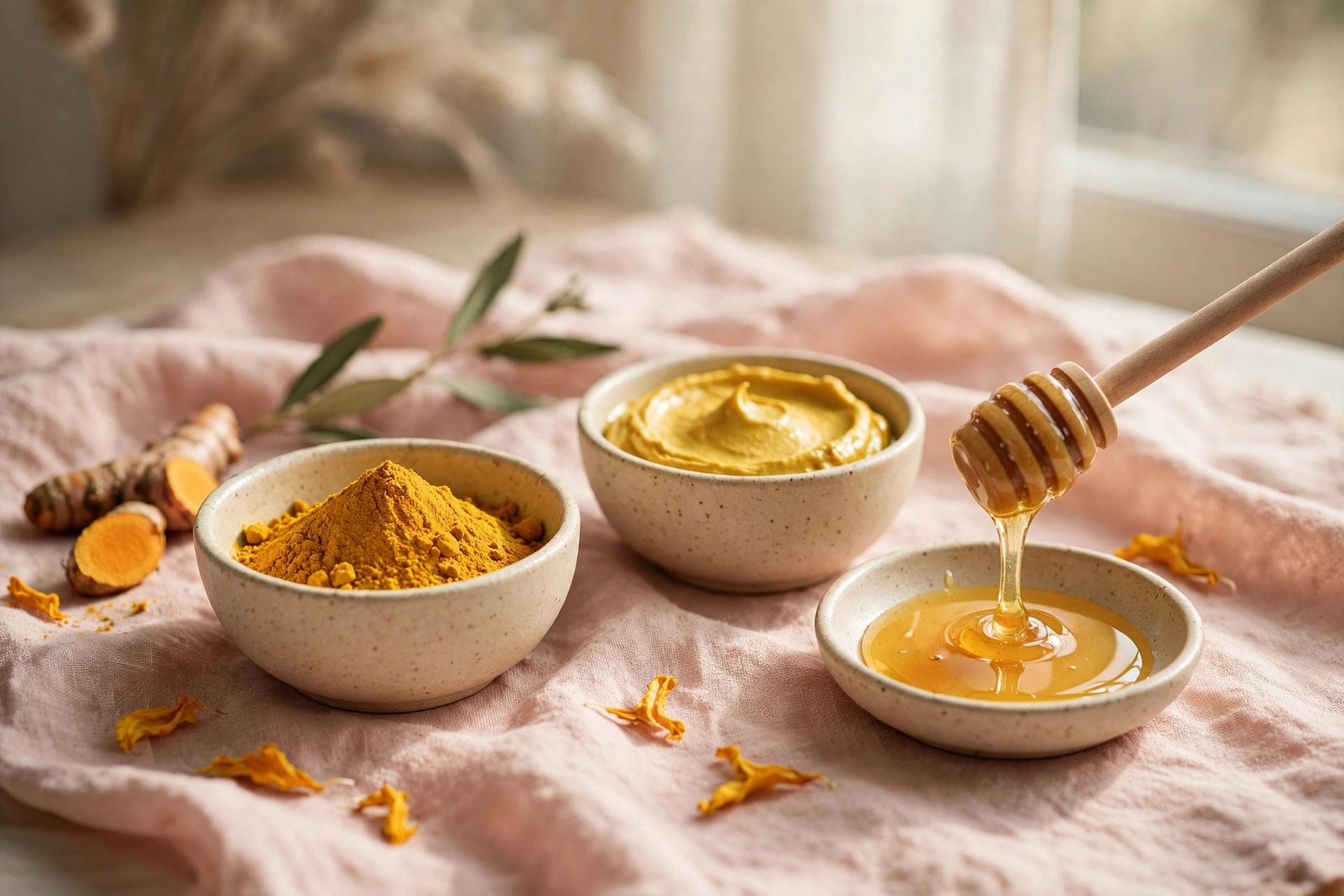
Turmeric Face Mask: How Often Should You Use It? (By Skin Type)
The short answer: Most skin types do best with a turmeric face mask once or twice a week. Oily and combination skin can handle twice weekly, while dry or sensitive skin should stick to once a week or every ten days. Using it daily is overkill — it won’t speed up results, but it will stain your skin and can leave it feeling tight and dry.
Turmeric has been a skincare staple in South Asia for centuries, and lately it’s everywhere — all over Pinterest boards and DIY beauty blogs. The golden spice gets credit for brightening dull skin and calming the look of redness, thanks to curcumin, its active compound. But here’s the thing nobody talks about enough: turmeric is potent stuff, and more is definitely not better.
I spent a month testing different frequencies on my own skin (combination, slightly sensitive in winter), plus patch-testing schedules with two friends — one oily, one dry — so this isn’t guesswork. Here’s everything I learned, organized by skin type.
Why Frequency Matters More Than the Recipe
With most DIY masks, the recipe gets all the attention and frequency is an afterthought. With turmeric, it’s the opposite. The mask itself is simple — turmeric plus a liquid base — but how often you use it determines whether you get that lit-from-within glow or a yellow tint and tight, unhappy skin.
Two things happen when you overdo turmeric masks:
- Staining. Curcumin is a dye — it’s literally what gives curry its color. Used too often, especially on fair skin, it leaves a yellow cast that takes a day or two to fade. Once a week? It rinses clean. Three times a week? You’ll notice it.
- Dryness. Turmeric is mildly astringent. Occasional use feels clarifying; frequent use can strip the skin barrier, particularly for dry and sensitive types. That tight, squeaky feeling after a mask is your cue to back off.
On the flip side, using it once a month is basically a fun afternoon with no real payoff. The sweet spot is regular-but-spaced use — enough for the brightening effect to build, with full recovery time between sessions.
How Often by Skin Type: The Frequency Chart
Here’s the chart I wish I’d had when I started. Find your row and set your schedule:
| Skin type | How often | Leave on | Notes |
|---|---|---|---|
| Oily / acne-prone | 2x per week | 10–15 min | Space sessions 3–4 days apart |
| Combination | 1–2x per week | 10–15 min | Twice weekly on the T-zone only if the cheeks get dry |
| Normal | 1x per week | 10–15 min | The easy maintenance schedule |
| Dry | 1x per week (max) | 10 min | Always add honey or yogurt to the mix for moisture |
| Sensitive | Every 10–14 days | 8–10 min | Patch-test first; keep it short |
A few notes on reading this chart. “Twice a week” means something like Monday and Thursday — never back-to-back days. Your skin needs at least 48 hours between turmeric sessions. And these are starting points: if your skin feels great at once a week, there’s no reason to push to twice.
What I Tested: The Staining Experiment
The number one fear with turmeric masks is looking like a highlighter, so I ran a deliberately unscientific staining test on the inside of my forearm (fair-to-medium skin, for reference):
- Once a week for 4 weeks: Zero visible staining after rinsing with a gentle cleanser. Gone completely.
- Twice a week for 2 weeks: A faint warm tint right after rinsing that faded within a few hours. Nothing anyone else would notice.
- Three times in one week (don’t do this): Noticeable yellow cast that lasted into the next day, plus my skin felt tight even with moisturizer.
The takeaway matched the chart: once or twice weekly rinses clean with normal cleansing. Daily or near-daily use is where the staining — and the dryness — show up.
One more finding worth sharing: mixing turmeric with yogurt or honey instead of water made a real difference in how easily it rinsed off. The fats in yogurt seem to lift the pigment better than water alone. My dry-skinned friend, who used the honey version, had zero staining issues at once weekly.
The Basic Turmeric Mask Recipe I Use
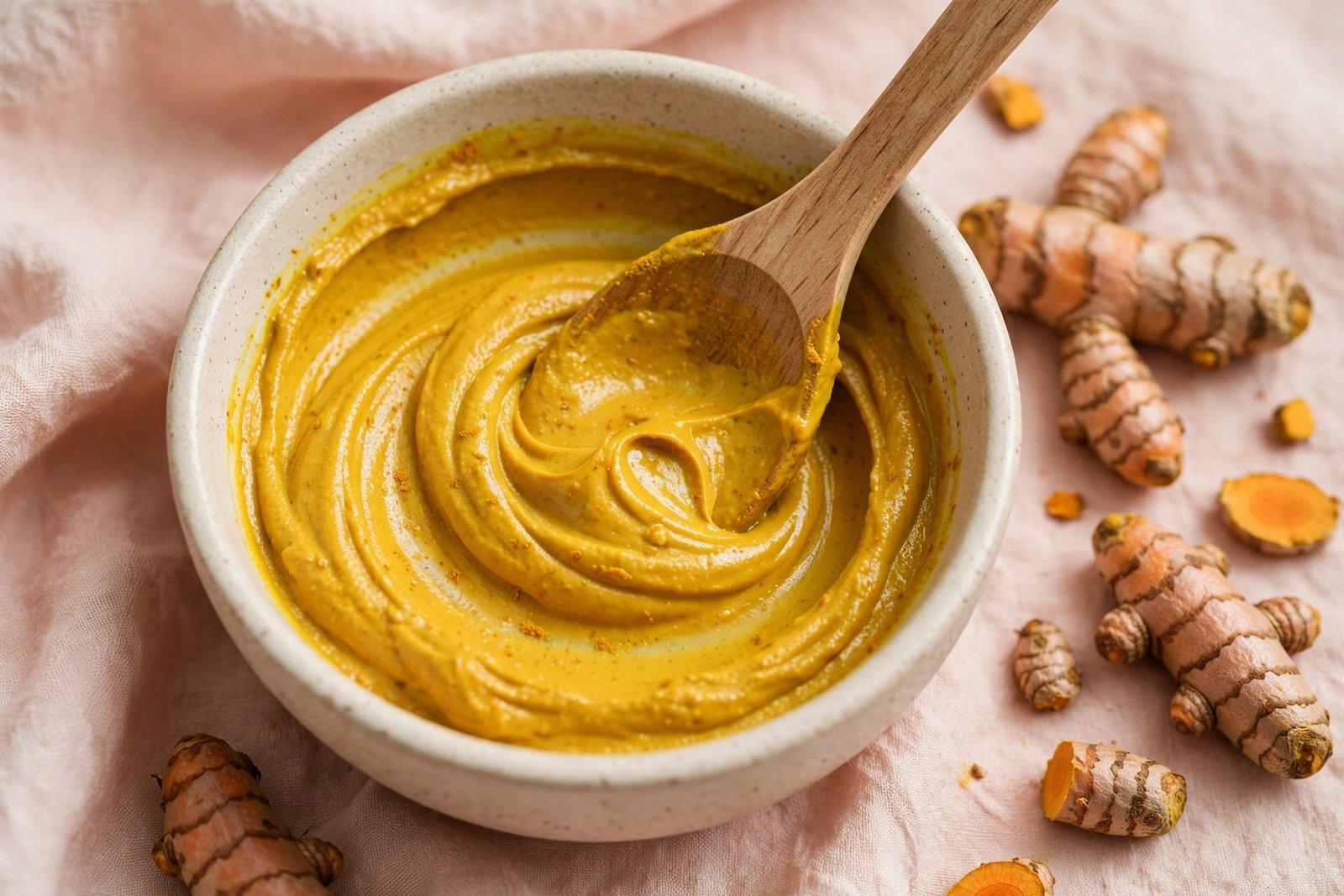
You don’t need anything fancy. This is the base I tested with:
- 1 teaspoon turmeric powder
- 1 tablespoon plain yogurt (or raw honey for dry skin)
- 1 teaspoon or aloe vera gel (optional, for dry/sensitive skin)
Mix into a smooth paste, apply a thin layer to clean skin (avoid the eye area), and leave on for the time listed in the chart above. Rinse with lukewarm water and a gentle cleanser, then moisturize. That’s it.
A quick word on turmeric type: regular culinary turmeric from the spice aisle works fine and is what I tested with. “Wild” or kasturi turmeric stains less and is popular for facial use, but it’s harder to find and pricier — nice to have, not necessary.
3 Base Variations by Skin Type
The base recipe above is the starting point, but I fine-tuned three versions during testing — one for each major skin type. Pick yours:
For oily / acne-prone skin — the clarifying version:
1 teaspoon turmeric + 1 tablespoon plain yogurt + ½ teaspoon honey. The yogurt’s lactic acid adds gentle exfoliation, and the thinner texture spreads easily over oily areas. This is the version I used for my twice-weekly sessions, and it rinsed the cleanest of the three.
For dry skin — the nourishing version:
1 teaspoon turmeric + 1 tablespoon raw honey + 1 teaspoon jojoba or sweet almond oil. The extra oil prevents any tight feeling and the honey keeps everything creamy. My dry-skinned friend used this one exclusively and reported zero dryness across four weeks.
For sensitive skin — the gentle version:
½ teaspoon turmeric (half the usual amount) + 1 tablespoon aloe vera gel + 1 teaspoon honey. Less turmeric means less staining risk and less activity on reactive skin. Keep it to 8–10 minutes. This is the version to start with if you’ve never put turmeric on your face before — you can always work up to the full-strength base.
All three follow the same frequency chart above. The variation changes the experience, not the schedule.
How to Avoid the Yellow Stain
Even on the right schedule, a little prevention helps:
- Apply a thin layer. Thick globs stain more and don’t work better.
- Don’t exceed 15 minutes. Longer isn’t stronger — it’s just yellower.
- Double-cleanse after. An oil cleanser or micellar water first, then your regular cleanser, takes off every trace.
- Use yogurt or honey as your base instead of water (see my test notes above).
- Skip it 48 hours before any big event. Just in case.
Signs You’re Overdoing It
Pull back to every two weeks (or pause entirely for a bit) if you notice:
- A yellow tint that survives your normal cleansing routine
- Tightness or flakiness in the day or two after masking
- New sensitivity — products that never stung before suddenly do
- Breakouts in areas where you don’t usually get them
None of this is permanent. Turmeric overuse is very forgiving — a week off and your skin bounces right back.
Quick Recap
- Oily/combination: up to twice a week, spaced 3–4 days apart
- Normal/dry: once a week, with honey or yogurt in the mix
- Sensitive: every 10–14 days, short contact time, patch-test first
- Never daily, never back-to-back days, never longer than 15 minutes
Consistency beats intensity with turmeric. A calm once-a-week ritual will do more for your glow than a frantic week of daily masking ever could.
One gentle note: this is cosmetic advice from my own experience, not medical advice. If you have a diagnosed skin condition, check with your dermatologist before trying new DIY treatments — and always patch-test first.
Frequently Asked Questions
Can I use a turmeric mask every day?
I don’t recommend it. Daily use dramatically increases staining and can dry out your skin without giving better results. The brightening effect builds with regular weekly use — daily application just adds side effects.
Will a turmeric face mask stain my skin permanently?
No. Even when overused, the yellow tint fades within a couple of days as your skin naturally exfoliates. An oil cleanser speeds it up considerably. It’s alarming the first time, but it’s temporary.
Is turmeric good for acne-prone skin?
Many people with oily, breakout-prone skin love turmeric masks for how they calm the look of redness and leave skin feeling clarified. Stick to twice weekly max, keep the mask thin, and always patch-test first — everyone’s skin reacts differently.
Can I leave a turmeric mask on overnight?
Please don’t. Overnight contact means serious staining (your pillowcase will never forgive you) and a high chance of irritation. Fifteen minutes is the ceiling.
What’s the difference between regular turmeric and kasturi (wild) turmeric for face masks?
Kasturi turmeric is a different variety traditionally used for skincare in South Asia — it stains less and has a milder scent. It works well, but it’s harder to source and more expensive. Regular culinary turmeric, used on the schedule above, works just fine.
Looking for more natural skincare you can make at home? Browse more DIY Beauty“>DIY beauty recipes and natural treatments — including my related guide“>2-minute honey-sugar lip scrub and the truth about that related guide“>tingling Aztec clay mask.
Love this? Pin it for later!