Best At Home Waxing Kit for Beginners: 2026 Picks
Buying your first waxing kit should be exciting, not overwhelming — but the sheer number of options can make it feel like the latter. Warmers, beads, strips, roll-ons, microwaveable cups: what does a beginner actually need, and what is just marketing?
This guide cuts through the noise. You will learn exactly what a complete beginner kit must include (and what you can skip), the real differences between wax warmers and microwaveable wax, how strip kits compare to hard wax kits, and which beginner-friendly picks are worth your money. No affiliate links here — just honest guidance so you can shop confidently. Once you have your kit, our complete beginner’s guide to at-home waxing will walk you through your first session step by step, and our hard wax vs soft wax comparison will help you decide which wax type suits the areas you plan to wax.
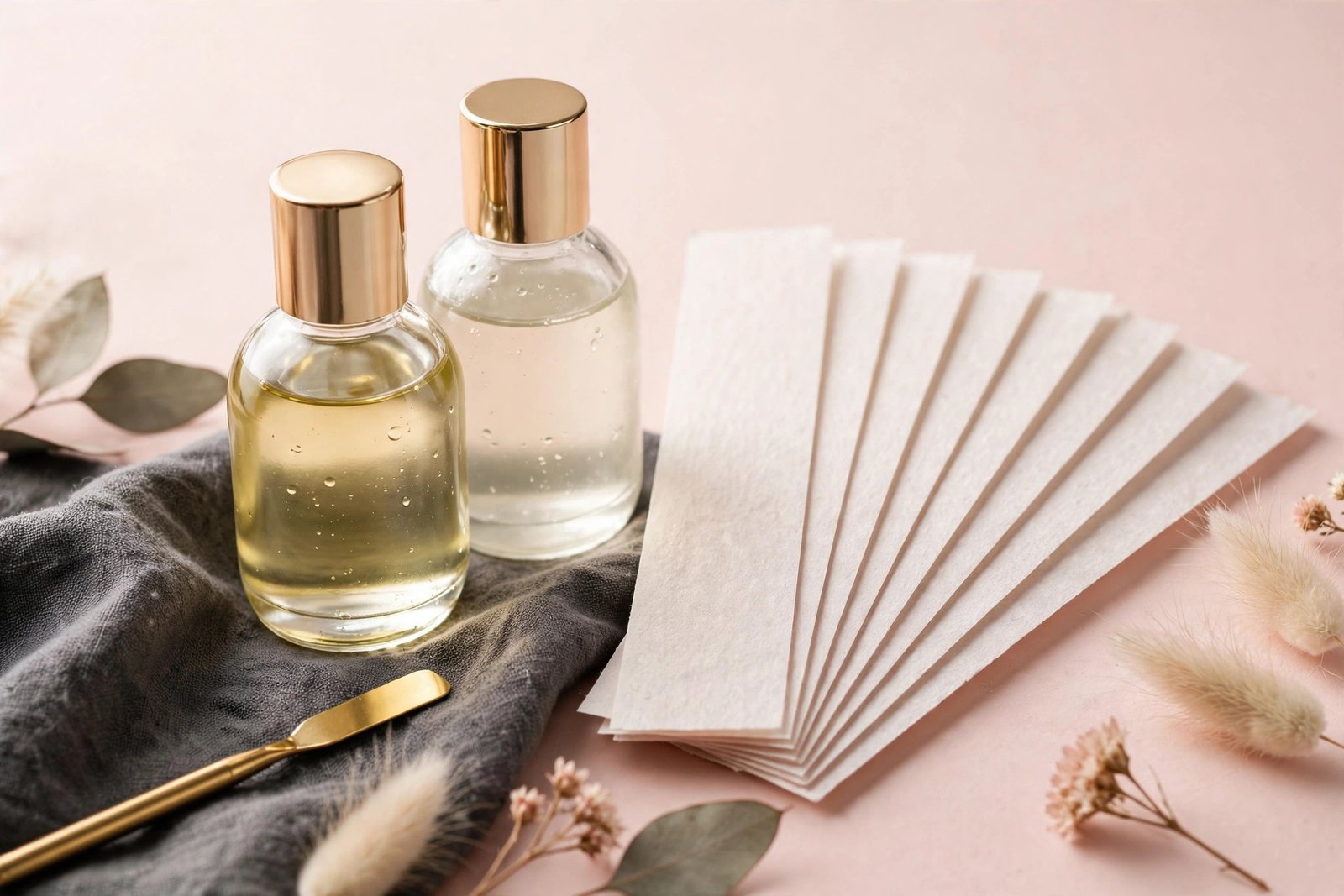
What a Complete Beginner Kit Must Include
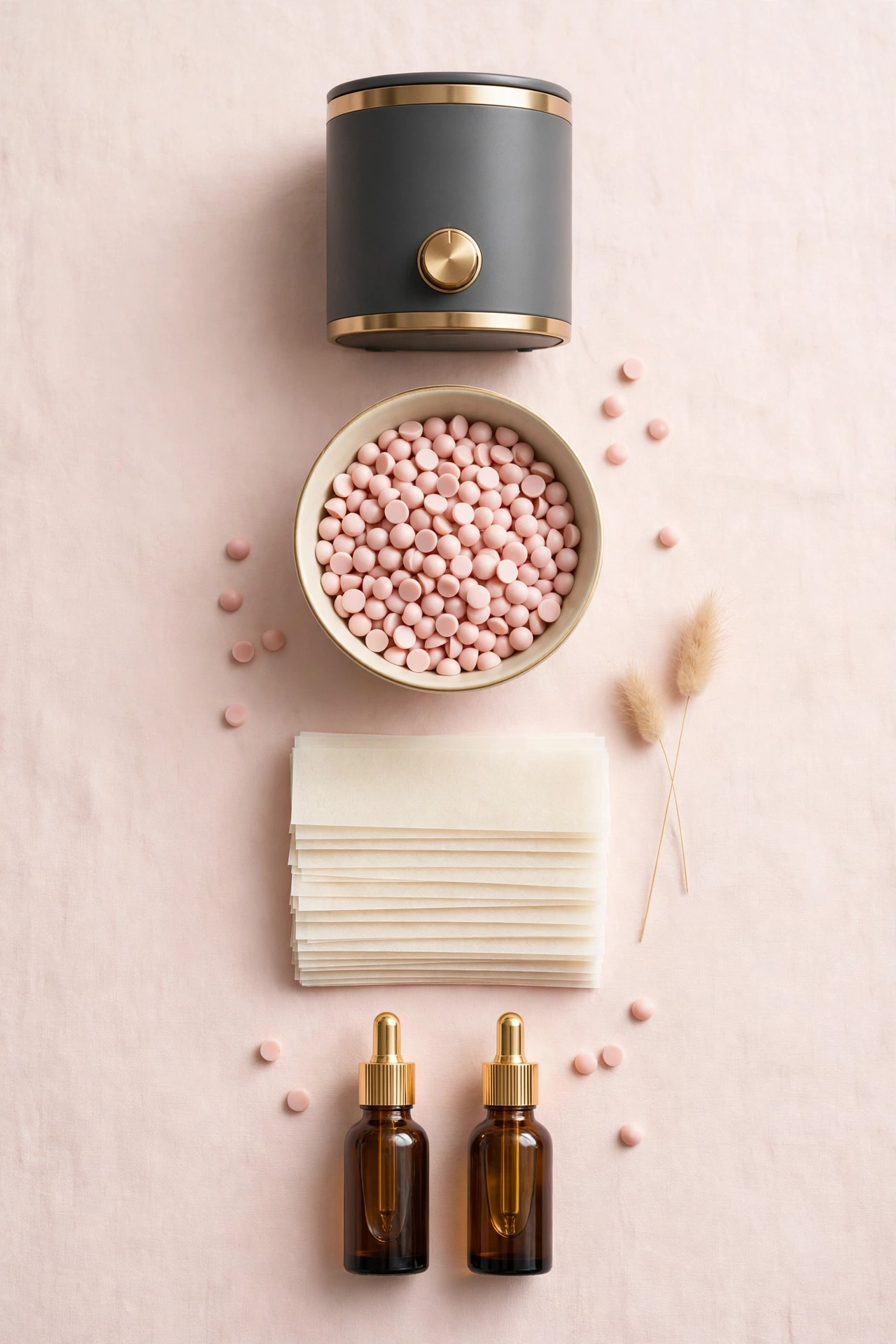
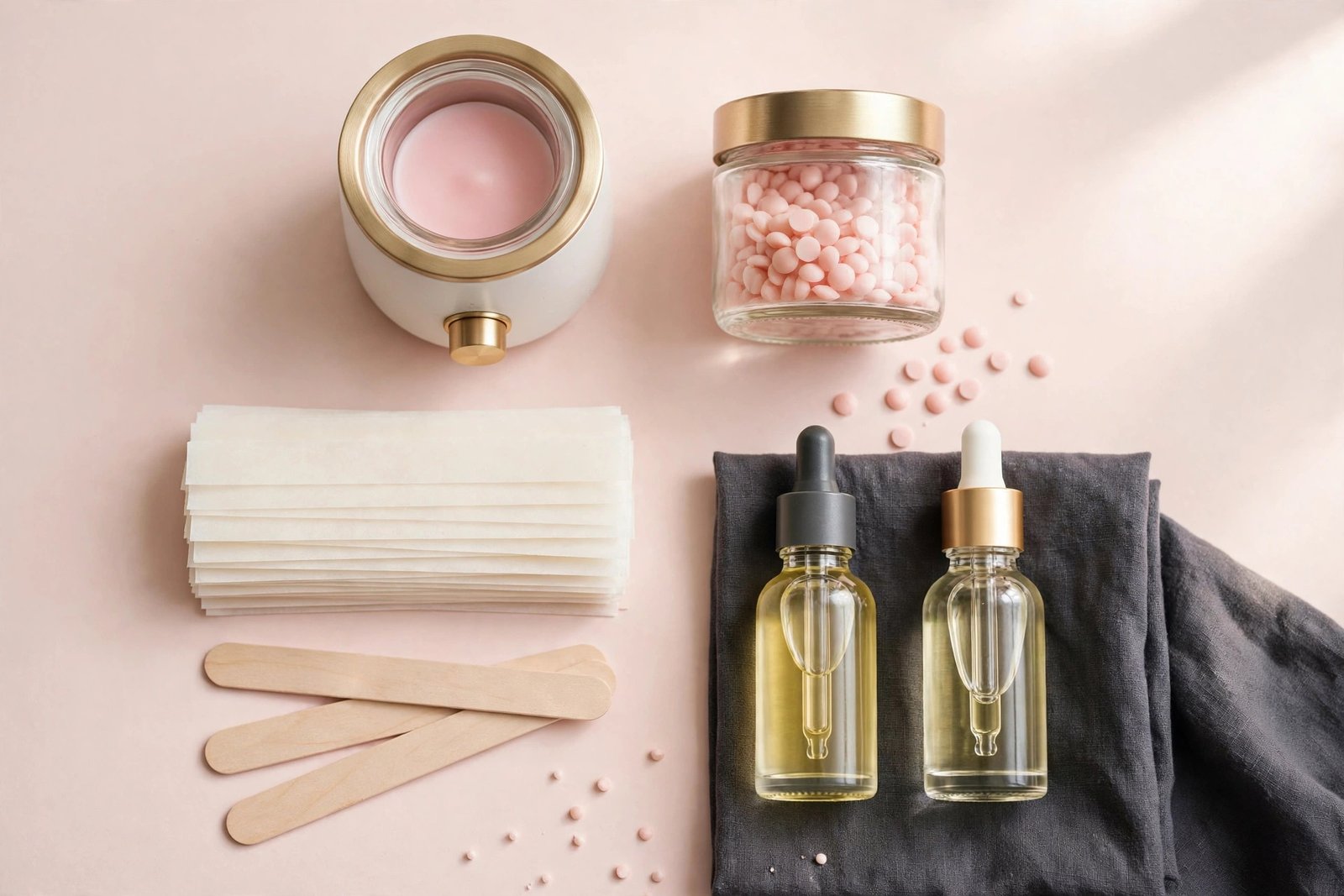
A good starter kit should let you complete a full waxing session with nothing else to buy. Before you add anything to your cart, check that the kit — or your combined purchases — covers every item on this list:
- The wax itself — enough for multiple sessions, in the type suited to your target areas (see below).
- A heating method — a wax warmer, microwaveable container, or pre-waxed strips that need no heat.
- Applicators — wooden spatulas in at least two sizes (large for legs, small for detail areas). If the kit lacks these, buy a bag separately; they are inexpensive.
- Removal strips — required for soft wax kits (muslin or non-woven). Hard wax kits should not need them.
- Pre-wax cleanser — removes oils and sweat so wax grips hair properly. In a pinch, gentle soap and water works, but a dedicated cleanser is better.
- Skin protectant powder — some kits include it; otherwise plain cornstarch or baby powder from the pharmacy works identically.
- Post-wax oil — dissolves sticky residue and soothes skin. Do not skip this; trying to scrub off residue irritates freshly waxed skin.
- Soothing aftercare — aloe vera gel or a fragrance-free calming gel for redness.
Red flags in a kit listing: no applicators included, no aftercare products, vague wax quantity (“enough for one use”), or a warmer with no temperature control. A kit missing the basics will cost you more in follow-up purchases than a slightly pricier complete kit.
Wax Warmers vs Microwaveable Wax: Which Is Better for Beginners?
This is the first big decision, and for most beginners the answer is clear.
Wax Warmers: The Beginner-Friendly Choice
An electric wax warmer is a small heated pot that melts wax beads or blocks and holds them at a steady temperature. For beginners, the advantages are significant:
- Consistent temperature. The warmer holds wax at an even heat, eliminating the hot spots that cause most at-home burns. You set it, wait for the wax to melt to a honey consistency, and it stays there.
- Adjustable heat settings. Most warmers let you melt on high, then dial down to a warm holding temperature — ideal for a long session.
- Safer reheating. Wax that cools mid-session reheats gently in the warmer without the guesswork of microwave intervals.
- Reusable for years. A decent warmer is a one-time purchase that works with any brand of wax beads.
The downsides are minor: warmers take 15–30 minutes to fully melt wax (plan ahead), they cost more upfront than a microwaveable cup, and they take up counter space. For anyone planning to wax regularly, the investment pays for itself within a few sessions compared to salon prices.
What to look for: adjustable temperature dial (not just on/off), a removable inner pot for easy cleaning, and a size suited to your needs — small warmers suffice for face and bikini touch-ups, while medium warmers suit full legs.
Microwaveable Wax: Convenient but Demanding
Microwaveable wax comes in a cup you heat in short bursts, stirring between each. It is cheaper upfront and requires no equipment, which appeals to beginners testing the waters.
The catch is temperature control. Microwaves heat unevenly, creating scalding pockets in the center while the surface feels fine — and stirring thoroughly between every interval is mandatory, not optional. Many beginners either under-heat (wax will not spread or grip) or over-heat (burn risk) their first few times. It is workable, but it demands more attention and carries more risk than a warmer.
Verdict for beginners: if you plan to wax more than once or twice, buy the warmer. If you want a single trial run before committing, a microwaveable hard wax cup for a small area (like the underarms) is a reasonable low-cost experiment — just be meticulous about stirring and wrist-testing.
Strip Wax Kits vs Hard Wax Kits
Your second decision is wax type, which determines the kit format you buy.
Strip (Soft) Wax Kits
These include soft wax plus muslin or non-woven strips. Some come as a tin of wax with a small warmer or as pre-waxed strips requiring no heat at all.
- Best for: legs, arms — large areas where speed matters.
- Beginner pros: intuitive technique, fast coverage, economical.
- Beginner cons: harsher on sensitive areas; not the right choice for bikini or face.
Pre-waxed strips deserve special mention as the ultimate low-commitment entry point: warm the strip between your palms, apply, pull. No equipment, no temperature risk, no mess. They are genuinely the easiest way to try waxing, though they struggle with very coarse hair and curved areas.
Hard Wax Kits
These include hard wax beads or tablets, usually bundled with a warmer, applicators, pre- and post-care. This is the kit format estheticians recommend most for beginners.
- Best for: bikini area, underarms, face — plus legs if you do not mind a slower session.
- Beginner pros: gentler on skin, lower burn risk, no strips to fumble with, safer to reapply on a missed spot.
- Beginner cons: slower per session; the cooling-and-pull timing takes a session or two to learn.
The beginner recommendation: if you will wax sensitive areas at all, get a hard wax kit with a warmer. It is the most versatile single purchase. If you will only ever do legs and arms, a strip kit or pre-waxed strips are simpler and faster.
Beginner-Friendly Picks: What to Look For
Rather than pushing specific products that may be reformulated or discontinued, here is how to evaluate the well-known beginner options you will encounter — and which profiles suit which beginner.
All-in-One Hard Wax Kits with Warmer
Brands like GiGi and similar professional-style lines sell complete hard wax kits bundling a warmer, wax beads, applicators, pre-wax cleanser, and post-wax oil. These are the closest to a salon setup at home and the best value for beginners planning regular sessions. Look for kits whose wax is labeled for sensitive skin or coarse hair — those formulations tend to be more pliable and forgiving of imperfect timing.
Best for: committed beginners who will wax face, underarms, or bikini area regularly.
Microwaveable Hard Wax Cups
Single-cup hard wax products (the kind you microwave and apply with included sticks) are sold by several drugstore brands. They are the lowest-cost way to try hard wax, and the small quantity suits face or underarm touch-ups.
Best for: trying waxing once before investing in a warmer; small-area touch-ups.
Pre-Waxed Strips
Veet and Nair dominate this category with strips sized for legs, body, and face. They require zero skill and zero equipment — genuinely foolproof for legs. Their limitation is grip strength on coarse hair and adaptability to curves.
Best for: absolute beginners who only want legs/arms done; travel waxing.
Roll-On Soft Wax Kits
Roll-on cartridges warm in a small heater and roll wax on in an even layer — they solve the “how thin do I spread it?” problem automatically. They are neat, fast, and good for legs.
Best for: beginners who want soft wax speed without the spatula learning curve.
Sensitive-Skin Formulations Worth Seeking
Across all formats, beginners with reactive skin should look for waxes labeled sensitive-skin, hypoallergenic, or formulated with soothing ingredients like chamomile, azulene, or titanium dioxide (which gives some hard waxes a creamy texture many find gentler). Fragrance-free options reduce the chance of post-wax irritation.
What About Price?
Expect to pay roughly the cost of one salon waxing session for a complete beginner kit with a warmer — and then pennies per session after that in wax refills. The economics of at-home waxing are strongly in your favor after the initial purchase, which is one of the main reasons people switch.
What to Skip as a Beginner
Not every waxing accessory deserves your money at the start:
- Professional multi-pot warmers — overkill for home use; a single-pot warmer handles everything.
- Fancy pre-wax oils and lotions — basic cleanser plus powder does the same job.
- Numbing creams marketed for waxing — most provide minimal real numbing for waxing pain and can interfere with wax adhesion; an OTC pain reliever taken beforehand is more effective.
- Bulk wax purchases — buy a small quantity first to confirm you like the formula and the process before stocking up.
- Exfoliating “waxing prep” scrubs at premium prices — a gentle drugstore exfoliant used 24–48 hours before works identically.
Setting Up for Your First Session
Once your kit arrives, do a dry run before waxing day: melt the wax, practice spreading it on a non-skin surface to get a feel for the consistency, and time how long your hard wax takes to set. Read the full technique in our beginner’s guide to at-home waxing and the area-specific walkthrough in our bikini area waxing guide. And plan your aftercare in advance — preventing ingrown hairs starts 48 hours after your session, as explained in our guide to preventing ingrown hairs after waxing.
Key Takeaways
- A complete beginner kit must include: wax, a heating method, applicators, strips (for soft wax), pre-wax cleanser, powder, post-wax oil, and soothing aftercare.
- Wax warmers beat microwaveable wax for beginners — steady temperature means fewer burns and less guesswork.
- Hard wax kits with a warmer are the most versatile beginner purchase, especially if you will wax the bikini area, underarms, or face.
- Strip kits and pre-waxed strips are fastest and simplest for legs and arms only.
- Look for sensitive-skin formulations (chamomile, azulene, fragrance-free) if your skin is reactive.
- Skip pro multi-pot warmers, numbing creams, and bulk wax buys until you know you like the process.
- One complete kit costs roughly one salon session — then pennies per session after that.
Frequently Asked Questions
How much does a good beginner waxing kit cost?
A complete hard wax kit with a warmer typically costs about the same as a single professional waxing session. Microwaveable cups and pre-waxed strips cost much less upfront. After the initial purchase, refill wax is inexpensive, so at-home waxing pays for itself within a few sessions.
Can I use the same kit for my face and body?
Yes, with caveats. Hard wax kits work for both face and body — just use small applicators and tiny sections on the face. Soft wax strip kits are fine for body but too harsh for most people’s facial skin. Never share applicators between areas without wiping; better yet, use fresh sticks per section for hygiene.
How long does the wax in a kit last?
An average hard wax bead bag (around a pound) covers multiple full-leg sessions or many months of bikini and underarm maintenance. Your consumption drops as your technique improves because you waste less. Store unused wax sealed in a cool, dry place.
Are at-home wax warmers safe?
Yes, when used as directed. They are designed to hold wax at safe working temperatures — far more consistent than a microwave. Always wrist-test the wax before applying, keep the warmer on a stable heat-resistant surface away from water, and unplug it when finished.
Do I need different wax for coarse vs fine hair?
Formulations marketed for coarse hair tend to be more pliable with stronger grip, which helps on bikini and underarm hair. For fine leg or arm hair, standard formulations work well. If you wax both, a coarse-hair hard wax handles everything acceptably — it is the more versatile single choice.
What should I do if my kit did not include post-wax oil?
Coconut oil, jojoba oil, or baby oil all dissolve wax residue effectively in a pinch — apply gently, never scrub. For aftercare calming, plain aloe vera gel works well. Consider ordering a dedicated post-wax oil with your next wax refill, since purpose-made ones often include soothing ingredients.
Love this? Pin it for later!