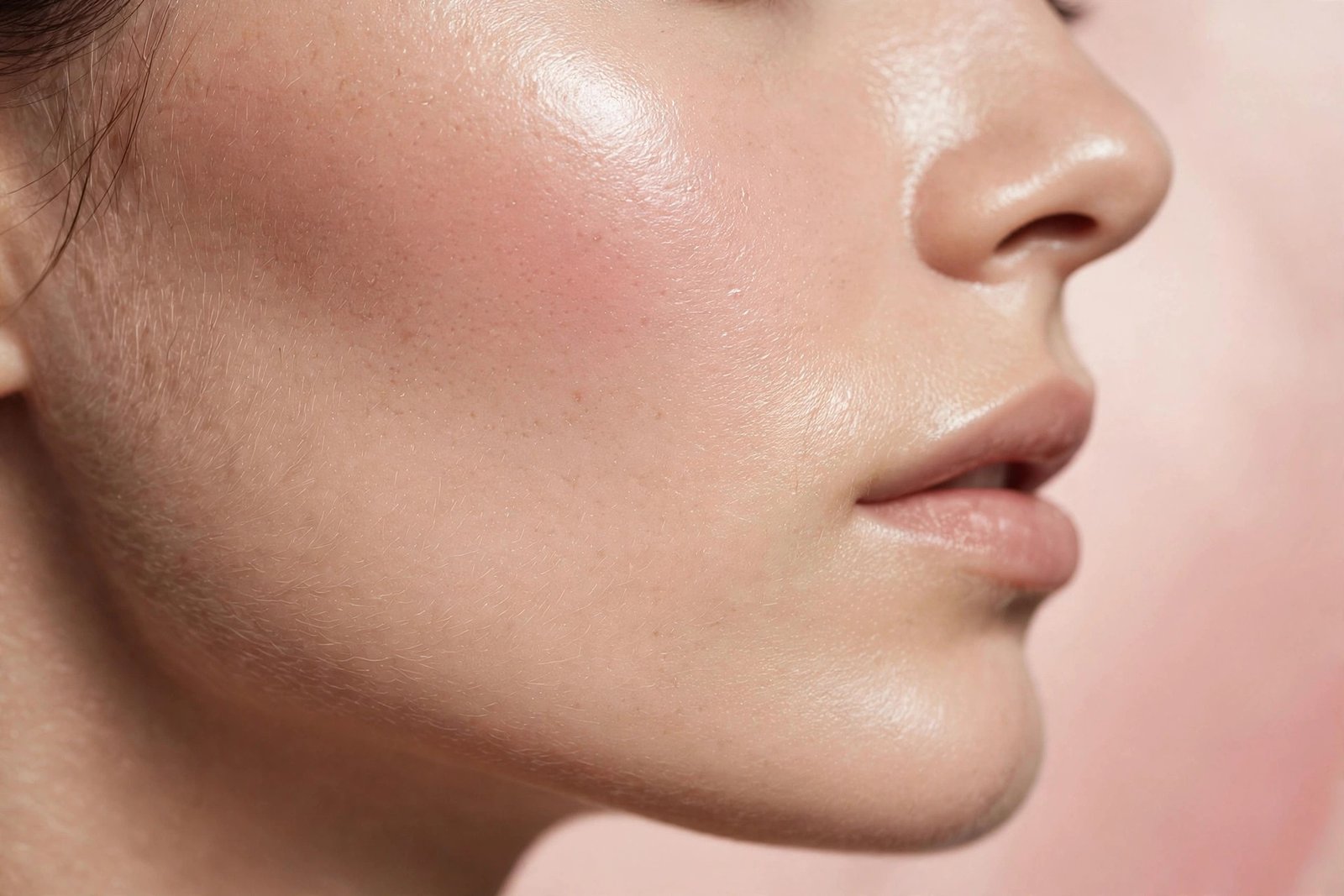
Why Does Your Foundation Look Cakey? 7 Causes and How to Fix Each One
The 2-minute diagnosis
Before reading all seven, do this quick check. Look closely in natural light (not your yellow bathroom bulb — it lies):
- Flaky or patchy, especially around the nose and mouth? → Causes 1 or 4
- Thick and mask-like everywhere? → Cause 2
- Separating or sliding by midday? → Causes 3 or 6
- Settling into every fine line? → Causes 2 or 5
- Grainy or textured no matter what you do? → Cause 7
Now find your number below.
Cause 1: Your skin wasn’t prepped (the #1 culprit)
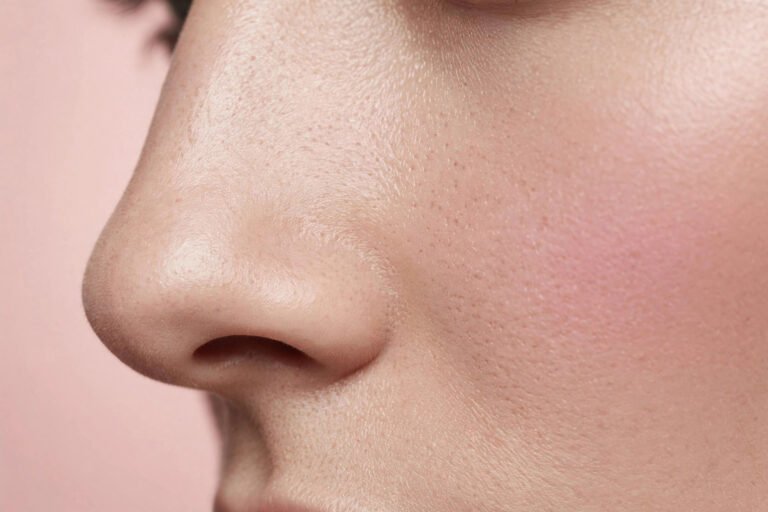
How to tell: Foundation clings to dry patches, looks flaky around the nose, mouth, and eyebrows — but feels fine on your cheeks. If your skin drinks up moisturizer in seconds, this is almost certainly your cause.
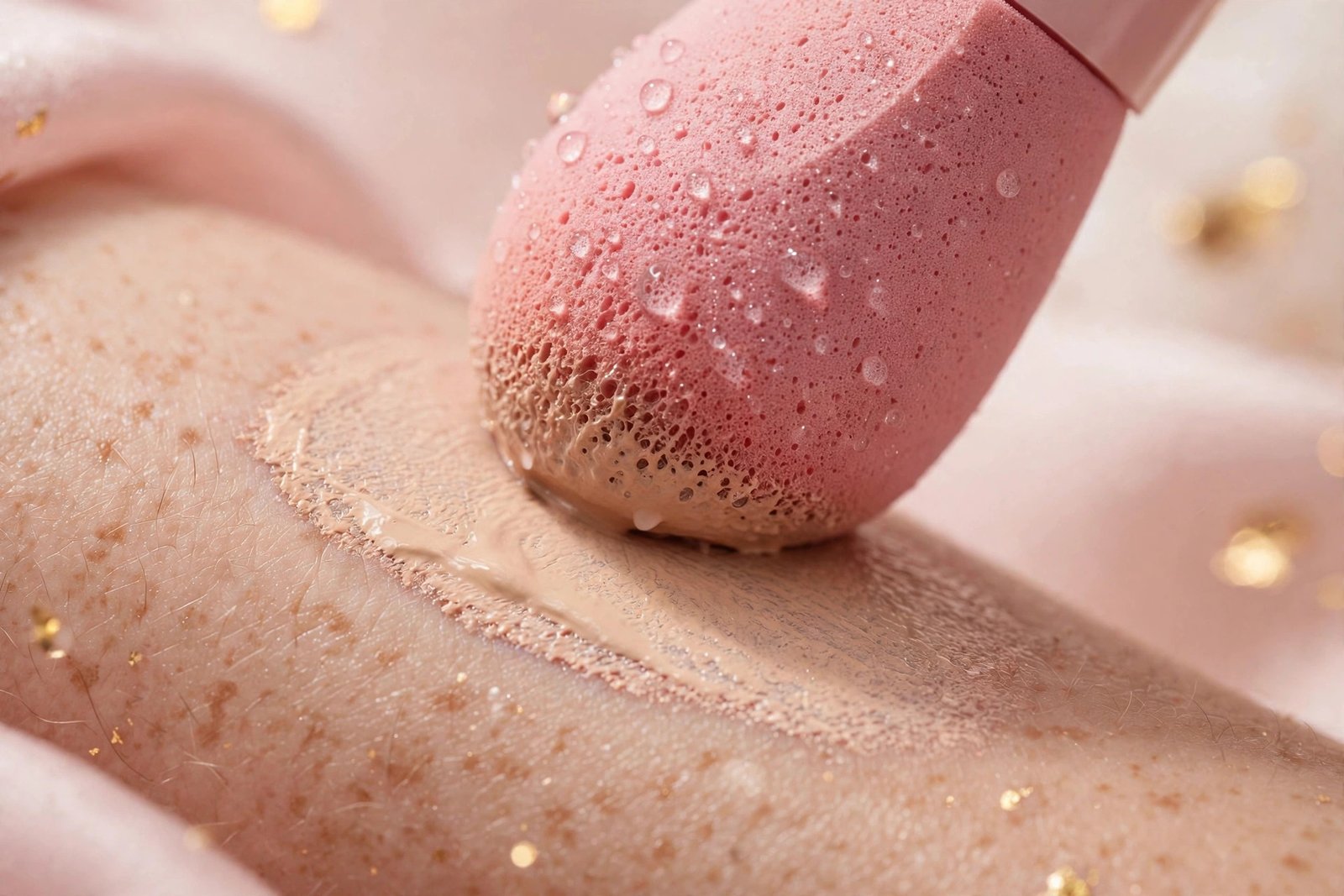
Why it happens: Foundation is pigment suspended in a base. On dehydrated skin, the base absorbs instantly and the pigment is left stranded on the surface, highlighting every flake and fine line. Dermatologists consistently recommend moisturizing before makeup application for exactly this reason — hydrated skin gives foundation something to grip evenly.
The fix:
1. After cleansing, apply moisturizer to slightly damp skin and wait 2–3 minutes.
2. If you’re very dry, layer a hydrating serum underneath (hyaluronic acid on damp skin works beautifully).
3. Don’t skip this even if you’re oily — use a lightweight gel moisturizer instead of nothing.
Pro tip: In winter, or if your skin is very dry, press a warm damp cloth to your face for 30 seconds before moisturizer. It softens flakes so they don’t show through foundation later.
Cause 2: You’re using way too much product
How to tell: Your base looks heavy and mask-like from the moment you finish, settles into smile lines within an hour, and your shade looks darker than it does in the bottle (thick layers oxidize more visibly).
Why it happens: Most of us apply 2–3 times more foundation than needed. Full coverage doesn’t come from more product — it comes from strategic placement.
The fix:
1. Start with half a pump — less than you think you need.
2. Apply only to the center of the face (nose, chin, inner cheeks) where redness lives, and blend outward. Most people need almost nothing on the outer cheeks and forehead.
3. Spot-conceal anything still showing instead of adding a second full layer.
What I tested: I did one half of my face with my usual two pumps and the other with half a pump blended outward. The half-pump side looked more natural at hour zero and at hour eight — the heavy side had creased under my eyes by lunch. Less really is more.
Cause 3: Wrong formula for your skin type
How to tell: Matte, long-wear foundations turn to chalk on dry skin within hours; dewy, hydrating foundations slide off oily skin by midday and pool in pores.
Why it happens: Foundation formulas are engineered for specific skin types. A matte formula on dry skin has nothing to meld with, so it sits on top. A luminous formula on oily skin adds oil to oil.
The fix:
– Dry skin: reach for hydrating, satin, or serum foundations. Avoid anything labeled “matte” or “24-hour wear.”
– Oily skin: matte or oil-free formulas are your friend — but pair with light prep (Cause 1 still applies, just use gel textures).
– Combination: use your regular foundation, then powder only the T-zone (see Cause 6).
Pro tip: If you love a foundation that’s slightly wrong for you, you can rescue it — mix one drop of facial oil into matte foundation for dry skin, or set dewy foundation strategically with powder on oily zones.
Cause 4: You didn’t let skincare absorb (hello, pilling)
How to tell: Little balls or flakes of product roll up as you apply foundation, especially around the jawline and hairline. Your base looks textured before you even finish.
Why it happens: Layering foundation over still-wet moisturizer, sunscreen, or primer causes the layers to ball up instead of bonding. Silicone-heavy products layered over water-based ones are the classic trigger.
The fix:
1. Wait a full 2–3 minutes between skincare and foundation. Make coffee. Answer a text. Let it sink in.
2. Keep your bases in the same family when you can — water-based primer under water-based foundation pills less.
3. If pilling starts mid-application, stop, let everything dry for two minutes, then press (don’t rub) foundation over the top with a sponge.
Cause 5: Wrong tool or technique
How to tell: Streaks, visible brush marks, or foundation that looks painted on rather than skin-like — especially around the nose and jawline.
Why it happens: Fingers drag and deposit unevenly; dry brushes can leave stroke marks; rubbing pushes product around instead of pressing it in.
The fix:
1. Switch to a damp makeup sponge — squeeze it until no water drips out, then bounce/stipple, never drag.
2. If you prefer brushes, use a dense buffing brush in small circular motions, then finish by pressing with a damp sponge to melt everything together.
3. Work in thin layers. You can always add; you can’t subtract gracefully.
What I tested: Same foundation, three tools, three days. Damp sponge won on natural finish every time; fingers were fastest but patchiest; a dry flat brush left visible strokes on my nose. The sponge is worth the 60 seconds it takes to dampen.
Cause 6: Over-powdering
How to tell: Your makeup looked good until powder, then instantly went flat and chalky. Fine lines you didn’t know you had suddenly appear.
Why it happens: Powder’s job is to lock down shine — but a heavy all-over layer sucks the life out of foundation and emphasizes texture.
The fix:
1. Powder only where you get shiny — usually the T-zone. Leave cheeks powder-free for a skin-like finish.
2. Use a fluffy brush, tap off the excess, and press lightly rather than sweeping.
3. Try the “powder before foundation” trick for very oily skin: a whisper of translucent powder under foundation controls oil without the chalky top layer.
Cause 7: Your foundation is expired or separated
How to tell: The formula looks grainy, applies unevenly no matter your technique, smells slightly off, or has visibly separated in the bottle (shake it — if it won’t re-emulsify, it’s done).
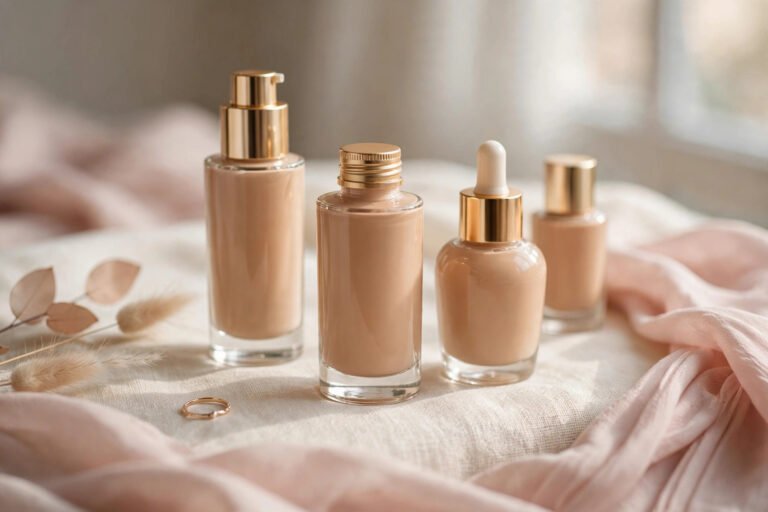
Why it happens: Foundation typically lasts 12 months after opening (look for the little open-jar symbol with “12M”). Old product breaks down: pigments clump, the base separates, and no technique can save it.
The fix: Replace it. And to make the next bottle last: store foundation away from heat and sunlight (not the steamy bathroom), pump rather than pour when possible, and write the open date on the bottom with a marker.
The no-cake routine (your prevention checklist)
Do this every morning and cakey foundation basically stops happening:
- Cleanse, then moisturize on damp skin — wait 2–3 minutes.
- Primer only where needed (pores, T-zone) — optional, not mandatory.
- Half a pump of the right formula for your skin type.
- Damp sponge, stipple and bounce, center-outward.
- Spot-conceal, don’t add layers.
- Powder only the shiny zones with a light hand.
- Finish with a hydrating setting spray to melt everything together — this one step erases 90% of residual powderiness.
Base fixed but the rest of the face misbehaving? Mascara smudging under your eyes, eyeshadow creasing on oily lids, and makeup separating around your nose each have their own causes — and their own fixes.
Frequently asked questions
Why does my foundation look cakey even though I moisturize?
Usually it’s amount or powder — try halving your product and skipping powder everywhere except the T-zone for one day. If it still cakes, your formula may be wrong for your skin type (Cause 3) or expired (Cause 7).
Does primer prevent cakey foundation?
It helps with grip and smoothness, but primer can’t fix dry unprepped skin or too much product. Think of it as a supporting player, not the solution.
How do I fix cakey foundation without starting over?
Spritz hydrating setting spray, then press (don’t rub) with a clean damp sponge — it re-melts the base. For flaky spots, dab the tiniest amount of moisturizer over the area and press foundation back in.
Why does my foundation look good at first and cakey later?
That’s usually oil breakthrough mixing with product (blot midday instead of adding powder) or dehydration as the day goes on. A midday setting-spray refresh prevents most of it.
Can oily skin get cakey foundation too?
Absolutely — just differently. On oily skin, cakiness comes from too much powder layered over oil, or heavy matte formulas cracking as oil pushes through. Lighter layers and blotting beat more powder.
Love this? Pin it for later!