Essence vs. Serum: What’s the Difference? (K-Beauty Guide)
Walk into the world of Korean skincare and you’ll quickly hit a wall of confusing terminology. Essence, serum, ampoule — three watery liquids in similar bottles, all applied somewhere in the middle of the routine, all promising better skin. Are they the same thing with different names? Do you need all three?
This guide clears it up completely: what essences and serums each do, how they differ in texture, concentration, and purpose, where each sits in your routine, and — the question every beginner actually wants answered — which one to buy first. For the full routine context, see our Korean skincare routine for beginners.
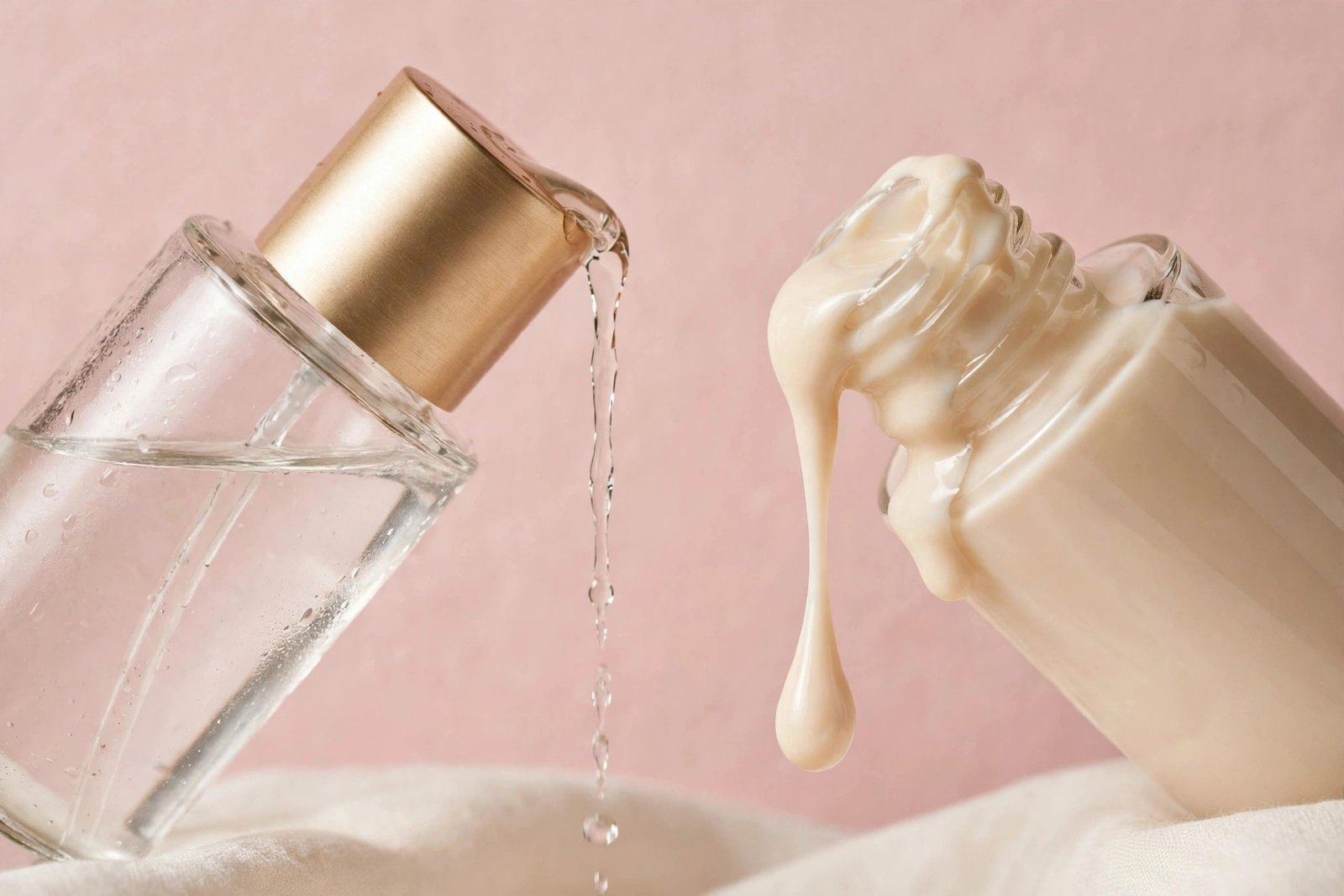
The Short Answer
An essence is a lightweight, watery treatment focused on hydration and skin-conditioning — think of it as a treatment-strength toner. A serum is a more concentrated, targeted treatment built around specific active ingredients — think of it as a lightweight cream’s active core without the moisturizing base.
In practice: essences hydrate and prep, serums target and treat. They overlap, they can substitute for each other in a beginner routine, and you almost certainly don’t need both when you’re starting out.
Essence: The K-Beauty Original
The essence is Korea’s signature contribution to skincare layering — a category that barely existed in Western routines before K-beauty went global.
Texture: Light, watery, sometimes very slightly viscous. Closer to a toner than to a cream. It absorbs fast and leaves minimal residue.
Purpose: Essences are about conditioning the skin as a whole rather than attacking one concern. Their typical jobs:
– Delivering a concentrated dose of hydration (hyaluronic acid, glycerin, fermented ingredients)
– Improving skin’s overall texture, plumpness, and “bounce”
– Prepping skin to absorb the heavier products that follow
– Supporting the skin barrier with soothing ingredients
Signature essence ingredients: Fermented extracts (galactomyces, bifida ferment lysate), snail mucin, beta-glucan, propolis, and rice extract. Notice the pattern — these are holistic skin-conditioners, not single-issue actives.
The classic example: Snail mucin essence — hydrating, soothing, barrier-supporting, and slightly brightening all at once, without being about any single one of those things. Our snail mucin benefits guide covers the ingredient in depth.
Serum: The Targeted Specialist
Serums exist in both Western and Korean skincare, and they’re the more familiar concept for most beginners.
Texture: Slightly thicker than essences — still fluid, but with more body. Some are gel-like, some are light oils, some are milky. They take a few seconds longer to absorb.
Purpose: Serums are problem-solvers. Each serum is typically built around one or two hero ingredients at meaningful concentrations, targeting a specific concern:
– Niacinamide serum → pores, oil control, uneven tone
– Vitamin C serum → brightening, dark spots, antioxidant protection
– Hyaluronic acid serum → intense hydration
– Retinol serum → fine lines, texture, cell turnover
– Peptide serum → firmness and elasticity
The key distinction: Where an essence asks “how can I make your skin healthier overall?”, a serum asks “what specific problem are we fixing?” That focus is the serum’s strength — and the reason beginners can get into trouble layering too many of them.
Ampoules: The Third Term, Briefly
You’ll also see “ampoules” (sometimes spelled “ampules”). In K-beauty, an ampoule is essentially a super-concentrated serum — the most potent step in the lineup, used when skin needs intensive care (after a breakout, before an event, during seasonal transitions).
For beginners, the practical rule is simple: treat “ampoule” as “strong serum” and don’t buy one until you’ve mastered the basics. It’s an advanced step, not a starter step.
Essence vs. Serum: Side-by-Side Comparison
| Essence | Serum | |
|---|---|---|
| Origin | K-beauty signature category | Global (Western + Korean) |
| Texture | Watery, very lightweight | Fluid but slightly thicker |
| Concentration | Moderate — blend of conditioners | Higher — focused actives |
| Purpose | Overall hydration, conditioning, prep | Targeted concern treatment |
| Typical ingredients | Ferments, snail mucin, beta-glucan | Niacinamide, vitamin C, retinol, peptides |
| Routine position | Right after toner | After essence (or after toner if no essence) |
| Beginner necessity | High — gentle and versatile | Medium — choose by concern |
| Risk of irritation | Low | Moderate (depends on actives) |
Where Each Goes in Your Routine
The layering rule is thinnest to thickest, which gives you the order automatically:
- Cleanser
- Toner
- Essence (thinner)
- Serum (thicker)
- Moisturizer
- Sunscreen (AM)
If you use both, the essence goes first — its watery texture would struggle to penetrate through a thicker serum applied underneath. Wait 30–60 seconds between layers so each absorbs rather than pills on top of the last.
Do You Need Both? The Honest Answer
As a beginner: no. This is the most liberating thing about understanding the distinction. One well-chosen treatment step is enough to start, and adding a second is a refinement for later.
Here’s how to choose your one:
Choose an essence first if:
– Your main complaint is dullness, dehydration, or “my skin just looks tired”
– You have sensitive skin and want the gentlest possible treatment step
– You’re drawn to the K-beauty philosophy of hydration-first care
– You want one product that does a bit of everything
Choose a serum first if:
– You have a specific, defined concern (dark spots, persistent breakouts marks, early fine lines)
– You’ve identified the ingredient that addresses it (vitamin C for spots, niacinamide for pores)
– Your skin tolerates active ingredients well
The most common beginner path: Start with a hydrating essence (snail mucin and fermented essences are the classic picks). Use it for a month. If a specific concern remains unaddressed, add a targeted serum after the essence. This sequence — general conditioning first, targeted treatment second — mirrors how dermatologists think about building routines.
Common Layering Mistakes
Using two products that do the same job. A hydrating hyaluronic acid essence under a hydrating hyaluronic acid serum is redundant layering — you’re paying twice for the same mechanism. If you run both categories, make them complementary: hydrating essence + brightening serum, for example.
Applying serum before essence. The thicker product blocks the thinner one. Essence first, always — unless you’re only using one, in which case order doesn’t matter.
Mixing too many actives. The classic beginner error: a vitamin C serum layered over an exfoliating essence, followed by a retinol serum at night. Each is fine alone; together they’re an irritation cocktail. One active focus per routine.
Expecting the essence to behave like a serum. If your dark spots haven’t budged after two months of snail mucin essence, that’s not a product failure — it’s a category mismatch. Essences condition; they don’t target. That’s what serums are for.
Skipping moisturizer because “I already layered two products.” Essences and serums are water-based treatments, not seals. Without a moisturizer on top, their hydration evaporates. The treatment steps and the moisturizing step do different jobs.
How to Shop for Each (Without the Hype)
Shopping for an essence — look for:
– A short ingredient list led by hydrating and conditioning ingredients
– Fermented extracts, snail mucin, beta-glucan, propolis, or rice water high on the list
– No denatured alcohol, minimal fragrance
– A watery texture that absorbs in under a minute (testers help here)
Shopping for a serum — look for:
– The hero ingredient clearly named with its concentration (e.g., “10% niacinamide,” “15% vitamin C”)
– A concentration appropriate for beginners — start lower (5–10% niacinamide, 10% vitamin C) rather than maximum strength
– Packaging that protects the formula — opaque or airless pump bottles for vitamin C and retinoids, which degrade in light and air
– One hero ingredient, not five — beginner serums should be simple enough that you know what’s doing the work
The marketing trap to avoid: “Essence” and “serum” aren’t regulated terms. A product labeled “essence” with 20% vitamin C is functionally a serum, and a watery “serum” that’s mostly fermented filtrate is functionally an essence. Read the ingredient list and texture description, not just the label — the category names are guidance, not law.
Key Takeaways
- Essences are lightweight, watery K-beauty treatments focused on overall hydration and skin conditioning; serums are more concentrated treatments built around specific active ingredients.
- In the routine, essence goes after toner and serum goes after essence (thinnest to thickest).
- Beginners need only one — choose an essence for general dullness/dehydration or a serum for a specific concern like dark spots.
- Ampoules are super-concentrated serums: an advanced step, not a beginner purchase.
- If you use both, make them complementary (hydrating essence + targeted serum), not redundant.
- “Essence” and “serum” aren’t regulated terms — judge products by ingredients and texture, not the label.
FAQ
Can I use an essence and a serum together?
Yes — apply the essence first, wait about a minute, then apply the serum. This is a standard K-beauty layering combination. Just make sure they serve different purposes (e.g., hydrating essence + brightening serum) rather than duplicating each other.
Which should I buy first as a complete beginner?
A hydrating essence, in most cases. It’s gentler, more versatile, and addresses the dullness and dehydration that bother most beginners. Add a targeted serum later once you know your specific concern.
Is a $10 essence as good as a $60 one?
Often, yes. Essences are mostly water, humectants, and fermented or botanical extracts — effective formulas exist at every price point, and K-beauty is famous for affordable essences that outperform luxury Western equivalents. Price correlates weakly with performance in this category.
Can essence replace my toner?
They’re adjacent but distinct steps. Toner is the first hydrating layer on freshly cleansed skin; essence is the treatment-strength layer after it. In a minimal routine, one hydrating product can cover both roles — but in the full routine, they stack.
How long should I wait between essence and serum?
About 30–60 seconds — just long enough for the essence to absorb and your skin to feel dry to the touch rather than wet. You don’t need to wait for full dryness; slightly damp skin actually absorbs the next layer better.
Love this? Pin it for later!